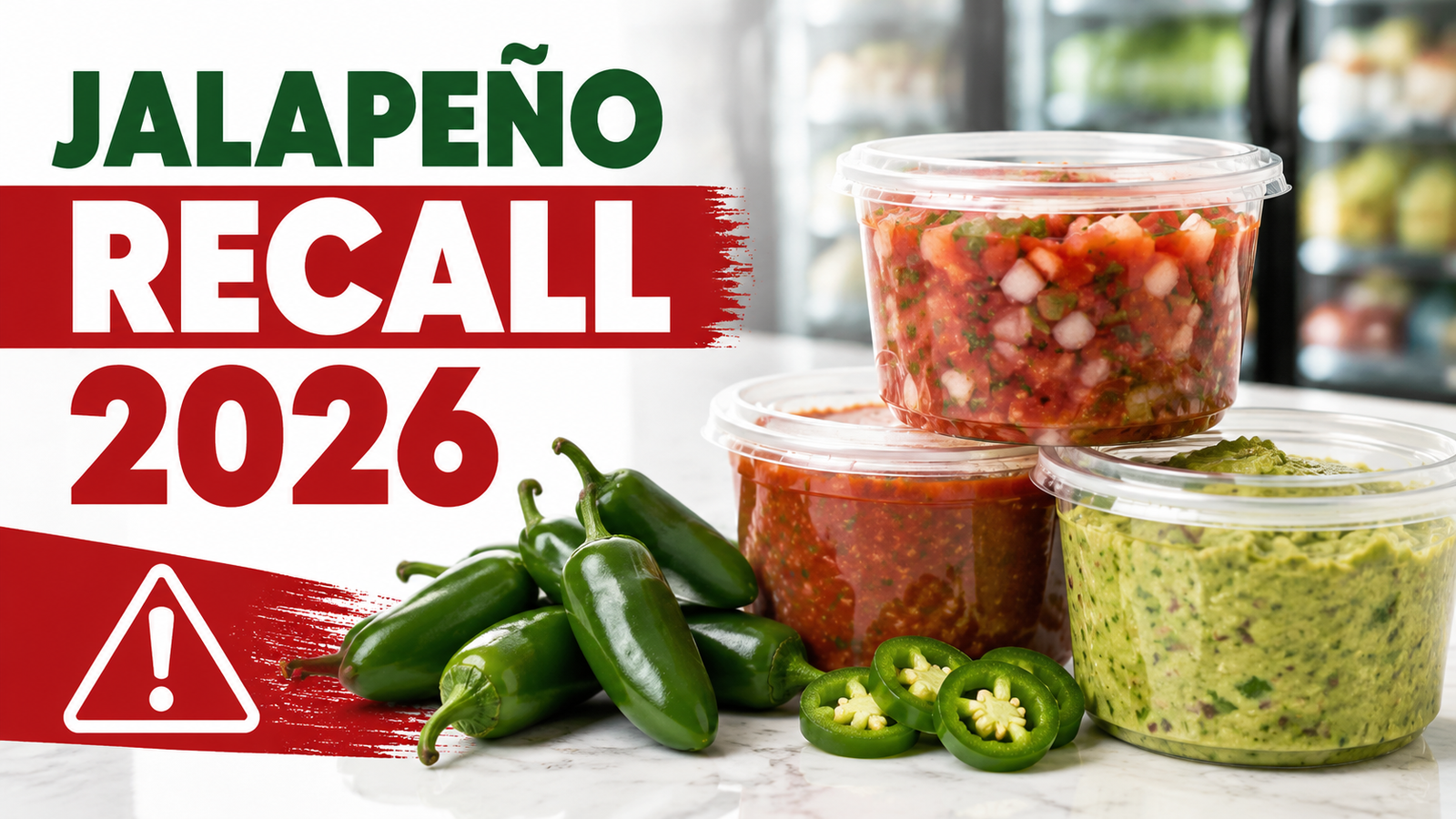
A major jalapeño recall 2026 update now includes salsa, guacamole, dips, sandwiches, salads, and other prepared foods sold at Walmart, Target, Trader Joe’s, Kroger, Whole Foods, Hannaford, and Stop & Shop.
The recalled products may contain jalapeños linked to an ongoing multistate Salmonella outbreak. According to the U.S. Food and Drug Administration, 345 illnesses and 36 hospitalizations have been reported across 27 states. No deaths had been reported as of the FDA’s August 10, 2026 update.
Consumers should check refrigerators immediately because some affected products have “Best If Used By” dates through August 16, 2026. Anyone who purchased one of the recalled foods should not eat it, even if it looks or smells normal.
This guide explains which products are included in the jalapeño recall 2026, where they were sold, how to check UPC codes and dates, what to do with recalled food, and which Salmonella symptoms require medical attention.
Why Were Jalapeños Recalled in 2026?
Federal and state health officials are investigating a multistate outbreak of Salmonella Javiana infections linked to fresh jalapeño peppers grown in Sinaloa, Mexico.
The peppers were imported and distributed by Coast Citrus Distributors to wholesalers, restaurants, distributors, and food-service businesses in the United States. The company agreed to recall the remaining implicated jalapeños and stopped importing peppers from the grower identified during the investigation.
The original recall focused on fresh jalapeños distributed to commercial customers. However, the situation expanded because recalled peppers had already been used as ingredients in packaged foods sold to consumers.
Taylor Fresh Foods subsequently recalled multiple prepared products containing the affected jalapeños. The foods include pico de gallo, salsa, guacamole, dips, a sandwich, a burrito, and a Trader Joe’s salad.
The U.S. Department of Agriculture’s Food Safety and Inspection Service also issued a public health alert covering certain meat and poultry products made with the recalled jalapeños.
Because the investigation remains ongoing, the official product list may change. Consumers should review the latest FDA jalapeño outbreak investigation in addition to checking the products listed below.
How Many People Have Become Sick?
As of August 10, 2026, the FDA reported:
- 345 confirmed illnesses
- 36 hospitalizations
- Zero reported deaths
- Cases in 27 states
- Illness onset dates ranging from June 19 through July 20, 2026
Cases have been reported in Alabama, Arkansas, California, Colorado, Georgia, Illinois, Indiana, Kansas, Kentucky, Louisiana, Michigan, Minnesota, Missouri, Montana, North Carolina, North Dakota, Nebraska, Ohio, Oklahoma, South Carolina, Tennessee, Texas, Utah, Virginia, Washington, Wisconsin, and Wyoming.
The number of people affected may be higher than the confirmed case count. Some people recover without medical care or testing, and it can take time for a new illness to be connected to an outbreak.
Health officials interviewed 191 people during the investigation. Of those interviewed, 177—or 93%—said they had eaten at a Mexican-style restaurant before becoming ill.
The outbreak investigation identified a common jalapeño grower in Sinaloa, Mexico as the likely source. Traceback information connected the grower to Coast Citrus Distributors.
Jalapeño Recall 2026 Store List
Prepared foods containing the affected jalapeños were distributed to retail centers in multiple states. Stores receiving recalled products include:
- Walmart
- Target
- Trader Joe’s
- Kroger
- Whole Foods Market
- Hannaford
- Stop & Shop
Not every location of these retailers necessarily received every product. Distribution varies according to the product and state.
Check all three of the following details before deciding whether a food is part of the recall:
- Product name and package size
- UPC code
- “Best If Used By” date
Do not rely only on the store name or general appearance of the package. Similar products with different UPC codes or dates may not be included.
Walmart Jalapeño Recall Products
The Walmart portion of the jalapeño recall 2026 includes two Freshness Guaranteed pico de gallo products.
Freshness Guaranteed Hot or Spicy Pico de Gallo
- Package size: 10 ounces
- UPC: 681131276351
- Best If Used By dates: August 8 through August 16, 2026
- Distribution: Florida, Illinois, Louisiana, Minnesota, Nebraska, Oklahoma, and Wisconsin
Freshness Guaranteed Mild Pico de Gallo
- Package size: 10 ounces
- UPC: 681131276344
- Best If Used By dates: August 8 through August 16, 2026
- Distribution: Florida, Illinois, Louisiana, Minnesota, Nebraska, Oklahoma, Texas, and Wisconsin
Consumers should check the printed date carefully. The affected pico de gallo may remain in home refrigerators even if stores have already removed it from sale.
If you transferred the salsa to another container and can no longer verify its UPC or date, the safest option is to discard it if you believe it may be one of the recalled products.
Target Jalapeño Recall Products
Five products distributed to Target retail centers are included in the recall. The affected states vary by product.
Taylor Farms or Unbranded Taco Dip
- Package size: 20 ounces
- UPC: 030223073581
- Best If Used By dates: August 12 through August 13, 2026
- Distribution: Florida, Ohio, and Texas
Taylor Farms or Unbranded Mango Pico de Gallo
- Package size: 11 ounces
- UPC: 030223073543
- Best If Used By dates: August 8 through August 13, 2026
- Distribution: Ohio and Texas
Taylor Farms or Unbranded Spicy Guacamole
- Package size: 13 ounces
- UPC: 030223073574
- Best If Used By dates: August 7 through August 13, 2026
- Distribution: Ohio and Texas
Taylor Farms Pico de Gallo
- Package size: 16 ounces
- UPC: 030223073536
- Best If Used By dates: August 7 through August 14, 2026
- Distribution: Texas
Taylor Farms Authentic Guacamole
- Package size: 13 ounces
- UPC: 030223073567
- Best If Used By dates: August 7 through August 12, 2026
- Distribution: Texas
Customers who purchased refrigerated dips, salsa, or guacamole from Target should compare the package with the complete information above. A matching product name alone is not enough; confirm the package size, UPC, date, and distribution state.
Trader Joe’s Jalapeño Recall Product
The Trader Joe’s product included in the recall is:
Trader Joe’s Fiesta Style Salad With Shrimp
- Package size: 11.11 ounces
- UPC: 000000818377
- Best If Used By dates: August 7 through August 12, 2026
- Distribution: Texas
Texas consumers should check refrigerators for this ready-to-eat salad immediately. Do not remove the jalapeño pieces and eat the remaining salad. Salmonella can spread to other ingredients and surfaces inside the package.
Discard the entire product or follow Trader Joe’s instructions for returning it. Keep it separated from other food until it can be safely discarded or returned.
Kroger Jalapeño Recall Products
The Kroger recall includes a prepared sandwich and two refrigerated dips.
Private Selection Spicy Roast Beef Sandwich
- Package size: 8.53 ounces
- UPC: 011110678171
- Best If Used By dates: August 7 through August 12, 2026
- Distribution: Alabama, Arkansas, Georgia, Louisiana, Mississippi, South Carolina, Tennessee, and Texas
Spicy Jarlsberg Dip
- Package size: 10 ounces
- UPC: 030223114826
- Best If Used By dates: August 7 through August 15, 2026
- Distribution: Illinois, Indiana, Kansas, Kentucky, Louisiana, Michigan, Missouri, Nebraska, Ohio, Texas, and West Virginia
Spicy Pimento Cheese Dip
- Package size: 10 ounces
- UPC: 030223116448
- Best If Used By dates: August 7 through August 15, 2026
- Distribution: Illinois, Indiana, Kansas, Kentucky, Louisiana, Michigan, Missouri, Nebraska, Ohio, Texas, and West Virginia
Some of these foods may have already passed their printed date. However, consumers may have frozen a sandwich or saved a partially used dip. Check both the refrigerator and freezer before assuming the affected food is no longer in your home.
Whole Foods Jalapeño Recall Products
Five salsa and pico de gallo products distributed to Whole Foods retail centers are included.
Salsa Fresca Medium
- Package size: 12 ounces
- UPC: 030223075080
- Best If Used By dates: August 7 through August 16, 2026
- Distribution: Illinois and Texas
Pico de Gallo Mild
- Package size: 10 ounces
- UPC: 030223075097
- Best If Used By dates: August 7 through August 16, 2026
- Distribution: Illinois and Texas
Pico de Gallo Spicy
- Package size: 10 ounces
- UPC: 030223075608
- Best If Used By dates: August 7 through August 16, 2026
- Distribution: Illinois and Texas
Salsa Roja Medium
Two UPC codes are included for 12-ounce containers of Salsa Roja Medium:
- UPC: 030223075639
- UPC: 030223075646
- Best If Used By dates: August 7 through August 16, 2026
- Distribution: Illinois and Texas
Pineapple Mango Salsa Mild
- Package size: 10 ounces
- UPC: 030223075653
- Best If Used By dates: August 7 through August 14, 2026
- Distribution: Illinois and Texas
Do not taste a product to determine whether it is safe. Food contaminated with Salmonella may have a normal appearance, smell, and flavor.
Hannaford and Stop & Shop Jalapeño Recall Products
The recalled products distributed to Hannaford and Stop & Shop include diced jalapeños, a burrito, and pico de gallo.
Hannaford Diced Jalapeños
- Package size: 3.75 ounces
- UPC: 030223082712
- Best If Used By dates: August 7 through August 14, 2026
- Distribution: Maine and New York
Hannaford Rice and Bean Burrito
- Package size: 12.5 ounces
- UPC: 030223082736
- Best If Used By dates: August 7 through August 11, 2026
- Distribution: Massachusetts, Maine, New Hampshire, New York, and Vermont
Stop & Shop and Hannaford Pico de Gallo Salsa
- Package size: 7 ounces
- UPC: 688267575778
- Best If Used By dates: August 7 through August 14, 2026
- Distribution: Massachusetts, Maine, and New York
Consumers in the affected Northeastern states should check both fresh prepared foods and anything placed in the freezer.
Were Chipotle and QDOBA Affected?
Chipotle and QDOBA received jalapeños imported by Coast Citrus Distributors from the implicated grower.
However, both restaurant chains stopped using the affected supply. Chipotle began switching suppliers at impacted stores on July 20, 2026. QDOBA stopped using the jalapeños on July 28, 2026.
According to the FDA, the steps taken to remove the affected peppers mean that the agency does not consider these restaurants to present a current ongoing risk related to this outbreak.
Consumers who previously ate at a Mexican-style restaurant and later developed possible Salmonella symptoms should still contact a healthcare provider, particularly if symptoms are severe.
What Should You Do With a Recalled Jalapeño Product?
If a product in your refrigerator or freezer matches the name, package size, UPC code, and date listed in the jalapeño recall 2026, do not eat it.
Follow these steps:
- Place the product in a sealed bag so it cannot leak onto other food.
- Keep it away from children and pets.
- Return it to the store or discard it according to the retailer’s instructions.
- Wash your hands thoroughly with soap and water.
- Clean and sanitize shelves, drawers, containers, and countertops that touched the product.
- Wash reusable shopping bags or coolers if the package leaked inside them.
- Contact a healthcare provider if anyone who ate the product develops possible Salmonella symptoms.
Do not taste the food to determine whether it is safe. Salmonella contamination cannot be identified by appearance, smell, or flavor.
Removing the jalapeño pieces does not make a prepared food safe. Contaminated liquid may have spread to salsa, cheese, meat, vegetables, dressing, or other ingredients inside the package.
The FDA also advises consumers to discard frozen recalled jalapeños. Freezing does not reliably eliminate Salmonella.
Do You Need a Receipt to Return Recalled Food?
A receipt may be helpful, but many retailers allow customers to return recalled food without one. Policies can differ by store and product.
Keep the original package if you can do so safely. The label contains information the retailer may need, including:
- Product name
- Brand
- UPC code
- Package size
- Best If Used By date
- Store information
- Lot or production code, if available
Take a clear photograph of the front and back of the package before returning or discarding it. The photograph may help if you need to contact the manufacturer, retailer, health department, or healthcare provider later.
If the package is leaking, place it inside another sealed bag. Do not carry an unsealed recalled product through your home or vehicle.
Call the store before making a special trip if you want to confirm its refund procedure. Do not consume the product simply because you cannot find the receipt.
What If You Already Ate a Recalled Product?
Do not panic if you already ate one of the recalled foods. Eating a recalled product does not mean that you will definitely become sick.
Monitor yourself and other household members for possible Salmonella symptoms. According to the CDC, symptoms can begin from six hours to six days after infection and commonly last four to seven days.
Write down the following information in case symptoms develop:
- Product name and brand
- UPC code
- Best If Used By date
- Store and location
- Purchase date
- Date and time the food was eaten
- Names of everyone who ate it
- Date and time symptoms began
Save photographs of the package and any available receipt. If part of the product remains, keep it sealed and separated from other food until you receive disposal instructions. Do not eat more of it.
Anyone who develops symptoms after eating a recalled jalapeño product should contact a healthcare provider. Mention the jalapeño recall 2026 and provide the date the food was eaten.
How to Clean Your Refrigerator After a Food Recall
Salmonella can spread from a leaking container to refrigerator shelves, drawers, food packages, utensils, and hands.
Clean the refrigerator carefully if a recalled product was opened, spilled, or stored without secure packaging.
Step 1: Remove the Recalled Food
Place the recalled product in a sealed bag. Return it or put it in a covered trash container where children, other people, and animals cannot reach it.
Step 2: Remove Nearby Food
Take out food stored beside or underneath the recalled product. Inspect containers for leaks or residue.
Discard unpackaged food that directly touched the recalled item or its liquid. Wash the outside of sealed containers before returning them to the refrigerator.
Step 3: Remove Shelves and Drawers
Take out removable shelves, drawers, and trays. Wash them with hot, soapy water.
Allow cold glass shelves to warm before placing them in hot water. A sudden temperature change may cause glass to crack.
Step 4: Clean Interior Surfaces
Wash the refrigerator’s interior walls, shelves, seams, and handles with hot, soapy water. Pay special attention to cracks and areas where liquid may have collected.
Rinse or wipe the surfaces as directed for the cleaning product you use.
Step 5: Sanitize the Area
After cleaning, sanitize surfaces using a food-safe sanitizer and follow its label instructions. Never mix bleach with ammonia, vinegar, or other household cleaners because dangerous fumes can form.
Step 6: Wash Your Hands
Wash your hands with soap and running water for at least 20 seconds after handling the recalled product, trash, cleaning cloths, or contaminated packaging.
Wash kitchen towels and reusable cloths using the hottest appropriate setting. Clean the sink, faucet, countertop, and refrigerator handle after completing the process.
What Are the Symptoms of Salmonella Infection?
The most common symptoms of Salmonella infection include:
- Diarrhea
- Fever
- Stomach cramps
- Nausea
- Vomiting
- Headache
- Loss of appetite
Diarrhea may be watery and can sometimes contain blood or mucus. Stomach cramps may be severe.
The CDC says symptoms generally begin six hours to six days after infection. Most people recover within four to seven days without specific treatment.
However, some people can develop severe dehydration or an infection that spreads beyond the intestines. A person’s symptoms and risk factors determine whether medical care is needed.
For the latest health guidance, review the official CDC Salmonella symptoms page.
When Should You Contact a Doctor?
Contact a healthcare provider if you think you developed Salmonella symptoms after eating a recalled food.
The CDC recommends calling a doctor for warning signs that include:
- Diarrhea or vomiting lasting more than two days
- Bloody stool, bloody diarrhea, or blood in the urine
- Fever higher than 102°F
- Little or no urination
- Very dark urine
- Extreme thirst
- Dry mouth or throat
- Dizziness or lightheadedness
- Crying without tears in a child
- Other signs of dehydration
Young children can become dehydrated quickly. Parents and caregivers should not wait to seek medical advice if a child cannot keep fluids down or shows signs of dehydration.
Call 911 or seek emergency care for a medical emergency, including loss of consciousness, severe confusion, difficulty breathing, or other immediately life-threatening symptoms.
This article provides general recall information and is not a substitute for medical advice, diagnosis, or treatment.
Who Is Most Likely to Develop a Severe Infection?
Anyone can become infected with Salmonella, but certain people have a greater chance of becoming seriously ill.
Higher-risk groups include:
- Children younger than five
- Adults age 65 and older
- People with weakened immune systems
- People receiving chemotherapy
- Organ-transplant recipients
- People taking certain immune-suppressing medications
- People with serious underlying medical conditions
Households with a high-risk family member should use extra care when handling a recalled product and cleaning contaminated surfaces.
Do not prepare food for someone else if you have diarrhea or vomiting. Wash hands carefully after using the bathroom and before touching food.
How Is Salmonella Infection Treated?
Many people recover by resting and drinking enough fluids. Diarrhea and vomiting can cause dehydration, so replacing lost fluids is important.
A healthcare provider may recommend additional treatment based on the patient’s age, symptoms, medical history, and risk of complications.
Antibiotics are not automatically required for every Salmonella infection. A healthcare professional should determine whether they are appropriate. Do not take leftover antibiotics or medication prescribed to another person.
Ask a healthcare provider before using medicine intended to stop diarrhea, particularly when fever or bloody diarrhea is present.
Can Cooking Kill Salmonella in Recalled Food?
Proper cooking can kill Salmonella under controlled conditions, but consumers should not attempt to rescue a recalled product by reheating or recooking it.
There are several reasons:
- Contamination may have spread throughout the food.
- Handling the product can contaminate hands and kitchen surfaces.
- A home cook may not heat every part of the food evenly.
- Ready-to-eat dips, salsa, salads, and guacamole are not designed for thorough cooking.
- Recall instructions direct consumers not to eat the affected products.
The safest action is to follow the FDA and retailer instructions and return or discard the entire product.
Can You Wash Recalled Jalapeños and Eat Them?
No. Washing may reduce some surface dirt, but it does not guarantee that Salmonella has been removed.
Do not wash and eat recalled jalapeños. Washing contaminated peppers can also spread bacteria through splashing water to the sink, faucet, countertop, dishes, and nearby food.
Discard recalled fresh or frozen jalapeños and clean any surface or container they touched.
Are All Jalapeños Recalled?
No. The jalapeño recall 2026 does not include every jalapeño sold in the United States.
The FDA investigation concerns jalapeños from a grower in Sinaloa, Mexico that were imported and distributed by Coast Citrus Distributors. Additional prepared foods were recalled because they contained the affected peppers.
Consumers should compare their food with the official product information rather than discarding every jalapeño automatically.
If you have loose jalapeños and cannot identify their source, contact the store where they were purchased. Ask whether the peppers came from the affected distributor and grower.
The FDA specifically advises businesses that received the affected fresh jalapeños not to sell or serve them. Consumers should follow the latest FDA guidance if the origin cannot be confirmed.
Are Chipotle and QDOBA Currently Unsafe?
The FDA states that it does not consider Chipotle or QDOBA to present a current ongoing risk connected to this outbreak.
Both restaurant chains had received jalapeños supplied through Coast Citrus Distributors. Chipotle began changing suppliers at affected locations on July 20, 2026, and QDOBA stopped using the implicated jalapeños on July 28, 2026.
Consumers who previously ate at a Mexican-style restaurant and then developed possible Salmonella symptoms should still contact a healthcare provider.
The FDA investigation remains ongoing, so consumers should check the official update for any new information.
What Meat and Poultry Products Are Included?
The USDA Food Safety and Inspection Service issued a public health alert for certain meat and poultry foods produced with the recalled jalapeños.
A public health alert can be issued when affected products are no longer available for a formal recall but may still be in consumers’ refrigerators or freezers.
Because meat and poultry product information can be updated, review the current USDA FSIS public health alert before deciding whether a product is safe.
Consumers should compare the product name, establishment number, packaging, date, and other identifying information provided by FSIS.
Do not rely only on the word “jalapeño” appearing in the ingredient list.
How Can You Report an Illness or Product Problem?
Begin by contacting a healthcare provider if you are experiencing symptoms.
You may also report a food-related complaint or illness to the FDA through its Safety Reporting Portal.
Be prepared to provide:
- Your contact information
- Product name and brand
- UPC or lot code
- Best If Used By date
- Store name and location
- Purchase date
- Date the food was eaten
- Symptoms and when they began
- Whether medical care was received
- Photographs of the package
- A copy of the receipt, if available
Your local or state health department may also collect reports of suspected foodborne illness. Complete information can help investigators identify additional cases and products.
Frequently Asked Questions About the Jalapeño Recall 2026
Why are jalapeños being recalled?
The recalled jalapeños may be contaminated with Salmonella and are linked to a multistate outbreak. Traceback evidence identified a grower in Sinaloa, Mexico as the likely source.
Which company distributed the affected peppers?
The affected fresh jalapeños were imported and distributed by Coast Citrus Distributors.
Which stores sold prepared foods containing the jalapeños?
The FDA lists Walmart, Target, Trader Joe’s, Kroger, Whole Foods, Hannaford, and Stop & Shop among the retailers that received recalled Taylor Fresh Foods products.
Does every store location have recalled food?
No. Distribution differed by product and state. Check the exact package size, UPC code, date, and state information.
Can I eat the food if it looks and smells normal?
No. Salmonella does not necessarily change a food’s appearance, odor, or taste.
Can I remove the jalapeños and eat the rest?
No. Bacteria may have spread to the other ingredients and the inside of the package.
What if the Best If Used By date has passed?
Check the refrigerator and freezer anyway. Consumers may still have an expired, opened, or frozen recalled product at home.
Should I throw away every salsa or guacamole product?
No. Compare your product with the official recall list. Only specifically identified products are included unless the FDA announces an expansion.
Can I get a refund?
Retailer policies vary, but recalled products are often eligible for a refund. Contact the store for instructions. Keep the package or take photographs of its identifying information.
Should I keep the recalled food as evidence?
Do not leave it where someone could eat it. Photograph the package and receipt first. If an agency or healthcare provider asks you to retain the product, keep it securely sealed and separated from other food while following their instructions.
Is the outbreak over?
No. As of the FDA’s August 10, 2026 update, the investigation remained ongoing. The agency may add products or other information as the investigation continues.
Jalapeño Recall 2026 Consumer Checklist
Use this checklist before closing the refrigerator:
- Check every salsa, pico de gallo, dip, guacamole, salad, sandwich, burrito, and container of diced jalapeños.
- Compare the product name and package size.
- Confirm the UPC code.
- Check the Best If Used By date.
- Verify whether the product was distributed in your state.
- Inspect the freezer for saved or frozen products.
- Do not taste a suspected recalled food.
- Photograph the package and receipt.
- Return or discard the recalled product safely.
- Clean and sanitize every surface it touched.
- Wash your hands for at least 20 seconds.
- Monitor anyone who ate the product for symptoms.
- Contact a healthcare provider if symptoms develop.
- Review the FDA page again for future updates.
Final Thoughts on the Jalapeño Recall 2026
The jalapeño recall 2026 involves fresh peppers and multiple prepared foods distributed through restaurants, wholesalers, food-service companies, and major retailers.
Consumers should pay particular attention to refrigerated salsa, pico de gallo, guacamole, dips, salads, sandwiches, burritos, and diced jalapeños sold at Walmart, Target, Trader Joe’s, Kroger, Whole Foods, Hannaford, and Stop & Shop.
Do not assume a food is safe because it looks fresh or has already passed its printed date. Check the refrigerator and freezer, compare all identifying information, and return or discard any matching product.
If a recalled food leaked or was opened, clean and sanitize the refrigerator and nearby surfaces carefully. Monitor anyone who ate the product for diarrhea, fever, stomach cramps, vomiting, and signs of dehydration.
The investigation is still active. Check the official FDA jalapeño outbreak investigation for new recalls or changes before relying on an older product list.
Acting quickly can prevent someone else from eating the food and reduce the risk of Salmonella spreading through the kitchen.
Related Articles
For another important food-safety update, read the Egg Recall 2026 Salmonella Alert.
Protecting your health is important, but so is protecting your personal information. See the Comcast Data Breach Settlement 2026 to check whether you may qualify.
You can also stretch your household budget with these 12 Things You Should Never Pay Full Price For in 2026.
Leave a Reply