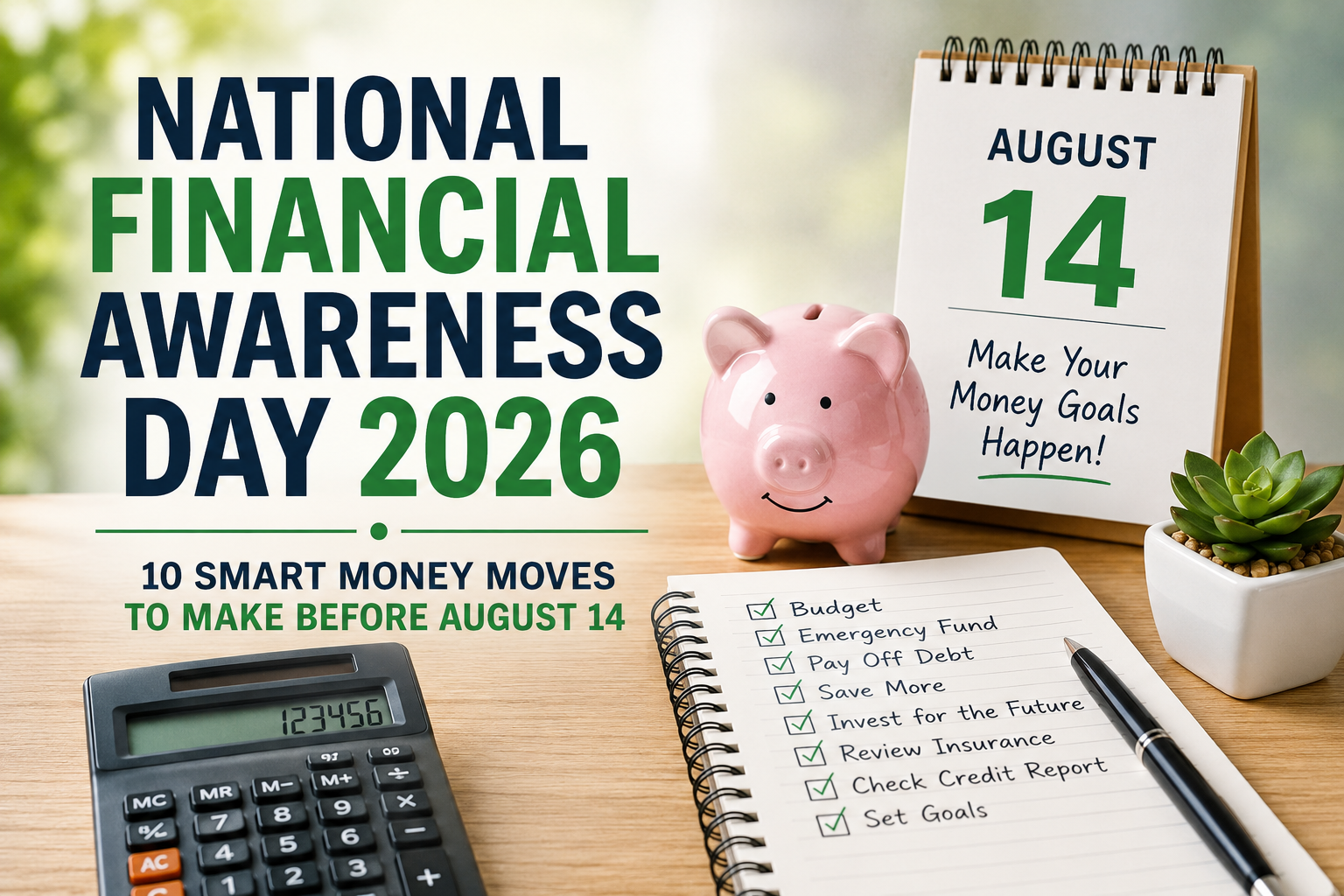
Financial wellness isn’t built overnight. It’s the result of small, consistent decisions that help you spend wisely, save regularly, and prepare for the unexpected. That’s why National Financial Awareness Day 2026, observed on August 14, is the perfect opportunity to take a closer look at your financial habits and make meaningful improvements.
You don’t need a six-figure income or a financial advisor to strengthen your finances. In fact, many of the most effective money-saving strategies take less than an hour to implement and can benefit you for years to come. Whether you’re trying to build an emergency fund, pay off debt, improve your credit score, or simply stretch your monthly budget, a few smart financial moves today can make a big difference tomorrow.
Many Americans continue to face rising housing costs, higher grocery bills, and increased insurance premiums. At the same time, savings account interest rates remain attractive compared to recent years, making this an excellent time to review your financial plan. National Financial Awareness Day serves as a reminder that financial health isn’t just about earning more—it’s about making smarter decisions with the money you already have.
In this guide, you’ll discover 10 practical money moves to make before August 14, along with simple tips that can help improve your financial future. None of these strategies require complicated investments or major lifestyle changes. Instead, they’re realistic actions almost anyone can take, regardless of income level.
Whether you’re just starting your financial journey or looking to fine-tune your existing plan, these ideas can help you build better habits and keep more money in your pocket. Financial Awareness Day is the perfect reminder to review your finances and make smarter money decisions before the end of the year.
Why Financial Awareness Day Matters
Financial awareness goes beyond balancing a checkbook or paying bills on time. It means understanding how your daily financial decisions affect your long-term goals.
Taking time each year to review your finances can help you:
- Identify unnecessary spending.
- Increase your monthly savings.
- Reduce high-interest debt.
- Improve your credit health.
- Prepare for emergencies.
- Build long-term financial security.
Think of National Financial Awareness Day as an annual financial checkup. Just as regular health checkups help prevent future problems, reviewing your finances now can help you avoid costly mistakes later.
1. Review Your Monthly Budget
The first step toward financial improvement is understanding where your money goes each month.
Many people underestimate how much they spend on small recurring purchases. Coffee, food delivery, subscription services, and impulse shopping can quietly consume hundreds of dollars every month.
Start by reviewing your bank and credit card statements from the past two or three months.
Ask yourself:
- Which expenses are necessary?
- Which subscriptions do I rarely use?
- Are there categories where I’m consistently overspending?
- Can I reduce any recurring bills?
Creating a realistic budget doesn’t mean eliminating everything you enjoy. Instead, it helps you spend intentionally while making room for future goals.
Quick Tip
Try following the 50/30/20 rule:
- 50% for needs
- 30% for wants
- 20% for savings and debt repayment
If those percentages don’t fit your situation, adjust them to match your income and priorities.
2. Build or Increase Your Emergency Fund
Unexpected expenses happen to everyone.
A medical bill, car repair, job loss, or home maintenance issue can quickly become a financial crisis if you don’t have emergency savings.
Even if you can’t save several months of living expenses immediately, every dollar you set aside today helps reduce future stress.
Financial experts commonly recommend building an emergency fund that covers three to six months of essential expenses, but don’t let that goal discourage you from starting small.
Easy Ways to Build Your Fund
- Set up automatic weekly transfers.
- Save tax refunds instead of spending them.
- Deposit work bonuses into savings.
- Keep unexpected cash gifts separate from everyday spending.
Consistency matters more than the amount.
Saving $25 every week adds up to more than $1,300 over the course of a year.
3. Check Your Credit Report
Your credit score affects much more than credit cards.
It can influence:
- Mortgage rates
- Auto loan approvals
- Apartment applications
- Insurance premiums
- Utility deposits
Reviewing your credit report regularly helps you identify errors before they become expensive problems.
Look for:
- Incorrect personal information
- Accounts you don’t recognize
- Late payments reported incorrectly
- Fraudulent activity
- Outdated balances
Correcting mistakes early can improve your credit profile and potentially save thousands of dollars over time.
4. Pay Down High-Interest Debt
Credit card interest can make even small balances expensive if they’re carried month after month.
If you’re paying interest rates above 20%, reducing those balances should be one of your highest financial priorities.
Two popular repayment strategies include:
The Avalanche Method
Pay off the highest-interest debt first while making minimum payments on the rest.
The Snowball Method
Pay off the smallest balance first to build momentum and stay motivated.
Neither method is perfect for everyone, but both can help you eliminate debt faster than making only minimum payments.
5. Increase Your Retirement Contributions
Retirement may seem far away, but every additional contribution has more time to grow through compound interest.
If your employer offers a 401(k) match, contribute enough to receive the full match whenever possible. Otherwise, you’re essentially leaving part of your compensation behind.
Even increasing your contribution by just 1% can make a meaningful difference over several decades.
If you don’t have access to an employer-sponsored retirement plan, consider whether an Individual Retirement Account (IRA) fits your financial goals.
Remember that retirement planning isn’t about timing the market—it’s about investing consistently over time.
Helpful Financial Habits to Start Today
While the five strategies above have the biggest long-term impact, smaller habits can also strengthen your finances.
Consider these simple improvements:
- Review your bank account weekly.
- Pay bills before the due date.
- Track your savings progress monthly.
- Avoid impulse purchases by waiting 24 hours before buying.
- Compare prices before making major purchases.
- Keep important financial documents organized.
Small habits often lead to lasting financial success because they’re easier to maintain over time.
Mid-Year Financial Checklist
Since National Financial Awareness Day falls in August, it’s also a great opportunity to perform a mid-year financial review.
Ask yourself:
- Am I saving enough each month?
- Have I reduced any debt this year?
- Is my emergency fund growing?
- Have my financial goals changed?
- Am I prepared for holiday spending later this year?
Answering these questions honestly can help you make adjustments before the end of the year instead of waiting until January.
6. Review Your Insurance Coverage
Insurance is one of those expenses that many people pay automatically without reviewing. However, your financial situation, family size, and lifestyle may have changed since you first purchased your policy.
Take time to review your:
- Auto insurance
- Homeowners or renters insurance
- Health insurance
- Life insurance
- Disability insurance
You may discover you’re paying for coverage you no longer need—or that you’re underinsured in important areas.
Money-Saving Tips
- Compare quotes from multiple insurers once a year.
- Bundle home and auto policies if it lowers your premium.
- Ask about safe-driver, multi-policy, or loyalty discounts.
- Increase your deductible only if you have enough emergency savings to cover it.
Even a small reduction in your monthly premium can save hundreds of dollars each year.
7. Move Your Savings to a High-Yield Savings Account
If your savings are sitting in a traditional checking or savings account earning almost no interest, your money may not be working as hard as it could.
Many online banks continue to offer significantly higher interest rates than traditional brick-and-mortar banks.
While rates change over time, earning more interest on money you’re already saving is one of the easiest financial improvements you can make.
Benefits of a High-Yield Savings Account
- Higher interest earnings
- FDIC or NCUA protection (where applicable)
- Easy online access
- Automatic transfers
- No investment risk to your principal
Compare annual percentage yields (APYs), fees, and minimum balance requirements before opening a new account.
8. Cancel Subscriptions You No Longer Use
Subscription services are convenient, but they can quietly drain your budget.
Streaming platforms, meal kits, fitness apps, cloud storage, software subscriptions, and monthly memberships often continue renewing long after you’ve stopped using them.
Spend 20 minutes reviewing your recurring charges.
Ask yourself:
- Have I used this service in the last month?
- Would I miss it if I canceled?
- Is there a free alternative?
Even canceling two or three subscriptions could save several hundred dollars per year.
Tip
Set a reminder every six months to review recurring charges and eliminate anything that no longer provides value.
9. Protect Yourself From Financial Scams
Financial scams continue to evolve, targeting consumers through email, text messages, phone calls, and social media.
Scammers often pretend to represent:
- Banks
- Government agencies
- Delivery companies
- Utility providers
- Investment firms
Before clicking any links or providing personal information, verify that the request is legitimate.
Ways to Stay Safe
- Enable two-factor authentication on financial accounts.
- Use strong, unique passwords.
- Never share verification codes.
- Monitor bank and credit card activity regularly.
- Be cautious of urgent requests demanding immediate payment.
Protecting your finances is just as important as growing your savings.
10. Set Financial Goals for the Rest of 2026
National Financial Awareness Day isn’t just about reviewing your finances—it’s about planning for the future.
Take a few minutes to write down three financial goals you want to accomplish before the end of the year.
Examples include:
- Save an additional $1,000.
- Pay off one credit card.
- Increase retirement contributions.
- Build a three-month emergency fund.
- Improve your credit score.
- Create a holiday spending budget.
Writing down your goals makes them more concrete and easier to track.
SMART Goal Example
Instead of saying:
“I want to save more money.”
Try:
“I will save $100 every paycheck until December 31.”
Specific goals are easier to measure and achieve.
Simple Financial Habits That Make a Big Difference
Financial success isn’t about making one perfect decision—it’s about consistently making good ones.
Here are a few habits worth building:
- Review your spending every week.
- Save before you spend.
- Avoid carrying high-interest credit card balances.
- Compare prices before major purchases.
- Review insurance annually.
- Increase retirement contributions whenever your income grows.
- Keep learning about personal finance.
Small improvements today often create significant financial benefits in the future.
Frequently Asked Questions
What is National Financial Awareness Day?
National Financial Awareness Day is observed annually on August 14 and encourages people to review their finances, improve money management habits, and make informed financial decisions.
Why is National Financial Awareness Day important?
It serves as a reminder to evaluate your budget, savings, debt, insurance coverage, retirement planning, and overall financial health before small issues become larger problems.
What’s the easiest financial improvement to make?
For many people, reviewing monthly expenses and canceling unused subscriptions provides one of the quickest ways to free up extra money.
How much should I keep in an emergency fund?
Many financial professionals recommend saving enough to cover three to six months of essential living expenses, though starting with even a small emergency fund is better than having none.
How often should I review my finances?
A quick monthly review and a more comprehensive annual financial checkup can help you stay on track with your goals.
Final Thoughts
National Financial Awareness Day 2026 is more than just a date on the calendar—it’s an opportunity to strengthen your financial future.
Whether you begin by creating a budget, increasing your savings, reviewing your insurance, or paying down debt, every positive financial decision moves you closer to long-term security.
You don’t need to overhaul your finances overnight. Instead, focus on making one or two meaningful improvements and build from there. Over time, those small actions can lead to greater financial confidence, reduced stress, and more opportunities to achieve your personal goals.
If there’s one takeaway from this guide, it’s this: the best time to improve your financial future is today.
Related Articles
Continue improving your financial health with these helpful guides:
- 12 Things You Should Never Pay Full Price For
- Equifax Settlement 2026: Claim Up to $600 by September 1
- YouTube TV Settlement 2026: How to Claim an Estimated $92 Cash Payment
- Comcast Data Breach Settlement 2026: Claim Up to $10,000
External Resources
For more information about financial education and consumer protection, visit:
- Consumer Financial Protection Bureau (CFPB): https://www.consumerfinance.gov/
- Federal Trade Commission Consumer Advice: https://consumer.ftc.gov/
- FDIC Money Smart Program: https://www.fdic.gov/resources/consumers/money-smart/
Leave a Reply