Category: Money-Saving Tips

  • iPhone Duo vs. iPhone 18 Pro: Which One Should You Buy—and Is Apple Upgrade Worth It?

    iPhone Duo vs. iPhone 18 Pro: Which One Should You Buy—and Is Apple Upgrade Worth It?

    Apple has officially entered the foldable phone market. The company’s first folding iPhone is called the iPhone Duo, not the iPhone 18 Fold, and it starts at an eye-opening $1,999.

    Alongside the iPhone Duo, Apple introduced the iPhone 18 Pro starting at $1,199 and the iPhone 18 Pro Max starting at $1,299. That leaves shoppers with a difficult question: Is Apple’s new foldable phone worth an extra $700 to $800, or is one of the iPhone 18 Pro models the smarter purchase?

    The answer depends on how you use your phone. The iPhone Duo delivers a dramatically larger folding display and new multitasking features, but it is not automatically superior in every category. In fact, the iPhone 18 Pro or Pro Max will offer better value for most buyers.

    Apple is also promoting its new Apple Upgrade lease program, which makes the $1,999 iPhone Duo appear more affordable at $57.99 per month. However, that payment does not work like a traditional 0% installment plan. Customers need to understand what they will—and will not—own before signing up.

    Here is how the iPhone Duo compares with the iPhone 18 Pro and Pro Max, which upgrades actually matter, and how to determine which model is worth your money.

    iPhone Duo vs. iPhone 18 Pro: Quick Answer

    The iPhone 18 Pro is the best overall choice for most buyers. It includes the same powerful A20 Pro chip as the iPhone Duo, a more advanced Pro camera system, Face ID, excellent battery life, and a lower $1,199 starting price.

    Choose the iPhone 18 Pro Max if battery life and a larger traditional display are your biggest priorities. It costs only $100 more than the Pro and delivers up to 45 hours of video playback.

    Consider the iPhone Duo only if you will regularly use its 7.6-inch folding display for multitasking, reading, gaming, videos, work, or creative projects. Its design is genuinely different, but the $1,999 price is difficult to justify if you mostly use your phone for texting, social media, photos, shopping, and calls.

    The iPhone Duo is exciting. The iPhone 18 Pro is practical. For a budget-conscious shopper, that difference matters.

    iPhone Duo, iPhone 18 Pro, and Pro Max Price Comparison

    Apple increased the starting prices of its Pro models this year, but the iPhone Duo still sits in a much higher price category.

    ModelStarting price24-month purchase paymentApple Upgrade lease
    iPhone 18 Pro$1,199$49.95 per monthFrom $34.99 per month
    iPhone 18 Pro Max$1,299$54.12 per monthVaries by configuration
    iPhone Duo$1,999$83.29 per monthFrom $57.99 per month

    Prices shown are before applicable taxes, accessories, wireless service, and optional protection plans. Apple Upgrade pricing may also change based on the lease length, storage capacity, trade-in credit, and eligibility.

    The iPhone Duo costs $800 more than the iPhone 18 Pro and $700 more than the Pro Max before taxes. That is enough money to purchase an Apple Watch, AirPods, an iPad, or several years of cellular service.

    The monthly lease price makes the gap look smaller, but shoppers should not compare a lease payment directly with a purchase payment. At the end of a regular financing plan, you own the phone. With Apple Upgrade, you may have to return it, start another lease, or pay an additional amount to keep it.

    We will examine the full Apple Upgrade math later in this guide.

    What Is the iPhone Duo?

    The iPhone Duo is Apple’s first foldable iPhone. When closed, it has a 5.4-inch outer display designed for regular one-handed phone use. Opening the device reveals a 7.6-inch inner display, which Apple says is 50% larger than the display on the iPhone 18 Pro Max.

    Both screens are Super Retina XDR displays with ProMotion, Always-On functionality, and up to 3,000 nits of peak outdoor brightness. The inner screen also has a nano-texture finish intended to reduce glare, reflections, and the visibility of the fold crease.

    The Duo is approximately passport-sized when closed. When opened, it provides an iPad-like workspace that can still fit in a pocket.

    According to Apple’s official iPhone Duo announcement, preorders begin October 16, 2026, and availability begins October 23. The phone comes in Star White and Night Sky, with 256GB, 512GB, 1TB, and 2TB storage options.

    What Is Actually Better About the iPhone Duo?

    The iPhone Duo’s biggest advantage is not processing speed. The Duo and both iPhone 18 Pro models use the same A20 Pro chip. What makes the Duo different is how its larger screen changes the way apps can be used.

    A Much Larger Display That Still Fits in Your Pocket

    The 7.6-inch inner screen is the largest display Apple has ever put in an iPhone. It provides more room for reading websites, editing documents, viewing photos, watching videos, using maps, and playing games.

    The outer display can handle quick everyday tasks without requiring users to unfold the phone. When more space is needed, the inner display turns the device into something closer to a small tablet.

    That flexibility is the Duo’s main selling point. However, buyers should consider whether they will actually open the phone frequently enough to justify paying $1,999.

    Two Apps Can Run Side by Side

    The iPhone Duo introduces Split View multitasking on an iPhone. Users can open two apps side by side, quickly replace one app, or run two windows from the same app.

    Practical examples include:

    • Comparing prices on two shopping websites
    • Watching a video while responding to messages
    • Viewing an email while checking a calendar
    • Participating in a Zoom call while viewing a shared document
    • Following directions while checking travel information
    • Talking to Siri AI while keeping the original content visible
    • Opening two Safari windows for comparison shopping

    Users can also save frequently used app pairs and reopen them together. For people who routinely use their phones for work, school, travel, or content creation, this may be the Duo’s most valuable improvement.

    For someone who usually uses one app at a time, however, the extra display may be more impressive than necessary.

    Apple Pencil Support

    Apple says the iPhone Duo will support the USB-C Apple Pencil later this year. Users will be able to take notes, sketch, sign forms, and mark up documents on either display.

    Apple Pencil support could make the Duo useful for students, designers, business travelers, and people who currently carry both an iPhone and a small tablet. However, the Apple Pencil is not included, and the Duo does not provide built-in storage for it.

    New Ways to Take Photos and Make Video Calls

    The folding design allows users to prop up the iPhone Duo without a tripod. This could be useful for group photos, FaceTime calls, videos, and hands-free viewing.

    The outer display can also show a live camera preview, allowing the person being photographed to check the framing and pose before the picture is taken. Users can take higher-resolution selfies with the rear cameras while viewing themselves on the outer screen.

    A feature called Kid Cue can display animated Peanuts characters on the outer screen to encourage children to look toward the camera. This is clever, although it is unlikely to justify the premium price by itself.

    Where the iPhone 18 Pro Is Better

    The iPhone Duo is Apple’s most unusual new phone, but the iPhone 18 Pro is the more balanced device. It is less expensive, easier to carry, and built around features that most people use every day.

    The Pro Models Have a More Advanced Camera System

    The iPhone Duo includes a 48MP Fusion Main camera with an optical-quality 2x option and a 48MP Ultra Wide camera. That is a strong camera system, but the iPhone 18 Pro models are designed for buyers who prioritize photography and video.

    The iPhone 18 Pro introduces Apple’s new variable-aperture 48MP Fusion Main camera. It can automatically change its aperture based on lighting and depth of field. Users can also manually adjust aperture, shutter speed, white balance, and exposure tools through the new Pro controls.

    That provides several real-world advantages:

    • More light can enter the camera in dark conditions
    • Group photos can keep more people in focus
    • Portraits can achieve more natural background separation
    • Photographers get greater manual control
    • Videos can receive Cinematic effects after recording
    • Apple Reference Image can preserve a verifiable, unedited version of a photo

    If the camera is your main reason for upgrading, the iPhone 18 Pro or Pro Max is the safer choice.

    Face ID vs. Touch ID

    The iPhone 18 Pro and Pro Max retain Face ID. The folding iPhone Duo uses Touch ID built into the side button instead.

    Touch ID may be convenient when the phone is folded or positioned on a table, but buyers who have become accustomed to Face ID may consider its absence a downgrade. The Duo can also be unlocked with a paired Apple Watch, but that does not fully replace Face ID for every user.

    Better Battery Life on the Pro Max

    Apple rates the iPhone 18 Pro for up to 36 hours of video playback and the iPhone 18 Pro Max for up to 45 hours.

    Battery estimates for the iPhone Duo depend on which display is being used:

    • Up to 31 hours of video playback using the inner display
    • Up to 44 hours using the outer display
    • Up to 24 hours of mixed use per charge

    The Duo has a battery on each side of the fold, but powering two displays requires more energy. Anyone who wants the longest possible battery life without managing how the phone is being used should strongly consider the iPhone 18 Pro Max.

    A Traditional Phone Has Fewer Durability Questions

    Apple built the iPhone Duo with a Grade 5 titanium frame, Ceramic Shield protection, a reinforced inner display, and an IP68 rating for water and dust resistance. The hinge contains more than 100 components and is designed to support the display when fully opened.

    Those specifications are reassuring, but the Duo is still a first-generation foldable device. It has a flexible inner screen and a mechanical hinge—two components that do not exist on a traditional iPhone.

    Until the phone has been used in the real world for several months, shoppers will not know how the inner screen, hinge, and protective coating handle repeated folding, drops, dust, fingernails, and everyday wear.

    At $1,999, buying the first generation also carries more financial risk. Buyers considering the Duo should budget for protection rather than assuming its premium price makes it immune to damage.

    What Is New in the iPhone 18 Pro Models?

    The iPhone 18 Pro and Pro Max may look more familiar than the Duo, but they received several meaningful upgrades.

    Both models include:

    • The new 2-nanometer A20 Pro chip
    • A 6-core CPU and 7-core GPU
    • Up to 40% faster graphics performance than A19 Pro
    • Double the on-device AI processing power
    • A redesigned vapor chamber for better heat management
    • The variable-aperture 48MP Fusion Main camera
    • Faster wired charging
    • Wi-Fi 7 and Bluetooth 6
    • Apple’s new C2 cellular modem
    • A smaller Dynamic Island that can display three Live Activities
    • iOS 27, Apple Intelligence, and the new Siri AI

    Apple says the iPhone 18 Pro can charge to 50% in approximately 15 minutes. The company also says its redesigned thermal system can deliver up to 40% better sustained performance than the previous generation.

    These improvements will matter most to gamers, photographers, video creators, and people who plan to keep their phones for several years. For lighter users, they may not be enough to justify replacing a recent iPhone.

    Which New iPhone Should You Buy?

    Buy the iPhone 18 Pro If You Want the Best Overall Value

    The iPhone 18 Pro is the best choice for most people who want a premium new iPhone. It has the same A20 Pro processor as the Duo, a better Pro-focused camera system, Face ID, strong battery life, and a significantly lower price.

    It is still expensive at $1,199, but it avoids the extra cost and first-generation risks of the foldable design.

    Buy the iPhone 18 Pro Max If Battery Life Is Most Important

    The iPhone 18 Pro Max is the better choice for frequent travelers, heavy users, mobile gamers, and anyone who dislikes charging during the day.

    It costs only $100 more than the Pro while providing a larger screen and Apple’s longest advertised iPhone battery life. For many shoppers, that $100 upgrade will deliver more practical value than spending another $700 for the Duo.

    Buy the iPhone Duo If You Will Use It Like a Phone and a Small Tablet

    The iPhone Duo makes the most sense for people who regularly multitask, read large documents, conduct video meetings, edit content, compare information, or use a phone as their primary computing device.

    It may also be worthwhile if it allows someone to carry one device instead of buying both a premium iPhone and a small iPad.

    The Duo is much harder to recommend if its main appeal is simply that it is new. Paying $1,999 for a phone that will mostly remain folded defeats the purpose of its most expensive feature.

    Keep Your Current iPhone If It Still Works Well

    Owners of an iPhone 16 or iPhone 17 should not assume they need to upgrade. Many iOS 27 and Apple Intelligence features will be available on other supported devices, although performance and feature availability may vary.

    A new folding design, faster processor, or improved camera can be exciting without being financially necessary. Keeping a working phone for one additional year is often the biggest iPhone savings available.

    The remaining question is whether Apple Upgrade can make one of these new models a smarter purchase—or whether the low monthly lease price simply makes an expensive phone look more affordable.

    If you are deciding whether to replace a recent model, read our complete guide on whether you should buy an iPhone 17 now or wait for the iPhone 18 before spending money on an upgrade.

    Is the Apple Upgrade Lease Program Worth It?

    Apple Upgrade is a hardware leasing program offered through Klarna. It is available to eligible U.S. customers and includes 12- and 24-month lease options for iPhones.

    The word lease is important. Apple Upgrade is not a traditional installment plan that automatically gives you ownership after the final monthly payment.

    At the end of the initial lease term, you can:

    • Return the iPhone and leave the program
    • Return it and apply for a new lease on another device
    • Make a one-time purchase payment to keep it

    If you upgrade, you must return the existing phone and enter into a new lease, subject to approval. If you want to keep the phone, you must pay the purchase fee specified in your lease agreement.

    That makes Apple Upgrade more similar to leasing a car than financing a phone.

    How Much Does It Cost to Lease an iPhone Duo?

    Apple advertises the 256GB iPhone Duo at $57.99 per month for 24 months through Apple Upgrade.

    Here is the basic math:

    $57.99 × 24 months = $1,391.76

    That is approximately $607 less than the phone’s $1,999 retail price. However, after paying $1,391.76, you do not automatically own the iPhone Duo. You must return it, begin a new lease, or pay the remaining purchase fee.

    By comparison, Apple lists a regular 24-month purchase payment of $83.29 per month:

    $83.29 × 24 months = $1,998.96

    The regular payment is approximately $25.30 more per month, but after 24 payments, the phone is yours. You can keep it, trade it in, sell it privately, or give it to a family member.

    The lease offers a lower monthly payment because you are paying primarily for two years of use—not full ownership.

    Taxes, AppleCare, accessories, carrier service, storage upgrades, trade-in credits, and other charges may change the final cost.

    iPhone 18 Pro Lease vs. Purchase

    Apple advertises the 256GB iPhone 18 Pro lease starting at $34.99 per month for 24 months.

    $34.99 × 24 months = $839.76

    The regular purchase price is $1,199, or approximately $49.95 per month for 24 months.

    $49.95 × 24 months = $1,198.80

    The lease saves about $359 in monthly payments during the initial two-year term. But once again, the customer does not own the phone unless the required purchase fee is paid.

    The lower payment can be useful for someone who wants a new phone every year or two and does not care about ownership. It is not necessarily a discount on the phone itself.

    When Apple Upgrade May Be Worth It

    Apple Upgrade can make sense for a specific type of customer.

    You Upgrade Every Year or Two

    If you always trade in your iPhone when the next model arrives, long-term ownership may not be important to you. A lease can provide predictable monthly payments and remove the work of selling your old phone.

    However, upgrading is not automatic or guaranteed. It requires returning your current device, applying for a new lease, and receiving approval.

    You Want a Lower Monthly Payment

    The iPhone Duo’s $57.99 advertised lease payment is much easier to fit into a monthly budget than an $83.29 purchase payment.

    That lower monthly amount could be helpful if you need the large folding display for work but do not want to pay nearly $2,000 upfront. Just remember that reducing the monthly payment does not reduce the phone’s true cost of ownership if you later decide to keep it.

    You Prefer Convenience Over Maximum Savings

    Apple Upgrade allows customers to manage lease information and payments through Klarna. At the end of the term, the phone can be returned instead of sold privately.

    For some buyers, that convenience may be worth giving up the phone’s resale or trade-in value.

    You Are Unsure About Keeping a Foldable Phone Long Term

    A lease may limit the commitment for someone who wants to try the first-generation iPhone Duo but is uncertain about using a foldable device for several years.

    Even so, customers should carefully review early-termination, damage, and purchase fees. A lease is not a risk-free trial.

    When Apple Upgrade Is Probably Not Worth It

    Most budget-conscious consumers will be better served by purchasing their iPhone and keeping it for several years.

    You Normally Keep a Phone for Three Years or Longer

    Buying becomes more attractive the longer you keep a phone. Once a financed phone is paid off, the device remains yours and the monthly hardware payment ends.

    A customer who repeatedly leases will continue making payments as each new agreement begins. That can turn an occasional phone purchase into a permanent monthly expense.

    You Want to Own or Resell Your Phone

    A purchased iPhone retains some value after two or three years. You can trade it in, sell it, or pass it down to another family member.

    With Apple Upgrade, you do not own the phone at the end of the lease unless you make the additional purchase payment. If you return it, you give up any potential resale value.

    You Use a Prepaid Wireless Plan

    Apple requires iPhone lease customers to select AT&T, T-Mobile, or Verizon. Prepaid plans are not eligible, although leased iPhones are unlocked.

    That restriction matters because an inexpensive prepaid plan can save more money over time than the lease saves on the phone payment.

    For example, saving $25 per month on wireless service equals $600 over two years. Choosing a more expensive carrier plan solely to qualify for a lower device payment could eliminate the apparent savings.

    You Are Concerned About Damage Fees

    Insurance is not included in the advertised Apple Upgrade payment. Customers may face charges if a leased phone is lost, stolen, or returned in unacceptable condition.

    This is especially important with the iPhone Duo. Its folding screen and complex hinge may make AppleCare particularly valuable, but adding protection increases the total monthly cost.

    Before leasing, calculate the payment with AppleCare—not just the advertised starting price.

    You May Need to Cancel Early

    Apple warns that ending a lease before the initial term expires may result in substantial fees. A customer who changes carriers, experiences financial difficulties, or simply dislikes the device may not be able to walk away without an additional cost.

    If no action is taken at the end of the initial term, the agreement may convert to a month-to-month lease for up to six months, potentially at a higher monthly payment. After that extension period, the customer may be charged the purchase fee.

    Review the complete Apple Upgrade terms before enrolling.

    Apple Upgrade vs. Apple Card Financing vs. Carrier Deals

    The best payment method depends on whether you value ownership, flexibility, or the lowest initial monthly payment.

    Payment optionWhat happens at the end?Best for
    Apple Upgrade leaseReturn, upgrade, or pay to purchaseFrequent upgraders
    Apple Card Monthly InstallmentsYou own the phoneBuyers who want 0% financing
    Carrier financingYou own the phone after paymentsCustomers staying with one carrier
    Pay in fullYou own it immediatelyLong-term users avoiding monthly debt
    Buy an older modelYou own it at a lower priceValue-focused shoppers

    Apple Card Monthly Installments offer 0% APR for eligible purchases, subject to approval and other requirements. Unlike Apple Upgrade, the installment plan is designed to end in ownership.

    Carrier promotions can offer larger discounts, but they frequently distribute credits over several years. Canceling service or switching carriers early may cause the remaining credits to stop. Always compare the total service cost—not only the advertised “free phone” or trade-in offer.

    Apple says qualifying customers can receive $175 to $885 through Apple Trade In when trading an iPhone 13 or newer. Select carrier offers may provide up to $1,200 in credits with an eligible trade-in, but restrictions apply.

    How to Decide If the iPhone Duo Is Worth $1,999

    Before ordering the iPhone Duo, ask yourself these five questions.

    1. Will I Open the Phone Several Times Every Day?

    If the answer is no, the iPhone 18 Pro is probably a better purchase. The Duo’s value comes from its folding screen, not from having a faster processor than the Pro models.

    2. Will the Larger Screen Replace Another Device?

    The price becomes easier to justify if the Duo can replace both a premium phone and a small tablet. If you will continue carrying an iPad or laptop, the Duo may add expense without eliminating another device.

    3. Do I Need the Best Camera or the Biggest Display?

    Choose the iPhone 18 Pro for advanced camera controls. Choose the Pro Max for traditional large-screen use and maximum battery life. Choose the Duo for multitasking and the largest available iPhone display.

    4. Am I Comfortable Buying a First-Generation Product?

    Apple may have invested heavily in the Duo’s durability, but no laboratory specification can replace years of real-world ownership data.

    Waiting for the second generation could bring a lower price, improved hinge, stronger display, better cameras, or longer battery life. It may also allow more third-party apps to optimize their interfaces for the folding screen.

    5. Could I Keep My Current Phone for Another Year?

    Waiting is often the smartest financial option. It gives Apple time to improve the Duo and allows shoppers to see real repair data, long-term reviews, and future promotions.

    If your existing phone still has good battery life, receives security updates, and handles the apps you use, an upgrade may be a want rather than a need.

    How to Save Money on an iPhone 18 Pro or iPhone Duo

    If you decide to purchase one of the new models, use these strategies to avoid paying more than necessary.

    Check the Value of Your Existing Phone

    Compare Apple’s trade-in offer with carrier promotions and private-sale prices. Apple Trade In is convenient, but selling a device independently may produce a higher return.

    Do not trade in a phone that still has an unpaid balance unless you understand how the remaining payments will be handled.

    Compare the Total Carrier Cost

    A large phone credit can be misleading if it requires a more expensive unlimited plan. Multiply the monthly service charge by the entire promotional period and compare it with your current plan.

    Saving $1,000 on a phone is not a bargain if the required plan costs $40 more per month for three years.

    Avoid Paying for Storage You Do Not Need

    All three new models begin with 256GB of storage. Many users will not need 512GB, 1TB, or 2TB—especially if they already use cloud storage.

    Check your current iPhone under Settings > General > iPhone Storage before selecting a capacity. If you have used far less than 256GB, upgrading the storage is probably unnecessary.

    Do Not Forget the Cost of Accessories

    A premium phone may also require a case, screen protection, charging equipment, and AppleCare.

    Apple’s iPhone Duo Case costs $79, while the Duo Folio with Kickstand costs $129. Those expenses should be included when comparing the actual cost of each model.

    Wait for Real-World iPhone Duo Reviews

    The iPhone 18 Pro and Pro Max arrive on September 18, while the iPhone Duo will not be available until October 23.

    There is no financial benefit to rushing into a $1,999 preorder. Waiting for independent durability, battery, camera, and repairability testing is especially sensible for a first-generation foldable phone.

    Should You Upgrade From an Older iPhone?

    iPhone 17 or 17 Pro Owners

    Most iPhone 17 owners should keep their current phones. The A20 Pro, improved camera, and battery upgrades are meaningful, but generally not worth replacing a one-year-old device.

    The Duo may be tempting because it offers a completely different design, but it is still a costly luxury upgrade.

    iPhone 16 Owners

    Upgrading may make sense for heavy users who want the new camera controls, significantly improved battery life, or folding display. Everyone else can probably wait another year.

    iPhone 15 Owners

    The iPhone 18 Pro offers a more noticeable improvement in processing power, AI capability, battery life, display features, and camera controls. Whether it is worth upgrading will depend on your phone’s battery health and trade-in value.

    iPhone 14 or Older Owners

    These users are most likely to notice a major difference. Faster performance, improved cameras, longer battery life, newer connectivity, and current Apple Intelligence features can make the iPhone 18 Pro a reasonable long-term upgrade.

    Even then, the $1,999 Duo is not automatically the best choice. A discounted older model or standard iPhone may deliver far better value.

    Frequently Asked Questions

    Is the iPhone 18 Fold Real?

    Apple’s folding iPhone is real, but its official name is iPhone Duo, not iPhone 18 Fold. Apple announced it on September 9, 2026.

    How Much Does the iPhone Duo Cost?

    The iPhone Duo starts at $1,999 for 256GB. Apple also offers 512GB, 1TB, and 2TB configurations. The advertised 24-month purchase payment starts at $83.29 per month.

    When Can I Buy the iPhone Duo?

    Preorders begin October 16, 2026, and the phone becomes available on October 23, according to Apple’s official announcement.

    Is the iPhone Duo Better Than the iPhone 18 Pro Max?

    The Duo is better for large-screen multitasking, portability, Apple Pencil support, and foldable camera features. The iPhone 18 Pro Max offers better value, longer straightforward battery life, Face ID, and a more advanced Pro camera experience.

    Neither is universally better. The right choice depends on which features you will actually use.

    Does Apple Upgrade Mean I Own the Phone After 24 Months?

    No. Apple Upgrade is a lease, not a purchase loan. At the end of the term, you must return the device, upgrade through a new lease, or pay the specified purchase fee to own it.

    Does Apple Upgrade Require a Credit Check?

    Yes. Klarna conducts a soft credit inquiry when you apply. Apple says the inquiry itself will not affect your credit score, but approval is still based on eligibility and creditworthiness.

    Can I Use Apple Upgrade With a Prepaid Carrier?

    No. iPhone leases require an eligible AT&T, T-Mobile, or Verizon plan. Prepaid carrier plans do not qualify. The leased phone is unlocked, however, allowing customers to switch among eligible carriers subject to their terms.

    Is AppleCare Included With Apple Upgrade?

    No. Insurance is not included in the advertised lease payment. AppleCare can be added separately. Without adequate protection, customers could face charges for a lost, stolen, or damaged device.

    Should I Buy the First iPhone Duo?

    Most consumers should wait for long-term reviews or a second-generation model. Buy the first iPhone Duo only if its folding display will provide enough practical value to justify the $1,999 price and the additional first-generation risk.

    Final Verdict: Which iPhone Is the Best Buy?

    The iPhone 18 Pro is the best overall purchase for most people. It delivers the new A20 Pro chip, advanced camera features, Siri AI, improved battery life, and premium performance without the Duo’s $800 price premium.

    The iPhone 18 Pro Max is the better upgrade for shoppers who want a larger conventional screen and the longest battery life. At $1,299, it is also significantly less expensive than the Duo.

    The iPhone Duo is best for a smaller group of buyers who will regularly use its folding display for multitasking, work, reading, video, gaming, drawing, or replacing a small tablet. It is an innovative product, but innovation alone does not make it a good value.

    Apple Upgrade can reduce the initial monthly payment, but it should not be mistaken for a discount. After making 24 lease payments, you will not own the phone unless you pay the additional purchase fee.

    For customers who keep their phones for three years or longer, purchasing with 0% financing, using a carefully evaluated carrier promotion, or paying upfront will usually provide better long-term value. For customers who replace their iPhones every year or two and prefer convenience over ownership, the lease may be worth considering.

    The smartest decision is not necessarily buying Apple’s most exciting new phone. It is choosing the least expensive model that will reliably perform the tasks you actually need.

  • LADWP Customers Can Get Free or Discounted Appliances in 2026

    LADWP Customers Can Get Free or Discounted Appliances in 2026

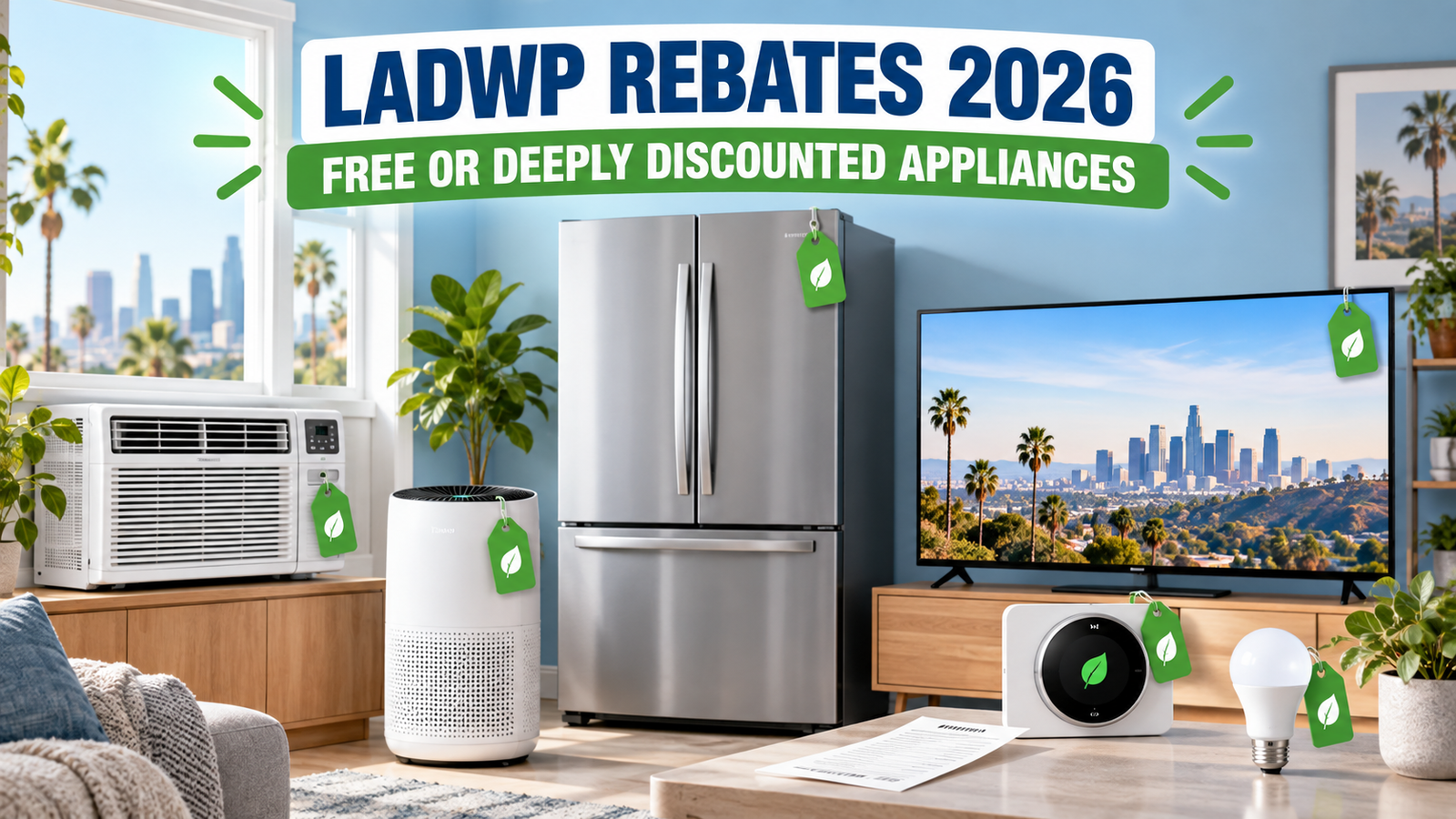
    If you are a Los Angeles Department of Water and Power customer, you may be able to get an air purifier, window air conditioner, smart thermostat, television, refrigerator, or LED light bulbs for free or at a deeply discounted price.

    The LADWP appliance rebates 2026 program helps residential customers purchase energy-efficient products through the LADWP Efficient Product Marketplace. Depending on the product’s current sale price and available rebate, some qualifying items may cost $0 before sales tax. That means eligible customers could pay only the tax—and possibly shipping—for select products.

    These offers are easy to overlook because they are not automatically advertised on your monthly utility bill. Product prices and availability can also change, so LADWP customers should check the marketplace before purchasing the same appliance elsewhere.

    Here is what you need to know about the current rebates, who qualifies, and why some products may be completely free after the rebate.

    Along with utility rebates, staying informed about product and food safety alerts can also protect your household. Read our latest guide to the 2026 egg recall and Salmonella warning.

    What Are the LADWP Appliance Rebates for 2026?

    The LADWP Efficient Product Marketplace is an online shopping and comparison platform that shows energy-efficient products available from participating stores and online retailers. It also displays the LADWP rebate available for each qualifying product.

    The marketplace includes products such as:

    • Air purifiers
    • Window and through-the-wall air conditioners
    • Smart thermostats
    • Televisions
    • Refrigerators
    • ENERGY STAR-certified LED light bulbs

    LADWP does not manufacture or directly sell these products. Instead, the marketplace helps customers locate qualifying products and see available retailer prices and rebate information in one place.

    According to the official LADWP Efficient Product Marketplace, the program is available to qualifying residential electric customers. The products generally must meet ENERGY STAR or California Energy Commission efficiency requirements.

    Can LADWP Customers Really Get Free Appliances?

    Yes, certain products may be free before tax when the product’s eligible purchase price is equal to or lower than the available LADWP rebate.

    For example, if a qualifying air purifier is on sale for $49.99 and the LADWP rebate is $50, the rebate may cover the entire eligible product price. The customer would still be responsible for sales tax and any applicable shipping or additional retailer fees.

    However, not every appliance listed on the marketplace will be free. The final cost depends on several factors:

    • The product’s current retailer price
    • The rebate available for that specific model
    • Whether the product meets LADWP efficiency requirements
    • Whether the customer has already used the rebate allowance
    • Sales tax and shipping charges
    • Product availability at the participating retailer

    LADWP states that a rebate cannot exceed the product’s purchase price. Taxes and shipping costs are not covered. Therefore, even when an appliance is described as “free,” customers should expect to pay at least the applicable sales tax and possibly shipping.

    The safest way to describe the offer is free or nearly free after the LADWP rebate, rather than suggesting that every customer can choose any appliance at no cost.

    Who Qualifies for LADWP Appliance Rebates in 2026?

    To qualify for the standard LADWP appliance rebates, the applicant must have an active LADWP residential electric account when the product is purchased.

    The rebate is issued only to the person listed as the LADWP account holder. This is important for renters or family members whose names are not on the utility account.

    The primary eligibility requirements include:

    • You must be an active LADWP residential electric customer.
    • The LADWP account must be active when you purchase the product.
    • The rebate application must be submitted by the account holder.
    • The product must meet the applicable ENERGY STAR or California efficiency standard.
    • You must stay within the household purchase limit for that product category.
    • You must provide the required purchase receipt and account information.

    Customers do not necessarily have to be enrolled in a low-income program to receive the standard rebates. However, income-qualified customers enrolled in certain LADWP discount programs may qualify for substantially larger air-conditioner rebates through the Cool LA program.

    LADWP Air Purifier Rebate: Up to $50

    LADWP currently offers a $50 rebate on qualifying ENERGY STAR-certified room air cleaners, commonly called air purifiers.

    The program allows up to three qualifying air purifiers per household during a five-year period. Because some smaller air purifiers occasionally sell for approximately $50 or less, this is one of the categories most likely to include products that cost $0 before tax after the rebate.

    Before purchasing an air purifier, confirm that:

    • The specific model is eligible for the LADWP rebate.
    • The product is ENERGY STAR certified.
    • You have not exceeded the three-unit household limit.
    • The retailer and purchase method shown on the marketplace qualify.
    • The rebate is still displayed when you are ready to purchase.

    Do not assume that every air purifier from the same brand qualifies. Eligibility may be based on the exact model number.

    LADWP Air Conditioner Rebate: Up to $125 for a Limited Time

    LADWP is offering increased rebates on qualifying window and through-the-wall room air conditioners as part of its 2026 summer promotion.

    For eligible purchases made from June 1 through September 30, 2026, customers may receive:

    • Up to $75 for qualifying ENERGY STAR 4.2 window air conditioners
    • Up to $125 for qualifying ENERGY STAR 5.0 window air conditioners

    Customers must apply by December 31, 2026 to receive the increased seasonal rebate.

    The standard household limit is two room air conditioners during a ten-year period. Portable air conditioners do not automatically qualify for the standard marketplace rebate, so shoppers must carefully check the product type and eligibility before buying.

    A smaller qualifying window air conditioner may become free or very inexpensive if its sale price is covered by the rebate. Larger or more powerful models will generally still require an out-of-pocket payment.

    Income-Qualified Customers May Receive Up to $275 for an Air Conditioner

    Some customers can receive a much larger air-conditioner rebate through the LADWP Cool LA program.

    Eligible income-qualified customers may receive:

    • Up to $225 for qualifying portable air conditioners and ENERGY STAR 4.2 window or wall air conditioners
    • Up to $275 for qualifying ENERGY STAR 5.0 window or wall air conditioners

    To receive the additional Cool LA rebate, the customer must have an active LADWP electric account enrolled in at least one qualifying discount or medical-assistance program at the time of purchase. Qualifying programs include:

    • EZ-SAVE Program
    • Senior Citizen/Disability Lifeline Rate
    • Life-Support Equipment Discount
    • Physician Certified Allowance Discount

    This additional rebate can make certain air conditioners free before tax, but it is not available to every LADWP customer. Customers receiving only the standard rebate should not expect the full $225 or $275 benefit.

    LADWP Smart Thermostat Rebate: Up to $100

    Qualifying ENERGY STAR-certified smart thermostats are also eligible for an LADWP rebate.

    LADWP normally lists a smart thermostat rebate of up to $75, but the 2026 limited-time summer promotion increases the available rebate to as much as $100 for eligible purchases made between June 1 and September 30, 2026. Applications for the increased rebate must be submitted by December 31, 2026.

    Customers may receive rebates for up to two smart thermostats per household during a five-year period.

    Because popular smart thermostats frequently go on sale, the combination of a retailer discount and LADWP rebate may reduce the product price to $0 before tax. Always confirm the rebate shown for the exact model before completing the purchase.

    LADWP Television Rebate: Up to $25

    Customers purchasing an energy-efficient television may qualify for one of the following rebates:

    • $10 for a qualifying ENERGY STAR television
    • $25 for a television rated ENERGY STAR Most Efficient

    The household limit is two televisions during a five-year period.

    A $10 or $25 rebate will not normally make a new full-size television completely free. However, it can be combined with a qualifying retailer sale price to reduce the final cost. The exact television model must meet the applicable efficiency requirements.

    LADWP Refrigerator Rebate: Up to $75

    LADWP customers may receive:

    • $65 for a qualifying ENERGY STAR refrigerator
    • $75 for an ENERGY STAR Most Efficient refrigerator

    The refrigerator must have a capacity of at least 15 cubic feet. The limit is one refrigerator per household during a five-year period.

    Because refrigerators cost considerably more than the available rebate, most qualifying refrigerators will not be completely free. However, the rebate can still provide meaningful savings—especially when combined with a retailer sale or clearance price.

    Customers should compare the complete purchase price, delivery charges, installation fees, and old-appliance removal fees before deciding which refrigerator offers the best overall value.

    LADWP LED Light Bulb Rebate

    LADWP also offers a $2.50 rebate per qualifying LED lighting product. Eligible products must be ENERGY STAR certified or meet California Energy Commission Title 20 or JA8 requirements.

    Customers may receive rebates for up to 20 qualifying lighting products per household each year. The rebate cannot exceed the eligible purchase price.

    When qualifying LED bulbs are priced at $2.50 or less, the LADWP rebate may cover the entire product price before tax. Multipacks and specialty bulbs may cost more, but the rebate can still significantly reduce the final price.

    Check the exact bulb or package listed on the LADWP marketplace because not every LED light bulb qualifies.

    Current LADWP Appliance Rebate Amounts

    The following rebates are available as of September 2026:

    ProductAvailable LADWP rebateHousehold limit
    Air purifier$503 per 5 years
    ENERGY STAR 4.2 window ACUp to $75 through September 30, 20262 per 10 years
    ENERGY STAR 5.0 window ACUp to $125 through September 30, 20262 per 10 years
    Income-qualified Cool LA air conditionerUp to $275Subject to program rules
    Smart thermostatUp to $100 through September 30, 20262 per 5 years
    ENERGY STAR television$102 per 5 years
    ENERGY STAR Most Efficient television$252 per 5 years
    ENERGY STAR refrigerator$651 per 5 years
    ENERGY STAR Most Efficient refrigerator$751 per 5 years
    Qualifying LED lighting$2.50 per unit20 per year

    Product prices, rebate amounts, participating retailers, and availability can change. Verify the current offer on the LADWP marketplace before making a purchase.

    How to Find Free LADWP Appliances Online

    Finding an eligible product requires more than searching for the appliance on a regular retailer’s website. Start through the LADWP Efficient Product Marketplace so you can confirm that the exact model qualifies.

    Follow these steps:

    1. Visit the LADWP Efficient Product Marketplace.
    2. Select a product category, such as air purifiers, air conditioners, thermostats, televisions, refrigerators, or lighting.
    3. Look for products displaying an LADWP rebate.
    4. Compare the retailer price with the available rebate.
    5. Check whether the product is currently in stock.
    6. Review the household purchase limit and eligibility requirements.
    7. Follow the marketplace link to the participating retailer.
    8. Save the complete receipt showing the purchase date, retailer, product, and model number.
    9. Submit the required rebate information using the instructions provided by LADWP.

    To find a potentially free product, look for an eligible item with a purchase price equal to or lower than the rebate. For example, a $49.99 air purifier paired with a $50 rebate may have a $0 eligible product cost before tax.

    Do not search only by brand name. Two nearly identical products from the same manufacturer may have different model numbers, and only one may qualify.

    How to Apply for an LADWP Appliance Rebate

    Customers may apply online or by mail. The online option is generally faster.

    For an online application:

    1. Purchase a qualifying product while your residential LADWP electric account is active.
    2. Keep the original receipt or a clear digital copy.
    3. Visit the LADWP Efficient Product Marketplace rebate page.
    4. Enter the LADWP account holder’s information.
    5. Provide the requested product and retailer details.
    6. Upload a clear copy of the purchase receipt.
    7. Review the information carefully before submitting the application.
    8. Save the confirmation for your records.

    According to LADWP, an approved online rebate is delivered as an electronic gift card selected by the customer. LADWP states that the gift card is generally emailed within five days after the application is approved.

    Customers who apply by mail receive a prepaid Visa card after approval. Mail processing may take approximately eight to ten weeks.

    Online purchases must still include documentation showing the exact product and model number. An order confirmation that does not show the completed payment may not be sufficient, so save the final receipt after the order ships or is picked up.

    Is the LADWP Rebate Applied at Checkout?

    The way the savings appear may depend on the product, retailer, and offer displayed through the marketplace.

    Some marketplace offers may direct customers to a retailer or provide special purchase instructions. Other rebates require the customer to pay the retailer first and submit a receipt to LADWP afterward.

    If the rebate is paid after approval, you may have to pay the full purchase price initially. The product becomes effectively free only after you receive the rebate.

    Before placing an order, check whether the offer is:

    • An instant discount
    • A retailer coupon or promotional price
    • A mail-in rebate
    • An online LADWP rebate paid after the purchase
    • A combination of a retailer sale and LADWP rebate

    Read the instructions shown for the specific product instead of assuming the rebate will automatically appear in the shopping cart.

    What Documents Should You Save?

    Keep all purchase records until the rebate has been approved and delivered.

    You may need:

    • A copy of your LADWP bill or account information
    • The account holder’s name and service address
    • The complete store or online receipt
    • The purchase date
    • The product brand and exact model number
    • Proof of payment
    • Order confirmation and delivery confirmation
    • A copy of the submitted rebate application
    • The rebate confirmation number

    If you purchase more than one item on the same receipt, make sure the qualifying appliance and model number are clearly shown.

    Do not discard the product packaging immediately. The box may contain the model number, serial number, UPC, or other information needed to complete the application.

    Important LADWP Rebate Rules to Know

    Before buying a product solely because of the advertised rebate, review these important restrictions.

    The LADWP Account Holder Must Apply

    The rebate is issued only to the LADWP account holder. If your landlord, spouse, roommate, or another family member is listed on the account, that person may need to submit the application.

    The Account Must Be Active at the Time of Purchase

    You must be an active LADWP residential electric customer when the qualifying product is purchased. Having only LADWP water service may not satisfy the residential electric-account requirement.

    Only Qualifying Models Are Eligible

    A product category being eligible does not mean every product in that category qualifies. Check the exact model number before purchasing.

    Taxes and Shipping Are Not Covered

    LADWP appliance rebates cannot exceed the product’s eligible purchase price. Sales tax, shipping, delivery, installation, and other fees may remain the customer’s responsibility.

    Household Limits Apply

    Each product category has its own purchase limit. Previous rebates received by your household may affect your current eligibility. LADWP states that the applicable period resets based on the date the last rebate for that product type was issued.

    Rebates and Products Can Change

    Prices, retailer inventory, rebate amounts, and program rules may change without notice. A product shown today may be unavailable or priced differently tomorrow.

    Returns Can Affect the Rebate

    Do not apply for or keep a rebate on a product that has been returned or canceled. LADWP may verify purchase information and eligibility.

    Do Renters Qualify for LADWP Appliance Rebates?

    Renters can qualify if they have an active LADWP residential electric account in their name and meet the other program requirements.

    A renter whose electricity is included in the rent and whose name does not appear on the LADWP account may not qualify as the account holder. The person listed on the account should review the program requirements before making the purchase.

    Renters should also obtain permission before installing a window or through-the-wall air conditioner, smart thermostat, or any product that requires changes to the property.

    Portable products such as air purifiers, televisions, and LED bulbs generally do not require permanent installation, making them more practical options for many renters.

    Can You Receive More Than One LADWP Rebate?

    Yes. Customers may receive rebates in multiple product categories as long as they meet the requirements and remain within each category’s household limit.

    For example, an eligible household may be able to receive rebates for an air purifier, smart thermostat, television, and LED bulbs. Receiving an air-purifier rebate does not automatically prevent the household from receiving a thermostat or television rebate.

    However, the household cannot exceed the limit within the same category. Previous rebates may count even if a different person living at the address submitted the earlier application.

    How to Get the Largest LADWP Appliance Savings

    Use these strategies to reduce your final cost:

    • Begin your search on the LADWP marketplace.
    • Sort products by price when that option is available.
    • Compare the rebate with the current retailer price.
    • Look for retailer sales and clearance prices.
    • Confirm that the model number matches the eligible listing.
    • Calculate tax, shipping, delivery, and installation costs.
    • Take screenshots of the rebate and product listing.
    • Save every receipt and confirmation email.
    • Apply promptly instead of waiting until the deadline.
    • Check whether you qualify for the additional Cool LA air-conditioner rebate.

    A product with the largest advertised rebate is not always the least expensive option. Compare the final amount you will pay after all discounts, rebates, taxes, and fees.

    LADWP Summer Rebate Deadline

    The increased 2026 rebates for qualifying window air conditioners and smart thermostats apply to eligible products purchased between June 1 and September 30, 2026.

    Customers must submit their applications by December 31, 2026 to receive the increased seasonal rebate.

    These dates are especially important because purchasing the product after September 30 may result in a lower standard rebate. Applying after the December deadline may also make the purchase ineligible for the increased amount.

    The standard Efficient Product Marketplace program continues to have its own rules, but individual rebates can be changed or discontinued. Customers should not delay if they find an eligible product at a good price.

    Frequently Asked Questions About LADWP Appliance Rebates 2026

    Does every LADWP customer get a free appliance?

    No. Eligible customers receive rebates on qualifying products. An appliance is effectively free only when the eligible product price is fully covered by the rebate. Taxes, shipping, and other charges may still apply.

    Can I get a free LADWP air purifier?

    Possibly. LADWP offers a $50 rebate for qualifying ENERGY STAR air purifiers. If an eligible model costs $50 or less, the rebate may cover the full product price before tax.

    Can I get a free air conditioner from LADWP?

    Some eligible customers may find an air conditioner whose price is fully covered by the rebate. Standard customers can receive up to $125 during the 2026 summer promotion, while qualifying customers enrolled in certain LADWP discount programs may receive up to $275 through Cool LA.

    Does LADWP offer a rebate for portable air conditioners?

    The standard Efficient Product Marketplace rebate primarily covers qualifying window-mounted and through-the-wall room air conditioners. Certain income-qualified Cool LA customers may receive a rebate on Title 20-compliant portable air conditioners.

    Can I buy the product from any store?

    Do not assume that every retailer or listing qualifies. Use the LADWP marketplace to identify the eligible model and follow the purchase instructions shown for that product.

    Do I have to be low-income to receive a rebate?

    No. Standard Efficient Product Marketplace rebates are available to qualifying active LADWP residential electric customers. Income-qualified customers may be eligible for larger air-conditioner rebates.

    Are sales tax and shipping included?

    No. LADWP states that rebates do not cover sales tax or shipping. Those costs remain the customer’s responsibility.

    How long does an online LADWP rebate take?

    LADWP states that an approved electronic gift card is generally emailed within five days after the application is approved. Approval time may vary if additional information is required.

    Final Thoughts on LADWP Appliance Rebates 2026

    The LADWP appliance rebates 2026 program can provide valuable savings on air purifiers, air conditioners, smart thermostats, televisions, refrigerators, and LED lighting. For select lower-priced products, the rebate may cover the entire eligible purchase price, leaving the customer responsible only for tax and possible shipping charges.

    The best opportunities are often found among qualifying air purifiers, smart thermostats, LED bulbs, and specially priced room air conditioners. Refrigerators and televisions may not be completely free, but their rebates can still reduce the total cost.

    Visit the LADWP Efficient Product Marketplace to check current products and prices. Confirm the exact model, rebate amount, household limit, and application requirements before purchasing because offers and inventory can change quickly.

    The increased summer rebates for qualifying air conditioners and smart thermostats are scheduled to end on September 30, 2026, so eligible Los Angeles customers should check the available offers before the promotion expires.

  • Best Things to Buy in September 2026: 12 Smart Purchases That Can Save You Money

    Best Things to Buy in September 2026: 12 Smart Purchases That Can Save You Money

    September is one of the best months to shop strategically. Retailers need to clear summer merchandise, Labor Day promotions bring major discounts, and stores begin making room for holiday inventory. However, not every September deal is worth your money.

    The best things to buy in September 2026 include mattresses, major appliances, patio furniture, grills, summer clothing, school supplies, and seasonal produce. Knowing which items are truly discounted—and which purchases should wait until Black Friday—can help you avoid spending more than necessary.

    Before buying anything, compare the sale price with the item’s recent price history. A large “percent off” sign does not always mean you are getting the lowest price.

    Why September Is a Good Month to Shop

    September falls between two major retail seasons. The back-to-school rush is ending, while holiday shopping has not fully started. That creates several opportunities for careful shoppers.

    Stores commonly reduce prices for three reasons:

    • Summer merchandise takes up valuable shelf and warehouse space.
    • Labor Day promotions encourage shoppers to make large purchases.
    • Retailers need room for fall and holiday products.
    • Back-to-school supplies lose demand after classes begin.
    • New product releases can lower prices on older models.

    The goal is not to buy more simply because something is discounted. The smartest approach is to purchase an item only if you already need it, the price fits your budget, and the sale is better than the promotions normally available.

    1. Mattresses and Bedding

    Mattresses are among the best things to buy in September 2026 because Labor Day is traditionally one of the year’s major mattress-sale periods. Many brands offer discounts on mattresses, adjustable bases, pillows, sheets, and bundled sleep accessories.

    Some Labor Day mattress promotions continue beyond the holiday weekend. Current sales include percentage discounts, fixed-dollar savings, or free bedding packages. However, shoppers should compare the final price instead of focusing on the advertised discount.

    Before purchasing a mattress, check:

    • The exact model name and regular price
    • Whether the sale requires a promotional code
    • Delivery, setup, and old-mattress removal fees
    • The length and conditions of the sleep trial
    • Return or exchange charges
    • Warranty exclusions
    • Whether free accessories are returnable

    A “free” adjustable base or bedding bundle should not persuade you to buy a mattress that costs more than comparable options. Focus first on comfort, support, return policies, and the total amount you will pay.

    2. Major Appliances

    Refrigerators, ranges, dishwashers, washers, and dryers are frequently included in September holiday promotions. Retailers may also offer package discounts when customers purchase more than one appliance.

    The purchase price is only part of the expense. Delivery, installation, required hoses or cords, haul-away service, and extended warranties can substantially increase the final bill.

    Use this checklist before completing an appliance purchase:

    1. Measure the space, doorways, hallways, and stairs.
    2. Confirm that the appliance’s doors can open fully.
    3. Ask whether delivery and installation are included.
    4. Check the price of required installation parts.
    5. Find out whether old-appliance removal costs extra.
    6. Compare energy use and estimated operating costs.
    7. Review the retailer’s return and restocking policies.

    Do not automatically buy the largest or most feature-packed model. Extra screens, smart features, specialty cycles, and oversized capacity can increase the price without adding meaningful value to your household.

    3. Patio Furniture

    As summer ends, stores begin clearing patio tables, outdoor chairs, umbrellas, cushions, and decorative items. Selection may be smaller than it was earlier in the season, but clearance prices can be much better.

    Before buying discounted patio furniture, examine it carefully for:

    • Rust or chipped finishes
    • Bent frames
    • Torn or faded cushions
    • Missing hardware
    • Wobbly legs
    • Water damage
    • Floor-model wear

    Ask whether a display item qualifies for an additional discount. Retailers may be willing to negotiate because assembled outdoor furniture is expensive to store and move.

    A low price is not a bargain if the furniture will deteriorate after one season. Choose durable construction and confirm that you have a dry place to protect it during winter.

    4. Grills and Outdoor Cooking Equipment

    September can be an excellent time to purchase a grill, smoker, griddle, or outdoor cooking accessory. Retailers often reduce prices as the peak summer grilling season winds down.

    Look beyond the discount and compare:

    • Cooking surface size
    • Fuel type
    • Replacement-part availability
    • Warranty coverage
    • Assembly and delivery fees
    • The cost of covers and accessories
    • Customer reviews describing long-term durability

    Open-box and assembled grills may receive deeper markdowns, but inspect them before paying. Make sure burners ignite correctly, grates are included, lids close properly, and no essential hardware is missing.

    Avoid buying a grill simply because it is large. A smaller, durable model that matches the way you cook may cost less to purchase, maintain, and fuel.

    5. Summer Clothing and Shoes

    September clearance racks often include swimsuits, sandals, shorts, lightweight dresses, children’s summer clothing, and warm-weather athletic apparel.

    The best values are usually classic pieces that will remain useful next year. Trend-driven items may be deeply discounted, but they are not necessarily worthwhile if you will rarely wear them.

    To avoid wasting money:

    • Buy only sizes that fit now or are highly likely to fit next season.
    • Check the final-sale policy before purchasing.
    • Inspect clearance items for stains, broken zippers, and missing buttons.
    • Avoid buying duplicates of clothing you already own.
    • Calculate the price per wear, not merely the percentage discount.

    Parents should be especially careful when buying children’s clothing far in advance. Growth is unpredictable, and an inexpensive item provides no savings if it never fits during the appropriate season.

    6. Back-to-School Supplies

    By September, many retailers begin reducing prices on notebooks, folders, binders, backpacks, lunch bags, pencil cases, and classroom organization products.

    These discounts can be useful for families, college students, teachers, and anyone who regularly uses office supplies. Before stocking up, review what you already have and create a short list.

    Good items to purchase for later include:

    • Basic notebooks
    • Composition books
    • Folders
    • Index cards
    • Pencils and pens
    • Glue sticks
    • Crayons and markers
    • Printer paper
    • Storage containers

    Avoid specialty planners or dated academic products unless you will use them immediately. Their useful life is limited, even when the clearance price appears attractive.

    Also compare the unit price. A large multipack is not automatically cheaper, and buying excessive quantities can tie up money and create clutter.

    7. Bicycles and Outdoor Recreation Gear

    Demand for bicycles, camping equipment, coolers, portable chairs, and other summer recreation gear often begins declining after Labor Day. Retailers may mark down remaining inventory instead of storing it until spring.

    This can be a good opportunity to purchase:

    • Adult bicycles
    • Children’s bicycles
    • Helmets and safety accessories
    • Tents and sleeping bags
    • Camping cookware
    • Coolers
    • Folding chairs
    • Hiking accessories

    Test bicycles for correct sizing and inspect returned or assembled products carefully. Confirm that all necessary components are included and ask whether discounted merchandise has the same warranty as full-price inventory.

    Do not buy outdoor equipment solely for a hypothetical future hobby. Even a heavily discounted tent is wasted money if it remains unopened in the garage.

    8. Seasonal Produce

    September brings an abundance of late-summer and early-fall produce. Availability varies by region, but apples, pears, grapes, squash, tomatoes, peppers, corn, and some root vegetables may be plentiful.

    Seasonal supply can lead to better prices, particularly at supermarkets, farmers markets, produce stands, and pick-your-own farms.

    To save more:

    • Compare prices by pound rather than by package.
    • Check weekly grocery advertisements before planning meals.
    • Buy only quantities your household can finish.
    • Freeze suitable produce before it spoils.
    • Use softer fruit in smoothies, sauces, or baked dishes.
    • Plan several meals around the same seasonal ingredient.

    Bulk produce is economical only when it is eaten or preserved. Food that ends up in the trash is never a bargain.

    The USDA publishes a weekly national report showing advertised produce activity and retail trends. Shoppers interested in current produce promotions can review the USDA National Retail Report.

    9. Air Conditioners and Fans

    Demand for air conditioners and fans begins declining as temperatures cool in many parts of the country. Retailers may discount remaining inventory rather than store bulky products until next summer.

    September clearance may include:

    • Window air conditioners
    • Portable air conditioners
    • Tower fans
    • Box fans
    • Ceiling fans
    • Portable evaporative coolers
    • Replacement filters

    Before buying an air conditioner, measure the room and choose the correct cooling capacity. An undersized unit may run constantly, while an oversized unit can cost more than necessary and may not control indoor humidity effectively.

    Compare the product’s energy efficiency, estimated annual energy cost, noise level, warranty, and return policy. A damaged-box unit may offer additional savings, but verify that the remote control, window kit, exhaust hose, and installation hardware are included.

    If your current cooling equipment works properly, do not replace it solely because you see a clearance price. The biggest savings come when you purchase an item you will genuinely need before demand and prices rise again.

    10. Lawn and Garden Equipment

    September is a useful time to look for discounts on lawn mowers, trimmers, leaf blowers, garden hoses, planters, and other outdoor tools. Stores frequently reduce seasonal inventory as they prepare for fall and winter merchandise.

    Battery-powered equipment requires extra comparison. Check whether the battery and charger are included because “tool-only” prices can initially appear much lower. Also consider whether the battery works with other tools you already own.

    Before purchasing lawn equipment, review:

    • Battery and charger costs
    • Replacement-part availability
    • Warranty coverage
    • Storage requirements
    • Maintenance expenses
    • Return restrictions on fueled equipment
    • Whether a floor model has been used or damaged

    Avoid purchasing a complete collection of tools when one multipurpose product will meet your needs. Maintaining fewer tools can save storage space and reduce future repair and replacement expenses.

    11. Pool Supplies and Summer Recreation Products

    Retailers do not want to store large quantities of pool equipment, inflatable toys, beach accessories, and summer recreation products during the colder months. That can create strong end-of-season clearance opportunities.

    You may find reduced prices on:

    • Above-ground pools
    • Pool floats and toys
    • Beach towels
    • Life jackets
    • Outdoor games
    • Water bottles
    • Picnic supplies
    • Sunscreen and insect repellent

    Always check expiration dates on sunscreen and insect repellent. A clearance price is not worthwhile if the product will expire before you can use it.

    Inspect inflatable products and opened packages carefully. Final-sale merchandise may not be returnable, even when a defect becomes apparent later.

    Large pools also create continuing expenses for water, chemicals, electricity, maintenance, replacement filters, and storage. Calculate the full cost of ownership rather than looking only at the clearance price.

    12. Previous-Generation Electronics

    September often brings new technology announcements and product releases. When a new model arrives, older phones, tablets, smartwatches, headphones, and accessories may receive price reductions.

    An older model can be the better value when it continues to receive software and security updates and includes the features you actually need.

    Before buying, investigate:

    • The product’s original release date
    • Remaining software-support period
    • Battery condition for open-box devices
    • Storage capacity
    • Carrier compatibility
    • Manufacturer warranty
    • Return and restocking fees
    • Whether accessories use older connections

    Compare the sale price with certified-refurbished options from the manufacturer. A refurbished product with a warranty may be safer than an inexpensive device purchased from an unfamiliar third-party seller.

    Do not assume every previous-generation device is a bargain. If support will end soon or the battery is difficult to replace, the lower price may lead to another purchase sooner than expected.

    What Should You Avoid Buying in September 2026?

    Some products may be discounted in September but are more likely to receive wider selections or stronger promotions later in the year. If the purchase is not urgent, waiting may be the better financial decision.

    Televisions

    Televisions are frequently promoted during holiday weekends, but Black Friday traditionally brings heavier competition among retailers. Waiting may provide more choices across sizes and price ranges.

    If your television has stopped working and you need an immediate replacement, compare the actual model numbers carefully. Retailers sometimes sell similar-looking models with different features, ports, refresh rates, or warranties.

    Small Kitchen Appliances

    Coffee makers, air fryers, blenders, mixers, and other small appliances are common Black Friday and holiday gift items. September prices may be reasonable, but shoppers who can wait could see more promotional bundles and doorbuster offers in November.

    Toys and Gift Sets

    September is usually too early to purchase most holiday toys unless an item is difficult to find or already has an unusually strong discount. Retailers typically expand their toy promotions closer to the holiday season.

    Set a target price and avoid buying toys because of predicted shortages or artificial countdown timers.

    Fall and Winter Clothing

    New fall clothing generally enters stores at or near full price. Waiting until later in the season can produce better discounts on coats, sweaters, boots, and cold-weather accessories.

    An exception may be a necessary item in a size or style that frequently sells out.

    Holiday Decorations

    Halloween, Thanksgiving, and Christmas decorations are usually most expensive when first displayed. Prices often decline shortly before or immediately after each holiday.

    If you already have adequate decorations, shop from your existing supplies before purchasing anything new.

    How to Tell Whether a September Sale Is a Real Deal

    Retail promotions are designed to create urgency. A crossed-out price, countdown clock, or “limited quantity” warning does not prove that an item is at its lowest price.

    Follow these steps before purchasing:

    Compare the Exact Model Number

    Products with nearly identical names can have different features. Search for the complete model number rather than relying on the product photograph or general description.

    Review the Price History

    Check whether the product was recently sold for less. This is particularly important for online marketplaces, where prices can change frequently.

    Calculate the Final Cost

    Include shipping, delivery, installation, accessories, membership requirements, sales tax, financing charges, and removal fees.

    Read the Return Policy

    Clearance, open-box, personalized, and seasonal products may have shorter return periods or may be final sale.

    Ignore the Advertised Savings Percentage

    The dollar amount you will pay matters more than the claimed percentage discount. Compare the sale price with competing products that offer similar quality and features.

    Use Cash-Back Rewards Carefully

    Cash-back portals and credit-card rewards can add value, but only when you pay the balance in full. Interest charges can quickly erase the savings from a promotion.

    Check for Price Adjustments

    Some retailers will refund the difference if an item’s price drops shortly after purchase. Review the store’s current price-adjustment rules and save your receipt.

    September 2026 Shopping Checklist

    Use this checklist before making any major September purchase:

    • Do I need this item now or within the next year?
    • Did I plan to buy it before seeing the sale?
    • Have I checked the exact model at other retailers?
    • Is this the lowest recent price?
    • Are delivery and installation included?
    • Will accessories create additional expenses?
    • Can I pay without carrying credit-card debt?
    • Is the item returnable?
    • Does the warranty provide adequate protection?
    • Do I have room to use and store it?
    • Would waiting until Black Friday produce better savings?
    • Am I buying the product or reacting to the discount?

    If several answers raise concerns, leave the item in your cart and wait at least 24 hours. Many unnecessary purchases lose their appeal once the initial sense of urgency disappears.

    How to Make the Most of September Clearance Sales

    September savings are most effective when they support an existing household plan.

    Start by reviewing purchases you expect to make during the next six to twelve months. Prioritize replacements for broken or failing items and products that reduce a necessary recurring expense.

    Create a maximum price before shopping. Once you find a qualifying product below that amount, compare the total cost and purchase terms instead of continuing to chase an unrealistic discount.

    You can also combine legitimate savings methods when permitted:

    • Retailer coupons
    • Manufacturer rebates
    • Loyalty rewards
    • Cash-back portals
    • Discounted gift cards
    • Credit-card rewards
    • Price matching
    • Price adjustments

    Read the rules because some discounts cannot be combined. Never open a new credit account merely to receive a small discount unless you have considered the effect on your finances and can pay the entire balance on time.

    For more practical ways to reduce everyday expenses, visit FrugalHQ before planning your next purchase.

    Frequently Asked Questions About the Best Things to Buy in September 2026

    What are the best things to buy in September 2026?

    The best things to buy in September 2026 include mattresses, major appliances, patio furniture, grills, summer clothing, school supplies, bicycles, seasonal produce, air conditioners, lawn equipment, pool supplies, and selected previous-generation electronics.

    Actual prices and inventory vary, so shoppers should compare the exact product and total cost before purchasing.

    Are Labor Day sales better than Black Friday?

    It depends on the product. Labor Day can be a strong time to purchase mattresses, appliances, grills, and outdoor furniture. Black Friday may provide stronger competition on televisions, small kitchen appliances, toys, and electronics.

    The best sale is the one that offers a genuinely low price on a product you already need.

    Is September a good month to buy appliances?

    Yes. Major appliances are frequently included in Labor Day and September promotions. Compare delivery, installation, haul-away charges, energy use, and required accessories before deciding which offer is cheapest.

    Should I buy a mattress in September or wait until Black Friday?

    September is one of the major mattress-sale periods, so waiting may not be necessary when you find the right mattress at a competitive price. Pay close attention to the sleep trial, return fees, delivery charges, and warranty rather than choosing a mattress based only on the discount.

    What clothing should I buy in September?

    September is a good time to purchase discounted summer clothing, sandals, swimsuits, and warm-weather accessories for future use. New fall and winter clothing may still be near full price, so waiting could provide better savings.

    Are September clearance items returnable?

    Return policies vary by retailer. Some clearance products can be returned normally, while others have shorter return periods or are marked final sale. Confirm the policy before paying and keep the receipt and packaging.

    Is it worth buying next year’s summer products now?

    It can be worthwhile when the item is durable, easy to store, and highly likely to be used. Avoid stocking up on products that may expire, no longer fit, become outdated, or cost money to maintain.

    Final Thoughts on the Best Things to Buy in September 2026

    The best things to buy in September 2026 are products entering their end-of-season clearance period, including patio furniture, grills, summer clothing, outdoor equipment, and cooling products. Mattresses and major appliances can also offer worthwhile savings during September promotions.

    However, a sale should never determine what you buy. Start with a genuine need, compare exact models, calculate the total cost, and review the return policy. Consider waiting until Black Friday for televisions, small appliances, toys, and other products commonly promoted during the holiday shopping season.

    A thoughtful purchase at a fair price will save more money than an unnecessary item marked 70% off.


  • September 2026 Social Security Payment Schedule: Exact SSI, SSDI and Retirement Dates

    September 2026 Social Security Payment Schedule: Exact SSI, SSDI and Retirement Dates

    The September 2026 Social Security payment schedule includes five main payment dates for people receiving Supplemental Security Income, retirement, disability, survivor, or other Social Security benefits.

    SSI recipients are scheduled to receive their September payment on Tuesday, September 1. Most Social Security retirement, SSDI, and survivor payments will arrive on September 3, September 9, September 16, or September 23, depending on when the recipient began receiving benefits and the day of the month they were born.

    Because Labor Day falls on Monday, September 7, 2026, some recipients may wonder whether the federal holiday will delay their payment. It will not change any of the scheduled September Social Security payment dates.

    Here is the complete schedule and what to do if your money does not arrive when expected.

    September 2026 Social Security Payment Schedule at a Glance

    Payment dateWho should receive a payment
    Tuesday, September 1, 2026SSI recipients
    Thursday, September 3, 2026People who began receiving Social Security before May 1997 or receive both Social Security and SSI
    Wednesday, September 9, 2026Recipients born between the 1st and 10th
    Wednesday, September 16, 2026Recipients born between the 11th and 20th
    Wednesday, September 23, 2026Recipients born between the 21st and 31st

    These dates come from the official Social Security Administration 2026 payment calendar.

    Your benefit type, birth date, and the date you first began receiving benefits determine which payment date applies to you.

    SSI Payment Date for September 2026

    Supplemental Security Income recipients are scheduled to receive their September 2026 SSI payment on Tuesday, September 1.

    SSI payments are normally issued on the first day of each month. If the first falls on a weekend or federal holiday, the payment is generally sent on the previous business day.

    September 1 falls on a Tuesday in 2026, so no early payment adjustment is necessary.

    SSI is different from Social Security retirement or SSDI. It is a federal program for people with limited income and resources who are age 65 or older, blind, or have a qualifying disability. Some people qualify for SSI and Social Security benefits at the same time.

    Recipients who receive both SSI and Social Security should generally expect:

    • SSI on Tuesday, September 1
    • Social Security on Thursday, September 3

    These are two separate benefit payments. Receiving money on both dates does not mean that an extra or bonus payment has been issued.

    September 3 Social Security Payment

    A Social Security payment is scheduled for Thursday, September 3, 2026, for two main groups:

    • People who started receiving Social Security benefits before May 1997
    • People who receive both Social Security and SSI

    For these recipients, the payment date is based on the program’s special schedule rather than the beneficiary’s birthday.

    People in this group who also receive SSI should receive their SSI payment on September 1 and their Social Security payment on September 3.

    September 9 Social Security Payment

    The first Wednesday-based Social Security payment in September will be issued on Wednesday, September 9, 2026.

    This date applies to beneficiaries whose birthdays fall between the 1st and 10th of any month.

    For example, someone born on January 4, July 8, or December 10 would normally be included in the September 9 payment group, provided that person began receiving Social Security after April 1997 and does not fall under the SSI exception.

    The beneficiary’s birth month and year do not determine the payment date. Only the day of the month is used for this part of the schedule.

    September 16 Social Security Payment

    The next payment is scheduled for Wednesday, September 16, 2026.

    This payment generally goes to Social Security recipients whose birthdays fall between the 11th and 20th of any month.

    Someone born on the 11th, 15th, or 20th would normally receive the September payment on this date. This applies to qualifying retirement, SSDI, and survivor beneficiaries who follow the regular Wednesday schedule.

    September 23 Social Security Payment

    The final regularly scheduled Social Security payment for September will be issued on Wednesday, September 23, 2026.

    This date applies to beneficiaries whose birthdays fall between the 21st and 31st.

    For example, recipients born on the 21st, 27th, or 31st would generally be included in this payment group.

    September 23 is the fourth Wednesday of the month, even though September has a fifth Wednesday on September 30. The SSA does not schedule an additional regular payment for September 30.

    Will Labor Day Delay Social Security Payments?

    Labor Day is Monday, September 7, 2026. However, it does not fall on any of the scheduled Social Security or SSI payment dates.

    Therefore, Labor Day should not delay the September 2026 Social Security payment schedule.

    The first Wednesday-based payment will arrive on September 9, two days after Labor Day. The remaining payments are scheduled for September 16 and September 23.

    Banks and credit unions may be closed on Labor Day, so transactions unrelated to Social Security could take longer to process over the holiday weekend. However, the SSA payment dates themselves remain unchanged.

    If you are planning Labor Day purchases, compare advertised discounts with regular prices before spending your benefit money. FrugalHQ’s guide to the best Labor Day sales of 2026 explains which sale categories may offer real savings.

    Does SSDI Follow the Same September Schedule?

    In most cases, Social Security Disability Insurance payments follow the same birthday-based schedule as retirement benefits.

    The September 2026 SSDI payment dates are:

    • September 9 for birthdays from the 1st through the 10th
    • September 16 for birthdays from the 11th through the 20th
    • September 23 for birthdays from the 21st through the 31st

    An SSDI recipient who began receiving benefits before May 1997 may instead receive the payment on September 3.

    People receiving both SSI and SSDI may receive one payment on September 1 and another on September 3. Individual circumstances can differ, so recipients should check their personal SSA account if they are uncertain.

    Is There an Extra Social Security Check in September 2026?

    No additional nationwide Social Security bonus payment is scheduled for September 2026.

    Some months appear to include an extra payment because SSI dates are moved when the first day of the following month falls on a weekend or federal holiday. That calendar adjustment does not increase a recipient’s annual benefits. It simply sends the next month’s payment early.

    That is not happening in September 2026. The regular October SSI payment is scheduled for Thursday, October 1.

    Recipients should be cautious about social media posts or websites claiming that everyone will receive a surprise stimulus check, Social Security bonus, or special deposit. An unexpected claim should be verified through SSA.gov before providing personal or banking information.

    For more information about widely circulated payment rumors, read FrugalHQ’s 2026 stimulus check update.

    How Much Will Social Security Recipients Receive?

    The payment date does not determine the amount of a person’s benefit.

    Individual Social Security payments can vary based on factors including:

    • Lifetime earnings history
    • Age when retirement benefits began
    • Type of benefit received
    • Disability or survivor eligibility
    • Medicare premiums withheld
    • Taxes withheld from benefits
    • Overpayments being recovered
    • Family benefits or other adjustments

    The 2026 cost-of-living adjustment is already included in current benefit amounts. The official 2027 COLA will affect payments beginning later, after the adjustment is announced.

    Recipients following next year’s possible increase can read FrugalHQ’s 2027 Social Security COLA estimate.

    The estimate is not the same as the official adjustment. The Social Security Administration will announce the final 2027 COLA after the required inflation data becomes available.

    What Time Will a Social Security Direct Deposit Arrive?

    The SSA schedules the payment date, but each bank or credit union controls when the deposit appears in a customer’s account.

    Many direct deposits are available early in the morning on the scheduled date. However, the exact posting time can vary by financial institution, account, and processing system.

    Some banks advertise early access to government deposits. That is a banking feature, not a different SSA payment schedule. Early availability is not guaranteed every month.

    Recipients should avoid scheduling automatic withdrawals before their official payment date unless their account has enough money to cover the transaction. Depending on an early deposit could result in an overdraft fee if the bank posts the payment later than expected.

    Keeping a small cushion in a savings account can help prevent unexpected fees. FrugalHQ’s guide to high-yield savings accounts in 2026 explains what consumers should compare before opening an account.

    What to Do if Your Social Security Payment Is Missing

    A missing payment does not always mean that the SSA failed to send it. Bank processing delays, incorrect direct-deposit information, account closures, address changes, and benefit reviews can affect delivery.

    If your Social Security payment does not arrive:

    1. Confirm your correct payment date. Check your birthday and benefit type against the September schedule.
    2. Check your bank account carefully. Look for a deposit listed under a federal payment description rather than only searching for the words “Social Security.”
    3. Contact your bank or credit union. Ask whether a federal direct deposit is pending, delayed, or rejected.
    4. Review your my Social Security account. Sign in through the official SSA website to review benefit and payment information.
    5. Allow three additional mailing days when appropriate. The SSA advises beneficiaries to allow three additional mailing days before contacting the agency about a missing payment.
    6. Contact Social Security if the payment is still missing. The SSA’s main phone number is 1-800-772-1213. TTY users can call 1-800-325-0778.

    Never call a number supplied in an unsolicited text message, email, or social media post. Use the telephone number listed on SSA.gov.

    Protect Yourself From Social Security Scams

    Payment dates often lead to an increase in scam messages. Criminals may claim that a Social Security number has been suspended or that a recipient must pay a fee to release a delayed benefit.

    The SSA will not threaten immediate arrest or demand payment through gift cards, cryptocurrency, wire transfers, or cash.

    Protect your information by following these precautions:

    • Do not provide your Social Security number to an unexpected caller.
    • Do not click payment links in unsolicited text messages.
    • Do not share a my Social Security password or verification code.
    • Verify benefit information directly through SSA.gov.
    • Review bank transactions regularly.
    • Report suspicious Social Security communications to the appropriate federal authorities.

    A legitimate government agency will not require a gift card payment to protect or restore benefits.

    How to Make a Social Security Payment Last Longer

    Knowing the payment date makes it easier to plan bills and avoid late charges.

    Start by listing essential expenses that must be paid before the next scheduled deposit. These may include housing, utilities, groceries, medications, insurance, and transportation.

    Then review recurring expenses for services that are no longer being used. Streaming platforms, phone applications, memberships, and free trials can quietly reduce the money available for necessities.

    FrugalHQ’s guide on how to save money on subscriptions includes practical ways to identify and cancel unnecessary charges.

    Recipients may also want to:

    • Schedule major bills shortly after the official payment date.
    • Ask utility providers about senior or low-income assistance.
    • Use automatic payments only when sufficient funds are available.
    • Compare prescription prices before purchasing medication.
    • Plan grocery purchases around weekly sales.
    • Keep a small emergency reserve when possible.
    • Avoid advance-fee loans promising access to benefit money.

    Even a modest monthly spending review can uncover charges that are easy to overlook.

    Frequently Asked Questions

    When will SSI be paid in September 2026?

    The September 2026 SSI payment is scheduled for Tuesday, September 1.

    When is the first Social Security payment in September 2026?

    The first Social Security payment other than SSI is scheduled for Thursday, September 3. It generally applies to people who began receiving benefits before May 1997 and people receiving both SSI and Social Security.

    What are the September 2026 SSDI payment dates?

    Most SSDI payments are scheduled for September 9, September 16, or September 23, depending on the recipient’s birthday. Certain recipients may be paid on September 3.

    Will Labor Day delay my Social Security check?

    No. Labor Day falls on September 7, and none of the scheduled September payments falls on that date.

    Is there a Social Security payment on September 30?

    No regular Social Security or SSI payment is scheduled for September 30, 2026.

    Will SSI recipients receive two payments in September?

    No. Only one regular SSI payment is scheduled during September. It will be issued on September 1. The October payment is scheduled for October 1.

    What should I do if my payment is late?

    Verify your scheduled date, check with your financial institution, review your my Social Security account, and follow the SSA’s guidance about allowing three additional mailing days before contacting the agency.

    Final Reminder About September Social Security Payments

    The September 2026 Social Security payment schedule begins with SSI on September 1 and continues with payments on September 3, September 9, September 16, and September 23.

    Most recipients can determine their date by checking when they first received benefits and the day of the month they were born. Labor Day will not change the official September schedule.

    Because individual benefit situations can vary, recipients should use their personal my Social Security account or contact the SSA when they need information about a specific payment.

  • Walmart Sparky AI: How It Works and How to Avoid Overspending

    Walmart Sparky AI: How It Works and How to Avoid Overspending


    Walmart Sparky AI is changing how shoppers search for groceries, household essentials, electronics, and gifts inside the Walmart app. Instead of typing a product name and scrolling through hundreds of results, customers can ask conversational questions and receive personalized suggestions.

    Walmart says Sparky can find products, summarize customer reviews, answer shopping questions and recommend items based on a shopper’s needs. A customer might ask for an affordable laptop for a student, ingredients for several family dinners, or a birthday gift for a toddler.

    That convenience can save time, but it may also make it easier to add more products than originally planned. Recommendations, complementary items, and ready-made shopping lists can increase the size of an order when users do not begin with a clear budget.

    The smartest way to use an AI shopping assistant is to treat it as a research tool—not as the person making the final purchasing decision. Here is how Walmart Sparky works, what information it may use, and how shoppers can benefit without losing control of their spending.

    Walmart Sparky AI: Quick Facts

    Here are the most important details:

    • Sparky is an AI-powered shopping assistant from Walmart.
    • It is designed to answer questions conversationally.
    • It can suggest products based on a shopper’s stated needs.
    • It can summarize product reviews.
    • It can help compare products and generate ideas.
    • It is available through the Walmart app for U.S. customers.
    • Users must sign in before starting a conversation.
    • Walmart says Sparky uses limited customer data to provide recommendations.
    • Walmart warns customers not to rely on Sparky for medical, legal, or financial advice.
    • AI responses can contain mistakes.
    • Recommendations may make shopping easier but can also encourage unplanned purchases.
    • Shoppers should verify prices, product details, return policies, and seller information.

    Walmart explains the assistant on its official Sparky Help Center page.

    What Is Walmart Sparky AI?

    Walmart Sparky AI is a conversational assistant built into the Walmart shopping experience.

    Traditional online shopping usually begins with a short search such as “lunch box,” “vacuum,” or “birthday gift.” The shopper then filters a large number of products.

    Sparky is designed to understand more detailed requests, such as:

    • “Find a lunch box that is easy for a kindergarten student to open.”
    • “What ingredients do I need for three inexpensive dinners?”
    • “Compare two cordless vacuums for a small apartment.”
    • “Find a birthday gift for a two-year-old under my budget.”
    • “Summarize the most common complaints about this product.”
    • “Which laptop features matter for an art student?”

    The assistant can interpret the request and present relevant products or information. Shoppers can then ask follow-up questions rather than starting another search.

    Where Can Shoppers Find Sparky?

    According to Walmart, Sparky is accessible in the Walmart app for U.S. customers.

    Users need to be signed in. Walmart says customers can open Sparky through the smiley-face icon in the app’s bottom navigation area as the feature becomes available.

    Availability may vary because technology features are often released in stages. Update the Walmart app if Sparky does not appear.

    Customers should download the app only from an official mobile app store. Avoid links in unexpected texts or emails claiming that a separate “Sparky app” must be installed.

    What Can Walmart Sparky Do?

    Find Products From a Detailed Request

    Sparky can translate a conversational request into product recommendations.

    Instead of searching separately for notebooks, folders, pencils, and glue, a shopper might ask for a basic school-supply list for a particular grade.

    The tool could also help narrow results based on:

    • Intended use
    • Product size
    • Age range
    • Features
    • Dietary preference
    • General budget
    • Room size
    • Occasion
    • Compatibility

    Always review each item before purchasing. An AI assistant may misunderstand a requirement or recommend a product that does not meet school, dietary, or technical specifications.

    Summarize Product Reviews

    Large numbers of reviews can be difficult to evaluate. Sparky may summarize recurring positive and negative comments.

    A review summary can help identify patterns such as:

    • Sizing problems
    • Durability concerns
    • Difficult assembly
    • Battery performance
    • Packaging damage
    • Ease of use
    • Quality compared with price

    A summary should not replace reading several recent verified-purchase reviews. AI can miss context, combine unrelated comments, or give too much weight to frequently repeated language.

    Compare Products

    Sparky may help compare features between similar products.

    This can be useful when evaluating:

    • Electronics
    • Kitchen appliances
    • Vacuums
    • Furniture
    • Baby equipment
    • School supplies
    • Household products
    • Toys

    Verify technical specifications on the individual product pages. Check dimensions, warranty, included accessories, seller, and return eligibility.

    Suggest Gifts

    Shoppers can describe the recipient, occasion, age, and budget. Sparky can then suggest possible gifts.

    This is convenient, but gift recommendations can quickly create impulse purchases. Set a firm maximum price before asking for ideas.

    Help Plan Meals

    An AI shopping assistant can suggest meals and identify possible ingredients. This may help a household create a grocery list faster.

    Meal suggestions are most useful when you provide limits, such as:

    • Number of people
    • Maximum total budget
    • Existing pantry ingredients
    • Number of meals needed
    • Dietary preferences
    • Preparation time
    • Foods to avoid

    Do not rely on an AI tool for medical nutrition advice or allergy safety. Read every ingredient label and consult an appropriate professional for medical dietary needs.

    How Walmart Sparky AI Could Increase Spending

    Sparky itself does not force customers to buy anything. The risk comes from making product discovery and cart-building extremely easy.

    More Recommendations Mean More Temptation

    A shopper looking for one item may receive several related suggestions. Some may be useful, while others may not have been part of the original plan.

    A request for a child’s lunch box could lead to recommendations for:

    • Reusable containers
    • Water bottles
    • Ice packs
    • Snack bags
    • Labels
    • Utensils
    • Backpack accessories

    Each item may seem inexpensive, but the combined total can substantially increase the order.

    Convenience Reduces the Time Available to Reconsider

    Friction can protect a budget. Searching, comparing, and manually adding each product gives shoppers time to decide whether something is necessary.

    AI recommendations can reduce that friction. A complete meal plan, gift bundle, or school list may be assembled quickly, making the purchase feel like one decision instead of many separate decisions.

    Personalized Suggestions Can Feel More Relevant

    A recommendation tailored to a shopper’s request may feel more trustworthy than a general advertisement.

    However, relevance does not mean necessity. A product can match your preferences and still be outside your budget.

    Small Additions Are Easy to Overlook

    Household supplies and grocery items often appear inexpensive individually. Five additional products costing $4 to $8 each can add $20 to $40 to an order.

    Review the final cart total rather than judging each item separately.

    15 Ways to Use Walmart Sparky Without Overspending

    1. Set a Budget Before Starting

    Decide the maximum amount before asking Sparky for recommendations.

    Use a specific instruction:

    “Recommend options with a total cost under $50. Do not suggest additional products outside that budget.”

    The assistant may not always calculate taxes, substitutions, delivery fees, or changing prices correctly. Verify the final total yourself.

    2. Begin With a Written Shopping List

    Create your own list before opening the app.

    Divide it into:

    • Must buy
    • Buy only if discounted
    • Optional
    • Do not buy today

    Use Sparky to locate or compare items already on the list. Do not allow the assistant to define the entire shopping trip.

    3. Ask for the Cheapest Suitable Option

    Avoid vague requests such as “What is the best vacuum?”

    Try:

    “Show me the lowest-priced vacuum that meets these three requirements.”

    The word “best” may lead an assistant toward products with more features and higher prices. Specify which features are genuinely necessary.

    4. Give a Total Budget, Not Only a Per-Item Limit

    A $10 limit for each product may still result in an expensive cart if the assistant recommends 15 items.

    Ask for a total limit:

    “Create a five-day dinner plan with all additional ingredients costing no more than $60 total.”

    Review the quantities and current prices before checkout.

    5. Tell Sparky What You Already Own

    An AI-generated list may include items already in your pantry, closet, or classroom.

    Mention what you have:

    “I already have rice, pasta, cooking oil and basic seasonings. Do not add those items.”

    Check cabinets, refrigerator, and freezer before ordering groceries.

    6. Ask for Fewer Recommendations

    Large product lists encourage browsing.

    Ask for only three options:

    “Give me three choices at different price levels and explain the practical differences.”

    A shorter list makes comparison easier and reduces decision fatigue.

    7. Verify Walmart Marketplace Sellers

    Not every Walmart.com product is necessarily sold directly by Walmart.

    Check the product page for:

    • Sold by
    • Shipped by
    • Delivery estimate
    • Return policy
    • Seller rating
    • Warranty
    • Condition
    • Restocking fees where applicable

    An AI recommendation does not guarantee that a third-party seller offers the same service or return experience as Walmart.

    8. Compare Unit Prices

    A larger package is not always the better value.

    Compare the price per:

    • Ounce
    • Pound
    • Count
    • Load
    • Fluid ounce
    • Square foot

    Also consider whether your household will use the product before it expires.

    9. Check Substitutions Carefully

    Grocery pickup and delivery orders may involve substitutions.

    A replacement item could cost more, contain different ingredients, or provide a different quantity.

    Review substitution preferences before submitting the order and inspect replacements when notified.

    10. Wait Before Buying Nonessential Items

    For nonessential purchases, leave products in the cart for at least 24 hours.

    After waiting, ask:

    • Do I still need it?
    • Is it replacing something?
    • Is it within this month’s budget?
    • Would I buy it without the recommendation?
    • Can I borrow, repair, or use something I already own?

    Convenience should not eliminate the pause that protects your budget.

    11. Compare Prices Outside Walmart

    Sparky is designed to help customers shop with Walmart. It should not be assumed to search every competing retailer or identify the lowest price available anywhere.

    Compare expensive products with:

    • Manufacturer websites
    • Competing retailers
    • Local stores
    • Warehouse clubs
    • Refurbished options
    • Price-history tools

    Include shipping, membership requirements, and return policies in the comparison.

    12. Remove Recommended Extras Before Checkout

    Before paying, review the cart line by line.

    Remove anything that:

    • Was not on the original list
    • Duplicates an item at home
    • Was added only to reach a delivery threshold
    • Exceeds the budget
    • Has an unclear purpose
    • Was included as a suggested accessory

    A free-delivery threshold does not create savings if you buy unnecessary products to reach it.

    13. Confirm Return Eligibility

    Check return terms before purchasing electronics, furniture, seasonal merchandise, or third-party marketplace products.

    Look for:

    • Return deadline
    • Original packaging requirements
    • Shipping fees
    • Restocking fees
    • Marketplace seller procedures
    • Final-sale status

    Do not assume every AI-recommended item has the same return policy.

    14. Do Not Rely on AI for Medical or Financial Advice

    Walmart specifically warns shoppers not to rely on Sparky for medical, legal, or financial advice.

    Do not use the tool to determine:

    • Whether a supplement is safe
    • Which medication to take
    • Whether a product will treat a condition
    • How to manage food allergies
    • Which insurance product to purchase
    • Whether a financial service is appropriate

    Verify health questions with a qualified professional and official product information.

    15. Save the Final List and Compare It With the Receipt

    Keep a copy of the intended shopping list and compare it with the final order.

    Calculate:

    • Planned total
    • Final merchandise total
    • Taxes
    • Delivery charges
    • Tips
    • Membership costs
    • Substitutions
    • Unplanned items

    This shows whether AI-assisted shopping is actually helping your budget.

    Does Walmart Sparky Use Customer Data?

    Walmart says Sparky uses limited customer data to provide recommendations and follows Walmart’s privacy policy.

    Customers must sign in to use the assistant, which means the conversation occurs within a Walmart account.

    Before using any personalized shopping tool, review:

    • Information collected
    • Purchase history use
    • Personalization settings
    • Advertising preferences
    • Data retention
    • Account privacy choices
    • Location permissions
    • Microphone access

    Do not include unnecessary sensitive information in a shopping conversation. Avoid entering Social Security numbers, payment-card details, medical records, or account passwords.

    The Walmart Privacy Notice explains how the company handles customer information.

    Can Walmart Sparky Make Mistakes?

    Yes. Walmart’s help page acknowledges that mistakes can happen.

    AI-generated answers may:

    • Misunderstand a request
    • Provide outdated information
    • Summarize reviews inaccurately
    • Recommend an incompatible accessory
    • Overlook product restrictions
    • Miscalculate quantities
    • Miss a better-priced alternative
    • Present incorrect specifications

    Verify important information through the product listing, manufacturer documentation, and packaging.

    Walmart lets users provide feedback with a thumbs-up or thumbs-down after a conversation. Report clearly inaccurate or unsafe responses.

    Walmart Sparky AI vs. Traditional Search

    Traditional search may be better when:

    • You know the exact product name.
    • You have a model number.
    • You want to sort by price.
    • You need a particular size or color.
    • You are reordering a familiar product.
    • You want to browse clearance results.

    Sparky may be more useful when:

    • You need gift ideas.
    • You are comparing unfamiliar products.
    • You want reviews summarized.
    • You are planning several meals.
    • You need products for a particular situation.
    • You want to ask follow-up questions.

    Use the simplest tool for the task. AI is not necessary for every purchase.

    A Budget-Friendly Walmart Sparky Prompt

    Copy and use this prompt:

    I have a firm total budget of $____. Help me find only the items on this list: ____. Recommend no more than three options for each item. Prioritize the lowest total cost and good recent customer reviews. Do not add accessories, upgrades, subscriptions or complementary products unless I specifically request them. Clearly identify marketplace sellers and remind me to verify the final price and return policy.

    No prompt can guarantee perfect results, so review every recommendation.

    Walmart Sparky AI Frequently Asked Questions

    Is Walmart Sparky free?

    Walmart currently presents Sparky as a feature in the Walmart app. Review the app and applicable terms for current access requirements.

    Do I need a Walmart account?

    Yes. Walmart says U.S. customers must sign in to the app to start a conversation.

    Can Sparky place an order automatically?

    Sparky can help customers discover products, but shoppers should review the cart, payment details, and delivery information before confirming any transaction.

    Does Sparky always find the cheapest product?

    No. It is designed to help people shop with Walmart, and recommendations may prioritize relevance rather than the lowest possible price across every retailer.

    Can Sparky summarize reviews?

    Yes. Walmart lists review summarization as one of its features. Read recent individual reviews for additional context.

    Is Sparky’s information always accurate?

    No. Walmart acknowledges that mistakes can happen. Verify product details and important claims.

    Does Sparky provide medical advice?

    Walmart says customers should not rely on Sparky for medical, legal, or financial advice.

    Can Sparky help with grocery planning?

    It can suggest meals and products, but shoppers should verify ingredients, quantities, current prices, and allergy information.

    How can I avoid impulse purchases?

    Start with a list and total budget, request only a few options, remove suggested extras, and wait before purchasing nonessential items.

    Final Thoughts on Walmart Sparky AI

    Walmart Sparky AI can make shopping faster by answering questions, comparing products, and summarizing reviews. It may be especially useful for shoppers who need help narrowing a large number of choices.

    The same convenience can make overspending easier. Personalized suggestions, related products, and automatically generated lists can expand a cart beyond the shopper’s original plan.

    Set a firm budget, provide clear restrictions, and verify every recommendation. Use Sparky to research products, but make the final decision based on your needs—not the number of items the assistant can suggest.

    Reducing unnecessary purchases is only one way to protect your budget. You can also save money on subscriptions by canceling unused recurring services.


  • High-Yield Savings Accounts 2026: How to Earn More on Your Savings

    High-Yield Savings Accounts 2026: How to Earn More on Your Savings

    High-yield savings accounts 2026 rates remain significantly higher than the returns offered by many traditional savings accounts. Some competitive accounts are advertising annual percentage yields around 4% or more, while the national average savings rate remains much lower.

    According to the FDIC’s National Rates and Rate Caps, the national average savings rate was approximately 0.38% in August 2026. Meanwhile, some of the most competitive high-yield savings accounts were advertising rates as high as approximately 4.50% APY as of August 17, 2026.

    That difference can have a noticeable effect on your money. A higher APY will not make you wealthy overnight, but it may help an emergency fund, vacation fund, or down-payment savings grow faster without exposing the money to stock-market risk.

    Interest rates can change at any time, however, and the account with the highest advertised APY is not automatically the best choice. Fees, balance requirements, deposit insurance, withdrawal options and promotional conditions can matter just as much as the headline rate.

    This guide explains how high-yield savings accounts work, how much interest you could earn, and what to check before moving your money.

    High-Yield Savings Accounts 2026: Quick Facts

    Here are the most important points to understand:

    • High-yield savings accounts generally pay more interest than standard savings accounts.
    • Most high-yield savings rates are variable and can change without advance guarantees.
    • APY shows the estimated yearly return after accounting for compounding.
    • Many of the most competitive accounts are offered by online banks and credit unions.
    • A high APY may apply only to certain balance amounts.
    • Some accounts require direct deposits or other qualifying activities.
    • Monthly fees can reduce or eliminate the benefit of a higher interest rate.
    • Eligible deposits at an FDIC-insured bank are generally insured up to applicable legal limits.
    • Federally insured credit unions receive similar protection through the NCUA.
    • High-yield savings accounts are generally better for cash savings than for everyday spending.

    Always confirm the current APY and account requirements directly with the financial institution before opening an account.

    What Is a High-Yield Savings Account?

    A high-yield savings account is a deposit account that pays a higher interest rate than many traditional savings accounts.

    It works much like an ordinary savings account. You deposit money, the financial institution pays interest, and you can withdraw funds when needed, subject to the account’s rules.

    The main difference is the return.

    Traditional banks with large branch networks often pay relatively low interest rates on basic savings accounts. Online banks may offer higher rates because they operate with fewer physical locations and lower overhead expenses. Credit unions and smaller financial institutions may also use competitive rates to attract deposits.

    A high-yield savings account may be appropriate for:

    • An emergency fund
    • Short-term savings goals
    • A future vacation
    • Home or car repairs
    • A house down payment
    • Property-tax payments
    • Insurance deductibles
    • Holiday expenses
    • School-related costs
    • Money you may need within the next several years

    It is generally not designed to replace a checking account used for frequent purchases and bill payments.

    What Does APY Mean?

    APY stands for annual percentage yield. It estimates how much interest an account could earn over one year, including the effect of compounding.

    Compounding means that interest is added to your balance and then begins earning interest of its own.

    For example, suppose you deposit $10,000 in an account with a 4.00% APY and the rate remains unchanged for one year. You could earn approximately $400 in interest before taxes, assuming you make no withdrawals.

    An account with a 0.38% APY would earn approximately $38 on the same $10,000 balance over one year.

    That is a potential difference of approximately $362.

    Actual earnings can vary because savings rates are generally variable, deposits and withdrawals affect the balance, and financial institutions may calculate or credit interest differently.

    The Consumer Financial Protection Bureau’s Truth in Savings regulation requires covered financial institutions to disclose information such as the APY, interest rate, fees, and minimum-balance requirements. These disclosures help consumers compare accounts more accurately.

    APY vs. Interest Rate

    APY and interest rate are related, but they are not exactly the same.

    The interest rate is the basic percentage the institution pays on the account balance. APY includes the effect of compounding over a year.

    Because APY provides a more complete estimate of potential annual earnings, it is generally the better number to use when comparing savings accounts.

    Make sure you compare:

    • APY with APY
    • Accounts using similar balance amounts
    • Standard rates rather than temporary promotional rates
    • Rates available to you based on the account requirements

    Do not compare one account’s APY with another account’s basic interest rate. That can make the comparison misleading.

    How Much Can a High-Yield Savings Account Earn?

    Your earnings depend on the deposit amount, APY, time in the account, and whether the rate changes.

    The following examples show approximate one-year earnings if the APY remains at 4.00% and no money is withdrawn:

    • $1,000 could earn approximately $40.
    • $2,500 could earn approximately $100.
    • $5,000 could earn approximately $200.
    • $10,000 could earn approximately $400.
    • $20,000 could earn approximately $800.
    • $25,000 could earn approximately $1,000.

    For comparison, at a 0.38% APY:

    • $1,000 could earn approximately $3.80.
    • $5,000 could earn approximately $19.
    • $10,000 could earn approximately $38.
    • $20,000 could earn approximately $76.
    • $25,000 could earn approximately $95.

    These calculations are illustrations rather than guaranteed returns. Savings-account APYs can rise or fall during the year.

    Why Are Online Savings Rates Often Higher?

    Online banks may offer more competitive APYs because they do not maintain the same number of physical branches as large traditional banks.

    Lower operating expenses can allow an online institution to pay more interest to depositors. However, an online account may not offer every feature available at a local bank.

    Before choosing an online bank, consider whether you are comfortable with:

    • Managing the account through a website or mobile app
    • Depositing checks electronically
    • Transferring money to another bank
    • Waiting several business days for certain transfers
    • Receiving customer service by phone or online chat
    • Having limited options for depositing cash
    • Using another institution for checking and everyday spending

    A higher APY may be worthwhile when the account provides reliable access to your money. It may be inconvenient if you frequently need branch services or cash deposits.

    Are High-Yield Savings Accounts Safe?

    A high-yield savings account at an insured financial institution is generally considered a relatively low-risk place to hold cash.

    At an FDIC-insured bank, deposits are automatically insured up to at least $250,000 per depositor, per insured bank, for each account ownership category. You do not need to apply separately for standard FDIC insurance.

    You can review the FDIC’s deposit insurance information and use the agency’s BankFind tool to confirm whether a bank is insured.

    Federally insured credit unions receive similar deposit protection through the National Credit Union Administration’s National Credit Union Share Insurance Fund.

    Deposit insurance generally covers eligible products such as:

    • Checking accounts
    • Savings accounts
    • Money market deposit accounts
    • Certificates of deposit
    • Certain other deposit accounts

    It generally does not cover:

    • Stocks
    • Bonds
    • Mutual funds
    • Cryptocurrency
    • Life-insurance policies
    • Annuities
    • The contents of a safe-deposit box

    A financial company offering an attractive savings rate is not necessarily a bank. Some financial technology companies partner with banks to hold customer deposits. If you use one of these services, identify the actual partner bank and understand how deposit insurance applies.

    Do not assume an account is insured simply because its website mentions FDIC coverage. Verify the institution and account arrangement yourself.

    High-Yield Savings Accounts vs. Regular Savings Accounts

    Both accounts hold cash and earn interest, but their rates and features may be different.

    High-Yield Savings Account

    A high-yield savings account may offer:

    • A substantially higher APY
    • Online account management
    • Few or no physical branches
    • Electronic transfers to outside banks
    • No monthly maintenance fee
    • Mobile check deposits
    • Competitive rates that change with market conditions

    Traditional Savings Account

    A regular savings account may offer:

    • Access to local branches
    • Easier cash deposits
    • Immediate transfers to a checking account at the same bank
    • In-person customer service
    • A lower APY
    • Possible monthly maintenance fees
    • Relationship benefits when combined with other accounts

    Keeping all your accounts at one bank may be convenient, but convenience can have an opportunity cost if the savings rate is extremely low.

    Some consumers keep a small amount at their local bank for immediate access and place the rest of their emergency savings in a higher-yield account.

    High-Yield Savings Accounts vs. CDs

    A certificate of deposit, or CD, typically requires you to leave the money deposited for a specific period. In exchange, the institution may provide a fixed interest rate.

    A high-yield savings account usually offers easier access but a variable rate.

    A high-yield savings account may be better when:

    • You may need the money unexpectedly.
    • You are building an emergency fund.
    • You want to add deposits regularly.
    • You do not want an early-withdrawal penalty.
    • Flexibility is more important than locking in a rate.

    A CD may be better when:

    • You know you will not need the money during the term.
    • You want to lock in a fixed APY.
    • The CD rate is competitive.
    • You understand the early-withdrawal penalty.
    • You are saving for a goal with a specific future date.

    Do not place your entire emergency fund in a CD unless you have another source of accessible cash.

    High-Yield Savings Accounts vs. Money Market Accounts

    A money market deposit account is another bank account that may offer a competitive interest rate.

    Some money market accounts include check-writing privileges or a debit card, while many high-yield savings accounts do not. However, money market accounts may require a larger minimum balance.

    Compare the following:

    • APY
    • Monthly fees
    • Minimum opening deposit
    • Minimum balance required for the advertised APY
    • Debit-card or check access
    • Withdrawal restrictions
    • Deposit insurance
    • Transfer speed

    Do not confuse a money market deposit account with a money market mutual fund. A money market mutual fund is an investment product and is not insured by the FDIC.

    Can the APY Change After You Open the Account?

    Yes. Most high-yield savings accounts have variable interest rates.

    A bank can raise or lower the APY based on economic conditions, Federal Reserve policy, competition, and its own funding needs. An account paying a leading rate today may become less competitive later.

    This does not necessarily mean you should move your money every time another account offers a slightly higher rate. Frequent switching can create extra work and may not produce meaningful additional earnings on a small balance.

    Instead, review the rate every few months. Consider switching when:

    • The APY falls significantly below competing accounts.
    • The bank adds a monthly fee.
    • New balance requirements appear.
    • Customer service becomes unreliable.
    • Transfers take longer than expected.
    • Another insured account offers meaningfully better terms.

    Always compare the additional yearly earnings with the time and inconvenience involved in opening another account.

    How to Compare High-Yield Savings Accounts in 2026

    The highest advertised APY should not be the only factor you consider. An account paying a slightly lower rate may be the better choice if it has no fees, easier transfers, and fewer requirements.

    Before opening an account, compare the following features.

    1. Standard APY

    Check whether the advertised APY is the account’s regular rate or a temporary promotional rate.

    A promotional rate may last only several months. After the promotional period ends, the APY could decrease substantially.

    Look for language such as:

    • Introductory APY
    • Promotional rate
    • New customers only
    • Guaranteed for a limited time
    • Rate available for the first six months
    • APY subject to qualifying activities

    Ask what the APY will be after the promotion ends.

    2. Balance Requirements

    Some accounts advertise a high APY but apply it only to a limited portion of the balance.

    For example, an account might pay its highest rate on balances up to $5,000 and a much lower rate on money above that amount. Another account may require a minimum balance to earn interest or avoid a monthly fee.

    Confirm:

    • The minimum opening deposit
    • The balance required to earn the advertised APY
    • Whether the APY applies to the entire balance
    • Whether different balance tiers receive different rates
    • What happens when the balance falls below the requirement

    An account with a slightly lower APY on the full balance may earn more than an account with a higher rate limited to a small amount.

    3. Monthly Maintenance Fees

    A monthly fee can quickly erase your interest earnings.

    Suppose you deposit $1,000 in an account earning 4.00% APY. That balance might earn approximately $40 during one year if the rate remains unchanged. A $5 monthly maintenance fee would cost $60 over the same period, leaving you worse off.

    Look for an account with no monthly maintenance fee or with requirements you can meet easily.

    Do not choose an account based on APY until you have read its complete fee schedule.

    4. Withdrawal and Transfer Rules

    Find out how you can access your money and how long transfers normally take.

    Questions to ask include:

    • Can you transfer money to an outside bank?
    • Is there a charge for outgoing transfers?
    • How many days does a transfer usually take?
    • Does the account provide an ATM card?
    • Are ATM fees reimbursed?
    • Can you withdraw money through a check?
    • Are same-day transfers available?
    • Is there a daily or monthly transfer limit?
    • Is there a waiting period for new deposits?

    Emergency savings should be reasonably accessible. A high rate provides little benefit if you cannot reach your money when an urgent expense occurs.

    5. Deposit Options

    Some online savings accounts do not accept cash deposits. If you regularly save cash, determine how you will deposit it.

    Available options may include:

    • Electronic transfers from another bank
    • Direct deposit
    • Mobile check deposit
    • Wire transfer
    • Mailing a check
    • Cash deposits through participating retailers or ATMs

    Check whether any deposit method carries a fee or a waiting period.

    6. Customer Service

    A savings account may hold a significant amount of your money, so reliable support is important.

    Review the institution’s customer-service hours and contact options. Confirm whether assistance is available by:

    • Telephone
    • Secure online message
    • Live chat
    • Email
    • Physical branch
    • Mobile application

    Customer reviews can reveal recurring problems, but do not rely on reviews alone. Verify account terms directly through the institution.

    7. Website and Mobile App Features

    If the account is online-only, its website and app will be your primary ways to manage money.

    Useful features may include:

    • Mobile check deposit
    • Automatic savings transfers
    • Savings-goal categories
    • Account alerts
    • Two-factor authentication
    • External account linking
    • Downloadable statements
    • Beneficiary management
    • Customer-service chat

    Security and reliable access are more important than a visually attractive app.

    8. FDIC or NCUA Insurance

    Confirm deposit insurance before transferring money.

    For a bank, use the FDIC BankFind Suite to verify the institution. For a credit union, check its insurance status through the NCUA Credit Union Locator.

    Make sure the name of the insured institution matches the legal bank or credit union holding your deposit.

    Watch Out for High-Yield Savings Account Requirements

    An advertised APY may depend on completing certain activities every month.

    Possible requirements include:

    • Receiving a qualifying direct deposit
    • Maintaining a minimum balance
    • Making a certain number of debit-card purchases
    • Opening a linked checking account
    • Enrolling in electronic statements
    • Depositing a minimum amount each month
    • Keeping the balance below or above a specified level

    An account may pay a much lower APY during any month in which you fail to meet the requirements.

    Choose an account with terms that fit your normal financial habits. Do not create unnecessary spending simply to qualify for a higher savings rate.

    How to Calculate Whether Switching Is Worth It

    Before moving money, estimate how much additional interest you could earn.

    Use this basic calculation:

    Deposit amount × difference in APY = approximate additional annual interest

    Suppose you have $10,000 in an account paying 0.50% APY and are considering an account paying 4.00%.

    The APY difference is 3.50 percentage points:

    $10,000 × 0.035 = approximately $350

    You could earn about $350 more during one year if the rates remained unchanged.

    For a $1,000 balance, the same rate difference would produce approximately $35 in additional annual interest.

    The larger the balance and APY difference, the more valuable switching may be.

    How to Open a High-Yield Savings Account

    Opening an account online usually takes only a short time, but the financial institution must verify your identity.

    You may need to provide:

    • Legal name
    • Residential address
    • Date of birth
    • Social Security number or taxpayer identification number
    • Government-issued identification
    • Email address
    • Telephone number
    • Employment information
    • Funding-account information

    Use the institution’s official website or mobile application. Avoid opening an account through an unsolicited email, text message, or social-media advertisement.

    After submitting the application, you may need to link an existing checking account and make an opening deposit.

    Start with a smaller transfer if you want to test the account’s deposit and withdrawal process before moving a larger balance.

    How to Move Your Savings Safely

    Do not immediately close your original savings account if it is connected to automatic payments, overdraft protection, or other banking services.

    Follow these steps:

    1. Confirm that the new account is open.
    2. Verify FDIC or NCUA insurance.
    3. Link your existing bank account.
    4. Make a small test deposit.
    5. Confirm that the deposit arrives correctly.
    6. Test an outgoing transfer if necessary.
    7. Move the remaining amount.
    8. Update any automatic savings deposits.
    9. Download statements from the old account.
    10. Close the old account only when you no longer need it.

    Keep enough money in your checking account to cover upcoming bills while transfers are pending.

    How Long Do Bank Transfers Take?

    Transfer times vary by institution. Standard electronic transfers may take one to several business days.

    New accounts may have longer deposit holds, especially for large transfers or checks. Weekends and federal holidays can also delay processing.

    Before relying on the account for emergencies, learn:

    • How long incoming transfers take
    • How long outgoing transfers take
    • Whether expedited transfers are available
    • Whether expedited transfers carry a fee
    • Whether new deposits have a holding period
    • The maximum daily transfer amount

    Some consumers keep a small emergency cushion at their primary bank and place the rest in a high-yield savings account.

    Are High-Yield Savings Account Bonuses Worth It?

    Some banks offer a cash bonus for opening an account and depositing a certain amount.

    A bonus can be valuable, but read the requirements carefully. You may need to:

    • Deposit a substantial amount
    • Maintain the balance for several months
    • Complete the deposit within a short period
    • Be a new customer
    • Use a promotional code
    • Keep the account open for a minimum period

    Compare the bonus with the interest you could earn elsewhere.

    Also check whether closing the account early causes the institution to take back the bonus or charge an early-closure fee.

    Never move money to an uninsured or unsuitable account solely because of a bonus.

    Are High-Yield Savings Earnings Taxable?

    Interest earned in a savings account is generally taxable income.

    The financial institution may issue Form 1099-INT when you receive enough interest to trigger its reporting requirement. Even if you do not receive the form, taxable interest generally must still be reported on your federal income-tax return.

    State income-tax rules may also apply.

    Keep account statements and tax documents with your financial records. Consult a qualified tax professional if you are unsure how savings interest affects your return.

    Common High-Yield Savings Account Mistakes

    Avoid these common mistakes when selecting or using an account.

    Chasing the Highest Rate Without Reading the Terms

    A top APY may apply only to a limited balance or require monthly activities. Review the complete account disclosure.

    Ignoring Monthly Fees

    Calculate the yearly cost of all fees. A no-fee account with a slightly lower APY may provide a better net return.

    Assuming the Rate Is Permanent

    Savings rates are variable. Review your APY periodically and compare it with current alternatives.

    Failing to Confirm Deposit Insurance

    Verify the actual financial institution holding your money. Do not rely solely on a company’s marketing language.

    Moving All Your Cash at Once

    Test the transfer system first and keep enough accessible money for immediate expenses.

    Using Emergency Savings for Everyday Purchases

    Keep your emergency fund separate from routine spending to reduce the temptation to use it.

    Opening Too Many Accounts

    Managing multiple accounts can become complicated. A small difference in APY may not justify additional passwords, statements and tax forms.

    Forgetting About Taxes

    Interest may increase your taxable income. Keep accurate records of all interest received.

    How Often Should You Compare Savings Rates?

    Review your account at least every three to six months.

    You should also check the rate when:

    • The Federal Reserve changes interest rates.
    • Your bank announces a new APY.
    • A promotional period ends.
    • The institution introduces a fee.
    • Your balance moves into a different rate tier.
    • You receive noticeably less interest than expected.
    • Your savings goals or access needs change.

    You do not need to move your money for every minor rate difference. Consider switching when the potential additional earnings are meaningful, and the new account offers equally good insurance, access, and service.

    High-Yield Savings Accounts 2026 FAQ

    What is a good high-yield savings rate in 2026?

    Competitive rates change frequently. In August 2026, some accounts were advertising APYs around 4% or higher, while the FDIC national average for savings accounts was considerably lower. Compare current rates and all account requirements before applying.

    Can I lose money in a high-yield savings account?

    An insured savings account does not normally lose value because of market fluctuations. However, fees can reduce your balance, and inflation can reduce the purchasing power of your money. Deposits exceeding applicable insurance limits may not be fully protected.

    Is my money locked in a high-yield savings account?

    Usually not. Unlike a CD, a savings account generally permits withdrawals. The institution may still impose transfer limits, processing delays or other account-specific rules.

    Can I pay bills from a high-yield savings account?

    Some accounts allow certain payments, but high-yield savings accounts are primarily designed for saving. A checking account is usually better for frequent transactions.

    Can I have more than one high-yield savings account?

    Yes. Some consumers use separate accounts for emergencies, travel, taxes or other goals. Make sure the additional accounts do not create unnecessary fees or complexity.

    Does opening a savings account affect my credit score?

    Opening a standard savings account generally does not involve the type of hard credit inquiry commonly used for loans and credit cards. A bank may still review identity and banking-history information.

    How much should I keep in a high-yield savings account?

    The appropriate amount depends on your expenses and financial goals. Many households use a high-yield savings account for an emergency fund and short-term goals rather than money intended for long-term investing.

    Are online banks safe?

    An online bank can be safe when it is legitimate, properly insured, and uses appropriate security protections. Verify the institution independently before depositing money.

    Reducing recurring expenses can also give you more money to deposit into savings. Read our guide on how to save money on subscriptions in 2026 for practical ways to lower your monthly bills.

    Final Thoughts on High-Yield Savings Accounts 2026

    The best high-yield savings accounts 2026 options combine a competitive APY with deposit insurance, low fees, reasonable requirements, and convenient access to your money.

    Do not choose an account solely because it advertises the highest rate. Review the APY terms, balance tiers, transfer policies, monthly fees, and identity of the bank holding the deposit.

    Moving savings from a very low-rate account to a competitive high-yield account could produce hundreds of dollars in additional interest over time, especially on larger balances.

    Rates will continue to change. Review your account periodically, but avoid switching for insignificant differences. The right account should help your money earn more while remaining safe and accessible when you need it.

    Visit FrugalHQ for more practical money-saving guides, consumer news and household budgeting tips.

  • How to Save Money on Subscriptions in 2026: 15 Easy Ways to Cut Monthly Bills

    How to Save Money on Subscriptions in 2026: 15 Easy Ways to Cut Monthly Bills

    Subscriptions make everyday life convenient, but they can also quietly drain hundreds of dollars from your bank account. Streaming services, shopping memberships, fitness apps, cloud storage, meal delivery programs, and premium credit cards may each seem affordable on their own. Once combined, however, they can become a major monthly expense.

    Learning how to save money on subscriptions is one of the simplest ways to reduce your bills without making drastic lifestyle changes. Unlike groceries, housing, or utilities, many recurring subscriptions can be canceled, paused, or replaced immediately.

    According to Deloitte’s 2026 Digital Media Monitor, subscribing households spend an average of approximately $69 per month on paid streaming video services. That equals $828 per year—and that figure does not include music, apps, cloud storage, gym memberships, or delivery programs.

    Deloitte also found that around 40% of consumers have recently reduced their entertainment subscriptions because of financial concerns. Nearly three-quarters are frustrated that entertainment services continue to raise their prices.

    If your budget feels tighter than it used to, your recurring charges are a good place to start. The following strategies can help you find forgotten memberships, eliminate duplicate services, and keep the subscriptions that provide real value.

    Why Subscription Costs Are So Easy to Miss

    Most subscription payments are automatically charged to a credit card, debit card, bank account, PayPal account, Apple ID, or Google account. Because consumers do not manually approve each payment, recurring charges can continue for months without attracting attention.

    A $9.99 monthly charge may not seem important, but it adds up to nearly $120 per year. Three similar subscriptions can cost approximately $360 annually.

    Subscription companies also use several pricing methods that make expenses difficult to track:

    • Introductory prices that increase after several months
    • Free trials that automatically become paid memberships
    • Annual renewals that appear only once a year
    • Add-ons purchased through an existing subscription
    • Different charges appearing on different payment accounts
    • Family members subscribing to the same type of service
    • Price increases communicated through easy-to-miss emails

    The problem is not necessarily that every subscription is wasteful. A service you use regularly may be worth keeping. The goal is to identify the subscriptions that no longer provide enough value for their price.

    1. Create a Complete Subscription List

    The first step to save money on subscriptions is finding every recurring payment.

    Start by reviewing at least three months of checking-account and credit-card statements. Reviewing a full year is even better because some subscriptions renew annually rather than monthly.

    Look for repeated charges from:

    • Streaming video platforms
    • Music and audiobook services
    • News and magazine websites
    • Fitness centers and exercise apps
    • Food and grocery delivery programs
    • Gaming subscriptions
    • Cloud storage providers
    • Software and mobile applications
    • Dating apps
    • Online learning platforms
    • Warehouse clubs
    • Retail memberships
    • Identity protection services
    • Premium credit cards
    • Children’s educational apps
    • Subscription boxes

    Do not rely on memory alone. Many people remember major services such as Netflix or a gym membership but overlook smaller app charges, extra cloud storage, or memberships purchased through a mobile device.

    Create a simple list containing the service name, price, billing frequency, payment method, and next renewal date. This gives you a complete picture of how much you are spending.

    2. Check Apple and Google App Subscriptions

    Some recurring payments may not appear under the service’s familiar name. Instead, a bank statement may display a general Apple or Google charge.

    On an iPhone or iPad, open Settings, tap your name, and select Subscriptions. This section shows active and recently expired subscriptions connected to your Apple Account.

    On an Android device, open the Google Play Store, tap your profile picture, and choose Payments & subscriptions, followed by Subscriptions.

    Review every item carefully. You may discover an old photo-editing app, game membership, meditation program, or free trial that converted into a paid plan.

    Canceling an app usually prevents its next renewal. In most cases, you can continue using it until the end of the period you already paid for.

    3. Calculate the Annual Cost of Every Subscription

    Monthly prices can make subscriptions appear less expensive than they really are. Convert every payment into an annual amount before deciding whether to keep it.

    For example:

    • $5.99 per month equals $71.88 per year
    • $9.99 per month equals $119.88 per year
    • $14.99 per month equals $179.88 per year
    • $19.99 per month equals $239.88 per year
    • $29.99 per month equals $359.88 per year

    Now ask whether you would willingly pay the full annual amount today.

    A $14.99 monthly service may feel inexpensive, but the decision becomes different when you realize it costs almost $180 per year. Showing the annual total makes it easier to compare the subscription with other financial priorities.

    4. Cancel Services You Have Not Used Recently

    Review how often you used each subscription during the previous 30 to 60 days.

    If you cannot remember the last time you used a service, canceling it is usually an easy decision. This is especially true for workout apps, digital magazines, meal-planning programs, premium app upgrades, and subscription boxes.

    Some people keep unused memberships because they believe they will start using them again. However, continuing to pay does not make future use more likely.

    Cancel the service now and subscribe again later if you genuinely need it. Most companies make it much easier to reactivate an account than consumers expect.

    Do not keep a subscription merely because you have had it for a long time. Past payments are already gone and should not determine whether you continue paying.

    5. Rotate Streaming Services Instead of Keeping Them All

    You do not need to subscribe to every streaming platform throughout the entire year.

    A more affordable strategy is to keep one or two services at a time. Watch the programs you want, cancel or pause the membership, and then move to another platform.

    For example, you might subscribe to one service for two months, finish a particular series, and cancel before the next billing date. You can then activate a different service when it releases something you want to watch.

    This rotation strategy works because most streaming subscriptions do not require a long-term contract. Your profiles, viewing history, and watchlists may remain available if you return later.

    Deloitte reports that 41% of consumers canceled at least one paid streaming service during the previous six months. Canceling and later returning has become a common way for consumers to control entertainment costs.

    Before canceling, check the final date of access and set a reminder several days before renewal. Waiting until the billing date increases the risk of paying for an additional month.

    6. Consider an Ad-Supported Streaming Plan

    If you use a particular service frequently and do not want to cancel it, compare its ad-free and ad-supported options.

    An ad-supported plan may provide access to much of the same entertainment at a lower monthly price. Saving even $5 per month reduces the annual cost by $60.

    According to Deloitte, 68% of households with a paid streaming subscription had at least one ad-supported service as of March 2026. That was up from 54% one year earlier, showing that more households are accepting advertisements in exchange for a lower price.

    Before switching, check whether the less expensive plan includes:

    • Your favorite shows and movies
    • Offline downloads
    • Multiple simultaneous streams
    • The video quality you want
    • Access while traveling
    • Live programming

    If the missing features are not important to you, downgrading may be more practical than canceling.

    7. Pause a Subscription When Possible

    Some companies allow customers to pause a membership for one or more billing cycles.

    Pausing can be helpful when you expect to use the service again but do not need it right now. Common examples include seasonal fitness programs, meal kits, streaming platforms, and subscription boxes.

    The 2026 State of Subscriptions report from Recurly found that leading subscription businesses recorded a substantial increase in customers using pause options. Many subscribers later returned without having paid for every month in between.

    Before pausing, confirm:

    • How long the pause lasts
    • Whether it automatically ends
    • The date billing will restart
    • Whether you retain access during the pause
    • Whether promotional pricing will be lost

    Add the restart date to your calendar so the charge does not surprise you later.

    8. Look for Duplicate and Overlapping Benefits

    Many subscriptions provide benefits that you may already receive somewhere else.

    For example, a credit card, wireless plan, or internet package may include free access to a streaming platform. A warehouse membership might overlap with benefits from a grocery-delivery program. Your employer or public library may provide free access to services for which you currently pay.

    Check for overlapping benefits through:

    • Credit-card reward programs
    • Cellphone plans
    • Internet providers
    • Employer benefit portals
    • Health-insurance programs
    • Public libraries
    • Warehouse clubs
    • Student or educator benefits
    • Military or veteran discounts

    You may also have two cloud-storage plans or multiple services that perform the same basic function.

    Keep the option that offers the best combination of price, reliability and actual use. Cancel the duplicate before its next renewal.

    9. Use Free Library Resources

    A library card can replace several paid subscriptions.

    Depending on your local library system, cardholders may receive free access to:

    • E-books and audiobooks
    • Digital magazines and newspapers
    • Movies and television programs
    • Music
    • Language-learning platforms
    • Online courses
    • Homework assistance
    • Genealogy databases
    • Consumer research tools

    Services vary by library, so visit your library’s website or ask a librarian which digital resources are included.

    Using the library for e-books, audiobooks, and digital magazines could eliminate several monthly charges without eliminating access to entertainment or learning materials.

    10. Cancel Before a Free Trial Ends

    Free trials are useful only when you remember to cancel before the first charge.

    Whenever you begin a trial, immediately record the expiration date. Set two reminders: one several days before the trial ends and another on the final cancellation date.

    In many cases, you can cancel immediately after registering and retain access until the trial expires. Check the company’s terms first, because some services end access as soon as cancellation is requested.

    Avoid entering payment information for a trial unless you know:

    • How long the free period lasts
    • What the regular price will be
    • Whether the plan renews monthly or annually
    • Where to cancel
    • Whether cancellation must occur a certain number of hours in advance

    A “free” trial that becomes a forgotten annual membership can cost much more than expected.

    11. Ask for a Lower Price Before Canceling

    Before canceling a subscription you regularly use, contact the company and ask whether a lower-priced plan or retention offer is available.

    Some businesses provide discounts to customers who begin the cancellation process. You may see an offer for a reduced monthly price, several free months, or a temporary account credit.

    You can use a simple request such as:

    “My subscription has become too expensive for my budget. Are there any lower-priced plans, loyalty discounts, or promotional offers available before I cancel?”

    This strategy may work with:

    • Internet and cable providers
    • Satellite radio services
    • Digital newspapers
    • Fitness centers
    • Meal-delivery programs
    • Software subscriptions
    • Identity protection services
    • Membership organizations

    Do not accept a discount without checking the details. A temporary offer may return to the full price after several months. Ask how long the discount lasts, when the regular price resumes, and whether you are agreeing to a contract.

    If the new price still does not fit your budget, continue with the cancellation.

    12. Switch to an Annual Plan Only When It Makes Sense

    Some companies offer a lower effective monthly price when customers pay annually. This can help you save money on subscriptions, but only when you are confident that you will use the service for the entire year.

    For example, imagine that a service costs $12 per month or $100 per year:

    • Monthly payments would cost $144 per year.
    • The annual plan would cost $100.
    • Paying annually would save $44.

    However, the annual plan becomes a poor choice if you stop using the service after only two or three months. You may also have difficulty getting a refund for the unused portion.

    Choose an annual subscription only when:

    • You have already used the service consistently.
    • The annual discount is significant.
    • You can afford the upfront payment.
    • You understand the refund policy.
    • You set a reminder before the following year’s renewal.

    Do not purchase an annual plan simply because the company describes it as the “best value.” It is valuable only if you would otherwise keep the monthly membership for most of the year.

    13. Review Family and Household Plans

    Family plans can cost less than several separate subscriptions, particularly for music, cloud storage, and certain software services.

    Ask members of your household which services they already pay for. You may discover that two people maintain separate accounts when one family plan would be less expensive.

    Before combining accounts, review the company’s rules. Some services require family-plan members to live at the same address, while others allow broader sharing. Follow the provider’s household and account-sharing policies.

    Also check whether every member actually needs premium access. A family plan is not a bargain if only one person uses the service.

    Compare these costs:

    • The price of separate individual accounts
    • The price of a family or household plan
    • The number of people who actively use the service
    • The features included with each option

    If a household plan produces genuine savings, decide who will manage the account and how the cost will be divided.

    14. Remove Premium Add-Ons You Do Not Need

    You may not need to cancel an entire subscription to lower its price. Removing premium features can sometimes reduce the bill while preserving the service’s most useful functions.

    Look for add-ons such as:

    • Extra screens or simultaneous streams
    • Premium channels
    • Additional cloud storage
    • Ad-free upgrades
    • Faster delivery options
    • Advanced software features
    • Extra user accounts
    • Printed editions of digital publications
    • Insurance or product-protection add-ons

    Review the itemized bill rather than looking only at the total charge. Companies may add optional features over time, and consumers can forget why they originally selected them.

    Downgrading a service by $5 to $10 per month can save $60 to $120 per year. If you downgrade several subscriptions, the combined savings can be substantial.

    15. Set a Monthly Subscription Review Date

    Subscription management should not be a one-time project. Prices, priorities, and usage habits change throughout the year.

    Choose one day each month to review recurring charges. This process may take only 10 to 15 minutes once your subscription list is organized.

    During each review:

    • Check for new recurring charges.
    • Confirm that canceled services stopped billing you.
    • Look for subscription price increases.
    • Review upcoming free-trial expiration dates.
    • Cancel memberships you no longer use.
    • Check annual renewals scheduled for the next 30 days.
    • Update your estimated monthly and yearly totals.

    You can also conduct a more detailed review every three months. Compare your current subscription spending with the amount you paid during the previous quarter.

    Treat subscriptions like any other budget category. Set a maximum monthly amount and avoid adding a new service unless it fits within that limit.

    How Much Can You Save by Canceling Subscriptions?

    The amount you can save depends on how many subscriptions you have and how often you use them.

    Consider a household that cancels or downgrades the following services:

    • Unused fitness app: $14.99 per month
    • Extra streaming service: $15.99 per month
    • Premium app upgrade: $7.99 per month
    • Unused delivery membership: $9.99 per month
    • Digital magazine subscription: $5.99 per month

    The total monthly savings would be $54.95. Over one year, that household would save $659.40.

    Even smaller changes can make a difference:

    • Saving $10 per month equals $120 per year.
    • Saving $25 per month equals $300 per year.
    • Saving $50 per month equals $600 per year.
    • Saving $75 per month equals $900 per year.
    • Saving $100 per month equals $1,200 per year.

    Once you reduce these expenses, direct the savings toward a specific goal. You might use the money to pay down a credit-card balance, start an emergency fund, cover school expenses, or reduce financial stress.

    A Simple Subscription Audit Checklist

    Use this checklist to review each recurring service:

    1. What is the exact monthly or annual price?
    2. When is the next payment scheduled?
    3. How often did I use it during the previous month?
    4. Does another membership provide the same benefit?
    5. Is a less expensive plan available?
    6. Can I pause the service instead of paying every month?
    7. Would a free alternative meet my needs?
    8. Am I keeping it only because canceling feels inconvenient?
    9. Would I purchase this subscription again at its current price?
    10. What else could I do with the annual cost?

    If you would not sign up again today, that is a strong indication that the subscription should be canceled.

    Watch for Charges After You Cancel

    After canceling a subscription, save the confirmation email or take a screenshot of the cancellation page. The confirmation should show the service name, cancellation date, and final access date.

    Check your next bank or credit-card statement to verify that the billing stopped.

    If another charge appears:

    1. Contact the company and request a refund.
    2. Provide your cancellation confirmation.
    3. Record the date and details of the conversation.
    4. Follow the company’s dispute process if necessary.
    5. Contact your credit-card company or bank if the merchant does not correct an unauthorized charge.

    Do not assume that removing an app from your phone cancels its subscription. Deleting an app normally removes only the software from the device. You must cancel the recurring payment through the appropriate account settings.

    Should You Use a Subscription-Tracking App?

    Subscription-tracking apps can help identify recurring payments and notify you about upcoming bills. However, you should review the app’s pricing, privacy practices, and account-access requirements before using one.

    A subscription manager may not produce meaningful savings if it creates another monthly fee. Free tools such as a spreadsheet, calendar reminder or note on your phone may be enough.

    If you choose a tracking service, check:

    • Whether the app charges a monthly or annual fee
    • What financial information it can access
    • Whether it sells or shares personal data
    • How to disconnect your bank accounts
    • Whether cancellation assistance costs extra
    • What security protections are provided

    You do not need a specialized app to save money on subscriptions. Regularly reviewing your own statements can accomplish the same basic goal.

    Frequently Asked Questions About Saving Money on Subscriptions

    What subscriptions should I cancel first?

    Start with subscriptions you have not used within the last 30 to 60 days. Next, eliminate duplicate services, expired free trials, and memberships that increased in price without providing additional value.

    Is it better to pause or cancel a subscription?

    Pause the service if you are confident that you will use it again soon and the company will not charge you during the pause. Cancel it if you have no specific plan to return. You can usually reactivate the account later.

    Do subscriptions affect a credit score?

    Subscription payments generally do not improve your credit score. However, unpaid balances sent to collections could potentially damage your credit. Cancel services properly rather than simply blocking payments.

    Can I get a refund for a forgotten subscription?

    Refund policies vary. Contact the company as soon as you notice the charge and explain that you did not intend to renew. A refund is not guaranteed, but some companies provide a courtesy refund, particularly when the service has not been used since renewal.

    How can I find annual subscriptions?

    Review at least 12 months of bank, credit card, Apple, Google, and PayPal activity. Search your email for words such as “renewal,” “subscription,” “membership,” “receipt,” and “automatic payment.”

    Are annual subscriptions always cheaper?

    Annual plans often have a lower effective monthly cost, but they are not always the better choice. If you might cancel within a few months, a flexible monthly plan can cost less overall.

    How often should I review subscriptions?

    A quick monthly review and a detailed review every three months can prevent forgotten charges. You should also review subscriptions before major seasonal expenses, such as back-to-school shopping or the holidays.

    Final Thoughts on How to Save Money on Subscriptions

    You do not have to cancel every form of entertainment or convenience to lower your monthly expenses. Keep the memberships you use and enjoy, but stop paying for services that no longer provide enough value.

    Begin by reviewing your bank and credit-card statements, checking app-store subscriptions, and calculating each service’s annual cost. Cancel forgotten memberships, rotate streaming platforms, remove unnecessary add-ons, and ask about less expensive plans.

    Even eliminating two or three small recurring charges can free up hundreds of dollars over the course of a year.

    The most effective way to save money on subscriptions is to make every recurring charge earn its place in your budget. If you would not willingly purchase the service again today, consider canceling it before the next payment is processed.

    Looking for more practical ways to protect your budget? Visit FrugalHQ for the latest money-saving tips, consumer alerts, and household savings guides.

  • How to Find Unclaimed Money in 2026: 8 Official Sites to Search for Free

    How to Find Unclaimed Money in 2026: 8 Official Sites to Search for Free

    Millions of Americans may have forgotten money sitting in old bank accounts, uncashed checks, insurance policies, utility deposits, retirement plans, or government databases. Some people discover only a few dollars, while others find hundreds or even thousands of dollars connected to a previous address, employer, or family member.

    The best part is that you do not need to pay a private company to look for this money. You can find unclaimed money in 2026 by searching legitimate state and federal databases for free.

    However, there is no single website that contains every type of unclaimed money. State governments generally manage abandoned bank accounts, checks, deposits, and insurance payments, while federal agencies maintain separate databases for unpaid wages, retirement benefits, failed-bank funds, tax refunds, and savings bonds.

    A complete search should include every state where you have lived, worked, attended school, owned property, opened an account, or operated a business. You should also search under previous names, maiden names, common misspellings, and the names of deceased relatives.

    This guide explains eight official places to search, how the claim process works, which documents you may need, and how to avoid companies that charge unnecessary fees.

    What Is Unclaimed Money?

    Unclaimed money is money or property that an organization has been unable to return to its rightful owner.

    For example, you may have moved before receiving a refund check, forgotten to close a small bank account, left money in a former employer’s retirement plan, or failed to collect a utility deposit. If the company cannot contact you for a certain period, state law may require it to report and transfer the property to a government unclaimed-property program.

    This process is often called “escheatment.” The state holds the property until the owner or an eligible heir submits a valid claim.

    Common types of unclaimed property include:

    • Forgotten checking and savings accounts
    • Uncashed payroll checks
    • Refund checks that were never deposited
    • Apartment security deposits
    • Utility deposits and refunds
    • Insurance payments or policy proceeds
    • Stocks, bonds, dividends, and mutual-fund distributions
    • Certificates of deposit
    • Safe-deposit-box contents
    • Customer overpayments
    • Escrow balances
    • Gift-card balances, depending on state law
    • Pension and retirement benefits
    • Funds associated with a failed bank or credit union
    • Money belonging to a deceased relative
    • Tax refunds that could not be delivered

    Unclaimed property is not the same as a government grant. You are searching for money that already belongs to you or that you may have a legal right to claim.

    How Does Money Become Unclaimed?

    Money often becomes unclaimed because the company holding it loses contact with the owner.

    Suppose you paid a $200 deposit to a utility company and then moved. If the company mailed your refund to your old address and the check was returned, it might be unable to locate you. After the required dormancy period, the company may transfer the money to the state.

    Other common situations include:

    • A person changes jobs and forgets about a final paycheck.
    • A bank account remains inactive for several years.
    • A shareholder never cashes dividend checks.
    • An insurance company cannot locate a beneficiary.
    • A refund is sent to an outdated address.
    • A person changes a last name after marriage or divorce.
    • An employer closes or merges with another company.
    • A relative dies without telling family members about an account.
    • A retirement-plan administrator cannot locate a former employee.
    • A business closes while still being owed refunds or vendor payments.

    That is why even organized people can have unclaimed property. The money may be connected to an address or employer from many years ago.

    Is It Really Free to Find Unclaimed Money in 2026?

    Yes. Official state and federal databases generally allow you to search for unclaimed money without paying a fee.

    Some private “finder” or “locator” companies search public records and offer to help recover money in exchange for a percentage of the claim. These services may be legal, but they are usually unnecessary. In many cases, you can locate the same property and file the claim yourself for free.

    You should not have to provide a credit-card number simply to search a public unclaimed-property database.

    A legitimate government office may ask for documents proving your identity, address, or ownership. However, it should not demand payment by gift card, cryptocurrency, wire transfer, or a person-to-person payment app.

    1. Search Every State’s Official Unclaimed Property Database

    The most important step when trying to find unclaimed money in 2026 is checking the official unclaimed-property program for every state connected to your history.

    States receive abandoned property from banks, employers, insurance companies, landlords, utility providers, retailers, investment firms, and other businesses. The property is usually reported to the state associated with the owner’s last known address.

    Start with the official USA.gov unclaimed money guide. This federal resource explains the different types of unclaimed money and helps direct consumers to legitimate search options.

    You should search the state where you currently live, but do not stop there. Also check every state where you have:

    • Previously lived
    • Worked for an employer
    • Attended college or vocational school
    • Rented an apartment
    • Owned a home or other property
    • Opened a bank or investment account
    • Purchased an insurance policy
    • Operated or registered a business
    • Had a mailing address
    • Had a deceased parent or other close relative

    Imagine that you lived in Arizona, attended college in Colorado, worked in Texas, and later moved to California. A forgotten deposit or paycheck could appear in any of those states. Searching only California could cause you to miss legitimate property.

    How to Search Your Name Correctly

    Do not search your name only once. Older records can contain variations, abbreviations, or spelling errors.

    Try searching:

    • Your full legal name
    • First and last name without a middle name
    • First initial and last name
    • Middle initial and last name
    • Maiden name
    • Previous married name
    • Nickname
    • Common misspellings
    • Hyphenated and non-hyphenated versions
    • Name without a suffix such as Jr. or Sr.
    • Name with and without punctuation
    • Spouse’s name
    • Former business name

    For example, someone named Jennifer Marie Thompson might search Jennifer Thompson, Jennifer M. Thompson, J. Thompson, Jenny Thompson, and any previous last name.

    If the website allows it, narrow the results using a city, ZIP code, or former address. Be careful not to reject a possible match just because the address looks unfamiliar. It could be connected to an old employer, apartment, relative, or business.

    What Information Appears in a State Search?

    The details shown vary by state. A result may include:

    • Owner’s name
    • Previous city or address
    • Name of the reporting business
    • Type of property
    • Approximate value
    • Property identification number
    • Names of co-owners

    Some states show an exact amount, while others display a range such as “under $100” or “over $100.” A listed match does not automatically prove that the money belongs to you. The state will review your documents before approving payment.

    Do Not Ignore Small Claims

    A listing may appear to be worth less than $50, but it can still be worth claiming. You may also find several small properties from different companies.

    For example, a $22 utility refund, $38 insurance overpayment, $47 payroll check, and $65 bank balance would total $172. Filing several online claims may take only a short time.

    Small results can also help uncover additional property. If one listing confirms that a company had an outdated address for you, search again for other records connected to the same address or name variation.

    2. Use MissingMoney.com for a Multistate Search

    MissingMoney.com is a free multistate search website endorsed by the National Association of Unclaimed Property Administrators.

    Instead of visiting dozens of state websites individually, you can enter a name and search records from participating states and provinces. This makes it a convenient place to begin, especially if you have lived in several locations.

    Enter your last name and first name, then add a city or state if you need to narrow a large number of results.

    Review possible matches carefully. Look for:

    • A current or former address
    • A city where you once lived
    • A previous employer
    • A familiar bank or insurance company
    • A business connected to your family
    • A name belonging to a deceased relative

    If you find a possible match, the website should direct you to the appropriate claim process.

    Why You Should Still Check Individual State Websites

    A multistate search is helpful, but it should not be your only search. Participation and available records can vary, and a state’s own database may provide additional or newer information.

    After using MissingMoney.com, check the official unclaimed-property website for every relevant state individually.

    This two-step approach gives you a better chance of locating:

    • Recently reported property
    • Records unavailable through the multistate search
    • Claims requiring a state-specific process
    • Property listed under an unusual name variation
    • Records that can be filtered using a former address

    Never pay to view a basic search result. If another website uses a similar name but asks for payment or excessive personal information, leave the site and return to the official state program.

    3. Search for Unclaimed Retirement Benefits

    Retirement money can be forgotten when an employee changes jobs, an employer closes, or a pension plan ends.

    Someone who worked for several employers over a long career may have money remaining in a pension, 401(k), or other workplace plan. The balance might be relatively small, or it could have grown significantly over time.

    The Pension Benefit Guaranty Corporation’s unclaimed retirement benefits database helps people search for certain benefits connected to terminated private-sector retirement plans.

    Search using your last name and review any potential result carefully. If you find your name, follow the PBGC instructions to confirm your identity and eligibility.

    Documents That Can Help Locate an Old Retirement Plan

    Before contacting an agency, former employer, or plan administrator, collect any records that may show your employment history.

    Useful documents include:

    • Old W-2 forms
    • Pay stubs
    • Tax returns
    • Pension statements
    • 401(k) statements
    • Employee-benefit booklets
    • Employment offer letters
    • Union records
    • Social Security earnings records
    • Letters from former employers
    • Documents showing previous names and addresses

    Even an old company name can be useful. Businesses frequently merge, change names, relocate, or close. Search online records or contact a former coworker if you need help identifying the company that later assumed responsibility for a plan.

    What If Your Name Is Not in the PBGC Database?

    The PBGC database does not contain every retirement account. A missing result does not prove that no benefit exists.

    You may also need to:

    • Contact the former employer’s human-resources department.
    • Contact the plan administrator listed on an old statement.
    • Search for the company’s successor after a merger or acquisition.
    • Review old tax returns and W-2 forms.
    • Check whether a 401(k) balance was transferred to an IRA.
    • Review the Department of Labor’s retirement-plan resources.
    • Search state unclaimed-property databases under your name.

    Small workplace retirement balances can sometimes be moved from an employer plan after an employee leaves. Depending on the circumstances, the money may have been rolled into an IRA, transferred elsewhere, or eventually reported as unclaimed property.

    Never provide retirement-account passwords or verification codes to someone who contacts you unexpectedly. Begin with an official government website or a verified plan administrator.

    4. Check for Back Wages Recovered by the Department of Labor

    The U.S. Department of Labor investigates employers that may have violated federal wage laws. In some cases, the department recovers unpaid wages for employees but cannot locate every worker entitled to receive money.

    The official Workers Owed Wages search allows people to check whether the Wage and Hour Division is holding back wages connected to a former employer.

    Search using the employer’s name rather than your own name.

    Try several versions, including:

    • Full legal company name
    • Shortened company name
    • Brand or trade name
    • Parent-company name
    • Former company name
    • Part of the employer’s name
    • Name of the business location
    • Name used on an old W-2 form

    For example, the name displayed on a storefront may be different from the legal business name appearing on your paychecks or tax forms.

    If you find the employer, follow the instructions to determine whether you are one of the affected workers. You may need to provide information such as your name, dates of employment, work location, Social Security number, or proof that you worked for the company.

    Who Should Search for Unpaid Wages?

    Consider using the database if you:

    • Worked in a restaurant, hotel, retail store, warehouse, or construction job
    • Were paid hourly
    • Regularly worked overtime
    • Received tips
    • Worked as an independent contractor but performed duties similar to an employee
    • Had wages deducted for uniforms, tools, or other expenses
    • Left a company before an investigation was completed
    • Moved after leaving an employer
    • Never received a final paycheck
    • Worked for a business that later closed

    A search takes only a few minutes, and you do not need to know whether the employer was officially investigated before checking.

    Unclaimed back wages may eventually be transferred to the U.S. Treasury if the worker cannot be located, so it is a good idea to search promptly.

    5. Search for Funds From a Failed Bank

    When an FDIC-insured bank fails, the Federal Deposit Insurance Corporation works to protect insured depositors and manage the institution’s receivership.

    Most customers receive their insured deposits through an acquiring bank or another payment process. However, some money can remain unclaimed if a check is not cashed, contact information is outdated, or the agency cannot locate the owner.

    Use the official FDIC Unclaimed Funds database to search by your name, business name, or check number.

    Possible funds may involve:

    • Uncashed dividend checks
    • Cashier’s checks
    • Money orders
    • Certificates of deposit
    • Checking or savings accounts
    • IRA-related accounts
    • Unclaimed insured deposits
    • Payments issued during a bank receivership
    • Funds connected to a closed business account

    Search under current and previous names. Business owners should also search old company names, abbreviations, and names used before a reorganization.

    If you find a result, the FDIC may request identification and documents proving your connection to the failed institution. A database match alone does not guarantee payment, but it is worth completing the verification process if the information appears familiar.

    6. Check for an Undelivered Federal Tax Refund

    A federal tax refund can become difficult to receive when the IRS has an outdated mailing address, a direct deposit is rejected, or a tax return requires additional review.

    If you already filed a federal tax return and are expecting a refund, use the official IRS Where’s My Refund? tool to check its status.

    You will generally need:

    • Your Social Security number or Individual Taxpayer Identification Number
    • Your tax-filing status
    • The exact whole-dollar refund amount shown on your return
    • Information from the tax year you are checking

    Enter the information exactly as it appears on the return. A different filing status or an incorrect refund amount may prevent the tool from finding your record.

    Why a Tax Refund May Not Reach You

    A refund can be delayed, returned, or held for several reasons:

    • You moved after filing the return.
    • The IRS mailed the check to an old address.
    • Your bank rejected the direct deposit.
    • The routing or account number was incorrect.
    • The name on the tax return did not match the bank account.
    • The IRS requested identity verification.
    • Information on the return required additional review.
    • The refund was applied to certain past-due obligations.
    • The return was incomplete or contained an error.

    If you moved, update your address with the IRS and the U.S. Postal Service. Mail forwarding alone may not resolve every refund problem.

    When a direct deposit is rejected, the IRS may issue a paper check to the address on the tax return. This makes it especially important to keep your mailing address current.

    What About a Refund From a Return You Never Filed?

    The Where’s My Refund? tool checks refunds connected to returns that have already been filed. It does not tell you whether you may be owed a refund from a tax return you never submitted.

    Someone who had taxes withheld but was not required to file may still be entitled to a refund. However, federal refund claims are subject to filing deadlines. If you think you failed to claim a refund from an earlier year, review the current instructions on IRS.gov or speak with a qualified tax professional promptly.

    Do not assume that an old refund will remain available indefinitely.

    Watch for IRS Refund Scams

    Scammers frequently send emails and text messages claiming that a refund is waiting. The message may contain a link to a fake website designed to collect your Social Security number, bank information, or login credentials.

    Do not click an unexpected “refund” link. Open your browser and type IRS.gov directly.

    The IRS does not require payment by gift card, cryptocurrency, wire transfer, or payment app to release a legitimate tax refund.

    7. Look for Lost, Stolen, or Forgotten Savings Bonds

    Savings bonds are easy to forget because they may have been purchased many years ago, given as a childhood gift, or stored with old family documents.

    Paper bonds can also be lost during a move, damaged in a disaster, or placed in a safe-deposit box that family members do not know exists.

    TreasuryDirect provides official instructions for handling lost, stolen, or destroyed savings bonds.

    Gather as much information as possible before beginning the process:

    • Bond owner’s full legal name
    • Social Security number
    • Approximate purchase date
    • Bond series, if known
    • Bond denomination
    • Names of co-owners
    • Beneficiary’s name
    • Address used when the bond was issued
    • Name of the person who purchased the bond
    • Approximate location where it was purchased

    You may not need every detail, but additional information can help the Treasury identify the correct record.

    Check Old Family Records

    If you remember receiving savings bonds but cannot locate them, search:

    • Safe-deposit boxes
    • Home safes
    • Estate files
    • Tax records
    • Old bank statements
    • Gift records
    • Documents stored by parents or grandparents
    • Papers maintained by an executor or attorney

    Do not discard an old paper bond simply because it has stopped earning interest. It may still have redemption value.

    The process for electronic bonds is different from the process for missing paper bonds. Follow the current instructions on TreasuryDirect instead of using an unofficial recovery service.

    8. Search for Money Belonging to a Deceased Relative

    One of the most overlooked ways to find unclaimed money in 2026 is searching for property that belonged to a deceased parent, grandparent, spouse, or other family member.

    A person may die without leaving a complete list of financial accounts. Family members might know about the home and primary bank account but not an old insurance payment, forgotten paycheck, investment account, utility deposit, or refund.

    Search every relevant state using:

    • The relative’s complete legal name
    • Maiden name
    • Previous married names
    • Middle name and middle initial
    • Common misspellings
    • Former addresses
    • Spouse’s name
    • Names of family businesses
    • Trust or estate name
    • Names of co-owners

    Search states where the person lived as well as states where the person worked, owned property, attended school, or operated a business.

    Who Can Claim a Deceased Person’s Property?

    Finding a relative’s name does not automatically mean you can collect the money. The state must determine who has the legal right to claim it.

    Depending on the circumstances, an eligible claimant might be:

    • A surviving spouse
    • A named beneficiary
    • An executor or personal representative
    • A trustee
    • An heir under state law
    • A court-appointed estate administrator

    The exact rules depend on the state, the value and type of property, and whether the person left a will or trust.

    Documents an Heir May Need

    A deceased-owner claim can require more documentation than an ordinary individual claim.

    Possible requirements include:

    • Certified death certificate
    • Government-issued identification
    • The deceased owner’s Social Security number
    • Will or trust documents
    • Probate records
    • Letters testamentary
    • Letters of administration
    • Small-estate affidavit
    • Marriage certificate
    • Birth certificate
    • Proof of relationship
    • Documentation showing the deceased owner’s former address
    • Signed forms from additional heirs

    Do not order expensive documents before reviewing the specific claim instructions. Some states allow certain low-value claims to be handled through a simplified process.

    If several heirs may have an interest in the property, contact the state office before submitting conflicting claims.

    How to Submit an Unclaimed Property Claim

    Once you find a possible match, select the property and begin the claim through the official website.

    The basic process usually includes the following steps:

    1. Review the owner’s name and reported address.
    2. Select the property you believe belongs to you.
    3. Identify your relationship to the listed owner.
    4. Enter your current contact information.
    5. Create or record the claim number.
    6. Sign the required claim form.
    7. Upload or mail the requested documents.
    8. Save copies of everything submitted.
    9. Monitor your email or claim portal for additional requests.
    10. Respond promptly if the agency needs more information.

    Some straightforward claims can be verified electronically. Other claims require manual review.

    An agency may contact the business that originally reported the property or request additional evidence connecting you to the listed address.

    Never Claim a Property Based Only on a Similar Name

    Common names can produce many results. Before filing, look for another connection, such as:

    • A previous address
    • A familiar employer
    • A bank you used
    • An insurance company you recognize
    • A former landlord
    • A relative’s name
    • A business you owned
    • A city where you lived

    Submitting a claim for property you know is not yours can delay legitimate claims and create legal problems.

    Documents You May Need to Prove Ownership

    The documents required will depend on the property and the agency holding it.

    Commonly requested items include:

    • Driver’s license or government-issued identification
    • Social Security card or tax document
    • Proof of current address
    • Proof of the address shown on the property
    • Old bank statement
    • Utility bill
    • Lease agreement
    • Mortgage statement
    • Pay stub or W-2 form
    • Insurance record
    • Marriage certificate
    • Divorce decree
    • Legal name-change document
    • Business registration record
    • Death certificate
    • Estate or probate documents

    How to Prove an Old Address

    Proving an address from many years ago can be the hardest part of a claim. If you no longer have a lease or utility bill, look for other records.

    Possible alternatives include:

    • Old tax returns
    • Credit reports
    • School transcripts
    • Vehicle-registration records
    • Insurance policies
    • Medical statements
    • Employment records
    • Bank statements
    • Court records
    • Voter-registration records
    • Archived correspondence
    • Government benefit records

    The document should clearly show your name and the former address. Redact unrelated financial information when the agency permits it, but do not alter information needed to validate the claim.

    Protect Your Personal Documents

    Unclaimed-property claims may require sensitive information. Confirm the website before uploading identification.

    Look for:

    • A government domain or a site linked by an official state office
    • A secure connection beginning with https
    • Clear contact information for the agency
    • Written instructions explaining how documents will be used
    • A claim number connected to your submission

    Do not send a Social Security card, driver’s license, or bank document in response to an unsolicited email.

    How Long Does an Unclaimed Money Claim Take?

    Processing time varies widely. A simple claim that can be verified electronically may be handled relatively quickly, while a complicated claim may take much longer.

    Factors that can affect processing include:

    • The number of claims awaiting review
    • Whether documents are complete
    • The value of the property
    • The age of the record
    • Differences between current and previous names
    • Difficulty proving an old address
    • Multiple owners or heirs
    • An open probate case
    • A business ownership claim
    • A claim submitted by a representative

    Check the claim-status page before contacting the agency repeatedly. If the office asks for another document, respond by the stated deadline and include your claim number.

    Keep copies of uploaded documents, mailed forms, confirmation emails, and tracking information.

    How to Avoid Unclaimed Money Scams

    The promise of forgotten money gives scammers an easy way to create urgency and excitement.

    A message may claim that a government agency has found thousands of dollars in your name but requires a processing fee before revealing the details. Another scam may direct you to a fake claim website that collects identity information.

    Watch for these warning signs:

    • A demand for payment before you can see the property
    • A guaranteed claim without identity verification
    • Pressure to respond immediately
    • A request for gift cards or cryptocurrency
    • A request for a bank password
    • A request for a one-time security code
    • A website designed to imitate a government agency
    • An unexpected attachment or login link
    • A promise of a government grant for personal expenses
    • A person asking to access your computer remotely
    • A company demanding a large percentage of the property

    Private recovery companies may offer legitimate services in some situations, but most people can search and file straightforward claims themselves.

    Before signing an agreement, determine:

    • Whether the property appears in a free public database
    • How much the company will charge
    • Whether the fee is permitted under state law
    • Whether the agreement gives the company authority to act for you
    • Whether you can complete the same claim yourself

    Use the USA.gov warning about free-money scams to learn more about misleading government-money offers.

    Create an Annual Unclaimed Money Search Routine

    A search that produces no results today may produce a result later. Companies continue reporting property, and state databases are updated as new records arrive.

    Complete this routine once or twice each year:

    1. Search your current state’s official database.
    2. Search every state where you previously lived.
    3. Search your full name and name variations.
    4. Search maiden and previous married names.
    5. Search for your spouse.
    6. Search for deceased parents and grandparents.
    7. Search old business names.
    8. Check MissingMoney.com.
    9. Review retirement-benefit resources.
    10. Search the Department of Labor’s unpaid-wage database.
    11. Check the FDIC database if you used a failed bank.
    12. Review any outstanding tax refund.
    13. Investigate missing savings bonds.
    14. Record the date and outcome of each search.

    Use a private spreadsheet or notebook to track:

    • Website searched
    • Search date
    • Name variation used
    • Possible matches
    • Claim number
    • Documents requested
    • Date documents were submitted
    • Current claim status

    Do not store full Social Security numbers, account passwords, or copies of identity documents in an unsecured spreadsheet.

    How to Prevent Money From Becoming Unclaimed

    Finding forgotten money is helpful, but preventing the problem is even better.

    Take these steps whenever you move or change jobs:

    • Update your address with banks and credit unions.
    • Notify investment and retirement-plan providers.
    • Update insurance companies.
    • Contact current and former employers.
    • Request utility and rental-deposit refunds.
    • Cash refund and payroll checks promptly.
    • Review accounts that receive paper statements.
    • Maintain a list of financial institutions.
    • Keep beneficiary information current.
    • Tell a trusted family member where estate records are stored.
    • Retain final statements when closing an account.
    • Review dormant accounts periodically.

    If you change your legal name, update it with every financial institution and employer. A mismatch between an old account name and your current identification can complicate a future claim.

    Frequently Asked Questions About Finding Unclaimed Money

    Is an unclaimed money search really free?

    Yes. Official state and federal databases generally allow free searches. You should not need to pay merely to see whether your name appears in a public database.

    Is unclaimed money the same as a government grant?

    No. Unclaimed property is money or property that already belonged to you or another owner. A grant is funding provided for a specific authorized purpose and usually involves an application and eligibility requirements.

    Does the government contact people about unclaimed money?

    A state office or reporting company may sometimes attempt to locate an owner. However, you should independently verify any unexpected message before providing personal information or paying a fee.

    Can I search for unclaimed money using only my name?

    You can begin with a name, but an address, city, former employer, or reporting company can help distinguish your property from another person’s property.

    Can I claim money if the listed address is old?

    Yes, but you may need to prove that you lived or received mail at that address. Tax returns, bank statements, leases, school records, and vehicle registrations may help.

    What if my name has changed?

    Search both your current and previous names. When filing the claim, provide a marriage certificate, divorce decree, court order, or another document connecting the names if requested.

    Can a child have unclaimed property?

    Yes. A minor may have property from a savings account, insurance payment, gift, investment, or other source. A parent or legal guardian may need to file the claim and provide proof of authority.

    Can a business have unclaimed property?

    Yes. A company can have unclaimed vendor payments, refunds, deposits, account balances, or other funds. The claimant may need to prove authority to act for the business.

    Can I claim property for a business that has closed?

    Possibly. Requirements vary based on the business structure and its legal status. The state may request formation records, dissolution documents, tax records, or proof that you are authorized to receive the company’s assets.

    What happens if two people are listed as owners?

    Both owners may need to participate in the claim, depending on how the property was titled. Follow the state’s instructions for jointly owned property.

    Does unclaimed money earn interest?

    Usually, cash held as unclaimed property does not continue earning interest for the owner in the same way it might have in the original account. Treatment varies by state and property type.

    Is there a minimum amount required to file a claim?

    Many programs allow claims for small amounts. Even if the property is worth only a few dollars, it still belongs to the rightful owner.

    What if I cannot find the documents requested?

    Contact the agency and ask whether it accepts alternative proof. Do not submit unrelated or altered records. An old tax return, credit report, employment record, or insurance document may be accepted instead.

    Can I search for money belonging to a deceased relative?

    Yes. Public databases generally permit name searches, but only a person with the appropriate legal authority or inheritance right can complete the claim.

    Do unclaimed-property claims expire?

    Rules depend on the agency and property type. Many state-held properties remain claimable for a long period, but certain federal funds, refunds, legal recoveries, and other programs may have deadlines. File a valid claim promptly.

    Should I hire a company to recover unclaimed money?

    Most individual claims can be handled without professional assistance. A complicated estate, business, or disputed-ownership claim may justify legal or tax advice, but review the cost before hiring anyone.

    How often should I search?

    Searching once or twice a year is reasonable. Also search after moving, changing jobs, closing a business, settling an estate, or discovering an old financial record.

    Final Thoughts on How to Find Unclaimed Money in 2026

    You do not need to pay an upfront fee or give a private company a percentage of your property to begin searching.

    Start with the official database for every state connected to your personal and employment history. Then check the specialized federal resources for unpaid wages, retirement benefits, failed-bank funds, tax refunds, and savings bonds.

    Use different versions of your name, search old addresses, and include deceased relatives and former business names when appropriate.

    When you find a possible match, read the claim instructions carefully and submit complete documentation. Protect your personal information by confirming that you are dealing with an official agency before uploading identification.

    Even if your first search produces no results, check again in the future. New records are reported regularly, and forgotten property from years ago may eventually appear.

    A careful annual search is one of the easiest financial tasks you can complete for free. With the right official resources, you may be able to find unclaimed money in 2026 that you did not know was waiting for you.

    Related Articles

    National Financial Awareness Day 2026: 10 Smart Money Moves to Make Before August 14

    12 Things You Should Never Pay Full Price For in 2026

    Comcast Data Breach Settlement 2026: Claim Up to $10,000

  • National Financial Awareness Day 2026: 10 Smart Money Moves to Make Before August 14

    National Financial Awareness Day 2026: 10 Smart Money Moves to Make Before August 14

    Financial wellness isn’t built overnight. It’s the result of small, consistent decisions that help you spend wisely, save regularly, and prepare for the unexpected. That’s why National Financial Awareness Day 2026, observed on August 14, is the perfect opportunity to take a closer look at your financial habits and make meaningful improvements.

    You don’t need a six-figure income or a financial advisor to strengthen your finances. In fact, many of the most effective money-saving strategies take less than an hour to implement and can benefit you for years to come. Whether you’re trying to build an emergency fund, pay off debt, improve your credit score, or simply stretch your monthly budget, a few smart financial moves today can make a big difference tomorrow.

    Many Americans continue to face rising housing costs, higher grocery bills, and increased insurance premiums. At the same time, savings account interest rates remain attractive compared to recent years, making this an excellent time to review your financial plan. National Financial Awareness Day serves as a reminder that financial health isn’t just about earning more—it’s about making smarter decisions with the money you already have.

    In this guide, you’ll discover 10 practical money moves to make before August 14, along with simple tips that can help improve your financial future. None of these strategies require complicated investments or major lifestyle changes. Instead, they’re realistic actions almost anyone can take, regardless of income level.

    Whether you’re just starting your financial journey or looking to fine-tune your existing plan, these ideas can help you build better habits and keep more money in your pocket. Financial Awareness Day is the perfect reminder to review your finances and make smarter money decisions before the end of the year.


    Why Financial Awareness Day Matters

    Financial awareness goes beyond balancing a checkbook or paying bills on time. It means understanding how your daily financial decisions affect your long-term goals.

    Taking time each year to review your finances can help you:

    • Identify unnecessary spending.
    • Increase your monthly savings.
    • Reduce high-interest debt.
    • Improve your credit health.
    • Prepare for emergencies.
    • Build long-term financial security.

    Think of National Financial Awareness Day as an annual financial checkup. Just as regular health checkups help prevent future problems, reviewing your finances now can help you avoid costly mistakes later.


    1. Review Your Monthly Budget

    The first step toward financial improvement is understanding where your money goes each month.

    Many people underestimate how much they spend on small recurring purchases. Coffee, food delivery, subscription services, and impulse shopping can quietly consume hundreds of dollars every month.

    Start by reviewing your bank and credit card statements from the past two or three months.

    Ask yourself:

    • Which expenses are necessary?
    • Which subscriptions do I rarely use?
    • Are there categories where I’m consistently overspending?
    • Can I reduce any recurring bills?

    Creating a realistic budget doesn’t mean eliminating everything you enjoy. Instead, it helps you spend intentionally while making room for future goals.

    Quick Tip

    Try following the 50/30/20 rule:

    • 50% for needs
    • 30% for wants
    • 20% for savings and debt repayment

    If those percentages don’t fit your situation, adjust them to match your income and priorities.


    2. Build or Increase Your Emergency Fund

    Unexpected expenses happen to everyone.

    A medical bill, car repair, job loss, or home maintenance issue can quickly become a financial crisis if you don’t have emergency savings.

    Even if you can’t save several months of living expenses immediately, every dollar you set aside today helps reduce future stress.

    Financial experts commonly recommend building an emergency fund that covers three to six months of essential expenses, but don’t let that goal discourage you from starting small.

    Easy Ways to Build Your Fund

    • Set up automatic weekly transfers.
    • Save tax refunds instead of spending them.
    • Deposit work bonuses into savings.
    • Keep unexpected cash gifts separate from everyday spending.

    Consistency matters more than the amount.

    Saving $25 every week adds up to more than $1,300 over the course of a year.


    3. Check Your Credit Report

    Your credit score affects much more than credit cards.

    It can influence:

    • Mortgage rates
    • Auto loan approvals
    • Apartment applications
    • Insurance premiums
    • Utility deposits

    Reviewing your credit report regularly helps you identify errors before they become expensive problems.

    Look for:

    • Incorrect personal information
    • Accounts you don’t recognize
    • Late payments reported incorrectly
    • Fraudulent activity
    • Outdated balances

    Correcting mistakes early can improve your credit profile and potentially save thousands of dollars over time.


    4. Pay Down High-Interest Debt

    Credit card interest can make even small balances expensive if they’re carried month after month.

    If you’re paying interest rates above 20%, reducing those balances should be one of your highest financial priorities.

    Two popular repayment strategies include:

    The Avalanche Method

    Pay off the highest-interest debt first while making minimum payments on the rest.

    The Snowball Method

    Pay off the smallest balance first to build momentum and stay motivated.

    Neither method is perfect for everyone, but both can help you eliminate debt faster than making only minimum payments.


    5. Increase Your Retirement Contributions

    Retirement may seem far away, but every additional contribution has more time to grow through compound interest.

    If your employer offers a 401(k) match, contribute enough to receive the full match whenever possible. Otherwise, you’re essentially leaving part of your compensation behind.

    Even increasing your contribution by just 1% can make a meaningful difference over several decades.

    If you don’t have access to an employer-sponsored retirement plan, consider whether an Individual Retirement Account (IRA) fits your financial goals.

    Remember that retirement planning isn’t about timing the market—it’s about investing consistently over time.


    Helpful Financial Habits to Start Today

    While the five strategies above have the biggest long-term impact, smaller habits can also strengthen your finances.

    Consider these simple improvements:

    • Review your bank account weekly.
    • Pay bills before the due date.
    • Track your savings progress monthly.
    • Avoid impulse purchases by waiting 24 hours before buying.
    • Compare prices before making major purchases.
    • Keep important financial documents organized.

    Small habits often lead to lasting financial success because they’re easier to maintain over time.


    Mid-Year Financial Checklist

    Since National Financial Awareness Day falls in August, it’s also a great opportunity to perform a mid-year financial review.

    Ask yourself:

    • Am I saving enough each month?
    • Have I reduced any debt this year?
    • Is my emergency fund growing?
    • Have my financial goals changed?
    • Am I prepared for holiday spending later this year?

    Answering these questions honestly can help you make adjustments before the end of the year instead of waiting until January.

    6. Review Your Insurance Coverage

    Insurance is one of those expenses that many people pay automatically without reviewing. However, your financial situation, family size, and lifestyle may have changed since you first purchased your policy.

    Take time to review your:

    • Auto insurance
    • Homeowners or renters insurance
    • Health insurance
    • Life insurance
    • Disability insurance

    You may discover you’re paying for coverage you no longer need—or that you’re underinsured in important areas.

    Money-Saving Tips

    • Compare quotes from multiple insurers once a year.
    • Bundle home and auto policies if it lowers your premium.
    • Ask about safe-driver, multi-policy, or loyalty discounts.
    • Increase your deductible only if you have enough emergency savings to cover it.

    Even a small reduction in your monthly premium can save hundreds of dollars each year.


    7. Move Your Savings to a High-Yield Savings Account

    If your savings are sitting in a traditional checking or savings account earning almost no interest, your money may not be working as hard as it could.

    Many online banks continue to offer significantly higher interest rates than traditional brick-and-mortar banks.

    While rates change over time, earning more interest on money you’re already saving is one of the easiest financial improvements you can make.

    Benefits of a High-Yield Savings Account

    • Higher interest earnings
    • FDIC or NCUA protection (where applicable)
    • Easy online access
    • Automatic transfers
    • No investment risk to your principal

    Compare annual percentage yields (APYs), fees, and minimum balance requirements before opening a new account.


    8. Cancel Subscriptions You No Longer Use

    Subscription services are convenient, but they can quietly drain your budget.

    Streaming platforms, meal kits, fitness apps, cloud storage, software subscriptions, and monthly memberships often continue renewing long after you’ve stopped using them.

    Spend 20 minutes reviewing your recurring charges.

    Ask yourself:

    • Have I used this service in the last month?
    • Would I miss it if I canceled?
    • Is there a free alternative?

    Even canceling two or three subscriptions could save several hundred dollars per year.

    Tip

    Set a reminder every six months to review recurring charges and eliminate anything that no longer provides value.


    9. Protect Yourself From Financial Scams

    Financial scams continue to evolve, targeting consumers through email, text messages, phone calls, and social media.

    Scammers often pretend to represent:

    • Banks
    • Government agencies
    • Delivery companies
    • Utility providers
    • Investment firms

    Before clicking any links or providing personal information, verify that the request is legitimate.

    Ways to Stay Safe

    • Enable two-factor authentication on financial accounts.
    • Use strong, unique passwords.
    • Never share verification codes.
    • Monitor bank and credit card activity regularly.
    • Be cautious of urgent requests demanding immediate payment.

    Protecting your finances is just as important as growing your savings.


    10. Set Financial Goals for the Rest of 2026

    National Financial Awareness Day isn’t just about reviewing your finances—it’s about planning for the future.

    Take a few minutes to write down three financial goals you want to accomplish before the end of the year.

    Examples include:

    • Save an additional $1,000.
    • Pay off one credit card.
    • Increase retirement contributions.
    • Build a three-month emergency fund.
    • Improve your credit score.
    • Create a holiday spending budget.

    Writing down your goals makes them more concrete and easier to track.

    SMART Goal Example

    Instead of saying:

    “I want to save more money.”

    Try:

    “I will save $100 every paycheck until December 31.”

    Specific goals are easier to measure and achieve.


    Simple Financial Habits That Make a Big Difference

    Financial success isn’t about making one perfect decision—it’s about consistently making good ones.

    Here are a few habits worth building:

    • Review your spending every week.
    • Save before you spend.
    • Avoid carrying high-interest credit card balances.
    • Compare prices before major purchases.
    • Review insurance annually.
    • Increase retirement contributions whenever your income grows.
    • Keep learning about personal finance.

    Small improvements today often create significant financial benefits in the future.


    Frequently Asked Questions

    What is National Financial Awareness Day?

    National Financial Awareness Day is observed annually on August 14 and encourages people to review their finances, improve money management habits, and make informed financial decisions.


    Why is National Financial Awareness Day important?

    It serves as a reminder to evaluate your budget, savings, debt, insurance coverage, retirement planning, and overall financial health before small issues become larger problems.


    What’s the easiest financial improvement to make?

    For many people, reviewing monthly expenses and canceling unused subscriptions provides one of the quickest ways to free up extra money.


    How much should I keep in an emergency fund?

    Many financial professionals recommend saving enough to cover three to six months of essential living expenses, though starting with even a small emergency fund is better than having none.


    How often should I review my finances?

    A quick monthly review and a more comprehensive annual financial checkup can help you stay on track with your goals.


    Final Thoughts

    National Financial Awareness Day 2026 is more than just a date on the calendar—it’s an opportunity to strengthen your financial future.

    Whether you begin by creating a budget, increasing your savings, reviewing your insurance, or paying down debt, every positive financial decision moves you closer to long-term security.

    You don’t need to overhaul your finances overnight. Instead, focus on making one or two meaningful improvements and build from there. Over time, those small actions can lead to greater financial confidence, reduced stress, and more opportunities to achieve your personal goals.

    If there’s one takeaway from this guide, it’s this: the best time to improve your financial future is today.


    Related Articles

    Continue improving your financial health with these helpful guides:


    External Resources

    For more information about financial education and consumer protection, visit:

  • 12 Things You Should Never Pay Full Price For (2026 Guide)

    12 Things You Should Never Pay Full Price For (2026 Guide)

    Have you ever bought something only to see it on sale a week later? It happens to almost everyone. Retailers know that many shoppers make purchases as soon as they need an item, which is why full-price sales still make up a significant portion of their revenue. However, experienced shoppers know a different strategy: timing matters just as much as choosing the right product.

    If your goal is to save more money without giving up the things you need, learning which things you should never pay full price for can make a noticeable difference in your budget. Many products follow predictable pricing cycles, with retailers offering discounts during holidays, clearance events, seasonal transitions, or new product launches. Waiting a few weeks—or sometimes just a few days—can save you anywhere from 20% to 70%.

    The good news is that you don’t have to spend hours searching for coupon codes or chasing every sale. By understanding when prices typically drop, you can shop smarter and avoid overpaying throughout the year.

    In this guide, we’ll cover 12 things you should never pay full price for, explain why retailers discount them, and share practical shopping strategies to help you keep more money in your wallet.

    Whether you’re furnishing your home, replacing an old laptop, buying clothes for your family, or upgrading household appliances, these tips can help you make better buying decisions in 2026 and beyond.


    Why You Should Avoid Paying Full Price

    Retail pricing is rarely fixed. Most stores build enough margin into their pricing to allow for regular promotions while still making a profit. That’s why you often see signs advertising 20%, 30%, or even 50% off throughout the year.

    There are several reasons retailers discount products:

    • New inventory arrives and older models need to be cleared.
    • Holiday sales drive more customer traffic.
    • Seasonal products lose demand after peak buying periods.
    • Retailers compete with online stores by matching or beating prices.
    • Membership programs and loyalty rewards encourage repeat customers.

    Understanding these pricing patterns allows you to buy when demand is lower and discounts are more common.

    Instead of asking, “Do I need this today?” ask yourself another question:

    “Can this purchase wait until the next sale?”

    More often than not, the answer is yes. This guide to Things You Should Never Pay Full Price For will help you identify the best buying opportunities throughout the year.


    1. Mattresses

    A mattress is one of the largest household purchases most people make, yet it’s also one of the easiest products to buy at a discount. Mattress retailers rarely expect customers to pay the advertised sticker price because promotions run almost year-round.

    Large brands such as Sealy, Tempur-Pedic, Serta, Purple, and Beautyrest frequently participate in holiday sales that can reduce prices by hundreds of dollars. In many cases, these promotions also include free delivery, free setup, extended sleep trials, or complimentary pillows and mattress protectors.

    Best Times to Buy

    • Presidents Day
    • Memorial Day
    • Fourth of July
    • Labor Day
    • Black Friday
    • Cyber Monday

    Many local mattress stores also negotiate pricing, especially if you’re buying more than one mattress or paying in full.

    Money-Saving Tips

    • Compare prices across multiple retailers before purchasing.
    • Ask whether free delivery or setup can be included.
    • Look for bundle offers that include adjustable bases or bedding.
    • Check if the manufacturer offers rebates or cashback promotions.

    Unless you need a mattress immediately because yours is damaged, waiting for one of these major sales can easily save several hundred dollars.


    2. Furniture

    Furniture is another category where paying full price is rarely necessary. Sofas, dining tables, bedroom sets, office chairs, and coffee tables frequently go on sale as retailers rotate seasonal collections.

    Most furniture stores plan inventory months in advance. When new styles arrive, older inventory is often marked down to make room on the showroom floor.

    Best Times to Buy Furniture

    Indoor Furniture:

    • January
    • February
    • July
    • Holiday weekends

    Outdoor Furniture:

    • Late August
    • September
    • October

    Shopping near the end of a season often results in the deepest discounts because retailers would rather sell remaining inventory than store it until next year.

    Smart Shopping Tips

    Before making a purchase:

    • Ask if floor models are available.
    • Request a price match if another retailer offers a better deal.
    • Look for financing promotions if you plan to pay over time.
    • Join the retailer’s email list to receive exclusive coupons.

    If you’re furnishing an entire room, don’t hesitate to negotiate. Many furniture retailers are willing to reduce prices or include free delivery for larger purchases.


    3. Electronics

    Technology changes quickly, which means today’s newest device often becomes tomorrow’s discounted model.

    Whether you’re shopping for a laptop, television, tablet, smartwatch, gaming console, or smartphone, patience can pay off. Manufacturers release updated products regularly, causing previous models to drop in price even though they still perform extremely well.

    For many shoppers, buying last year’s model instead of the newest release offers the best value.

    Best Times to Buy Electronics

    • Amazon Prime Day
    • Back-to-school sales
    • Black Friday
    • Cyber Monday
    • End-of-year clearance events

    Retailers like Amazon, Best Buy, Walmart, Costco, and Target frequently compete with one another during these shopping events, creating additional opportunities for price matching.

    Money-Saving Tips

    • Compare prices across several retailers.
    • Consider certified refurbished products from reputable sellers.
    • Look for student discounts if you’re eligible.
    • Check cashback websites before purchasing.
    • Review manufacturer trade-in programs.

    For example, if a new laptop launches in September, the previous version may see significant discounts despite offering nearly identical performance for everyday tasks like browsing, streaming, schoolwork, and office productivity.


    4. Clothing

    Fashion retailers depend on constantly changing inventory. Every season brings new styles, which means older inventory eventually needs to be cleared.

    That’s why experienced shoppers rarely buy clothing at the beginning of a season. Instead, they purchase items as stores prepare for the next collection.

    Winter coats become cheaper near the end of winter.

    Summer clothing often reaches its lowest prices in August and September.

    Holiday apparel usually goes on clearance immediately after the season ends.

    Best Times to Buy Clothing

    • End-of-season clearance
    • Black Friday
    • Cyber Monday
    • After Christmas sales
    • Back-to-school promotions

    Department stores and online retailers also run frequent flash sales, offering additional discounts on already reduced merchandise.

    Smart Ways to Save

    • Stack coupons with sale prices whenever possible.
    • Join store rewards programs for birthday coupons and member discounts.
    • Shop outlet stores for previous-season inventory.
    • Use cashback credit cards responsibly to earn additional savings.
    • Compare prices online before buying in-store.

    If you aren’t shopping for a special event or replacing an essential item, waiting even a few weeks can lead to significant savings.


    5. Major Appliances

    Replacing a refrigerator, washing machine, dryer, dishwasher, or oven can be expensive, but paying full price is often unnecessary.

    Major appliance manufacturers regularly introduce updated models, prompting retailers to discount older inventory. Since performance improvements between model years are often modest, buying last year’s version can be a smart financial decision.

    Holiday weekends are also some of the best times to shop because appliance retailers compete aggressively for customers.

    Best Times to Buy Appliances

    • Memorial Day
    • Labor Day
    • Fourth of July
    • Black Friday
    • End-of-month sales
    • September and October, when many new models arrive

    Ways to Save More

    • Ask about scratch-and-dent inventory.
    • Compare installation and delivery fees.
    • Look for manufacturer rebates.
    • Bundle multiple appliances for additional discounts.
    • Check warehouse clubs like Costco or Sam’s Club for package deals.

    Another tip is to ask whether the retailer can remove your old appliance at no extra charge, which can save both money and time.


    6. Eyeglasses

    Prescription glasses are one of the most heavily marked-up consumer products. Designer frames can cost hundreds of dollars in retail stores, even though comparable options may be available online for much less.

    If your prescription hasn’t changed significantly, you can often save by purchasing replacement lenses or ordering glasses through reputable online retailers.

    Many optical stores also run promotions that include discounts on frames, lenses, or second pairs.

    Best Times to Buy Eyeglasses

    • Back-to-school promotions
    • End-of-year insurance benefit periods
    • Holiday sales
    • Store anniversary events

    Smart Shopping Tips

    • Compare online and local pricing.
    • Use Flexible Spending Account (FSA) or Health Savings Account (HSA) funds if eligible.
    • Ask your eye doctor’s office about manufacturer promotions.
    • Check whether your vision insurance includes additional partner discounts.

    For many shoppers, taking just a little extra time to compare prices can reduce the total cost of prescription eyewear without sacrificing quality.

    7. Gym Memberships

    Joining a gym is a great investment in your health, but it’s rarely necessary to pay the advertised monthly rate. Fitness centers frequently run promotions to attract new members, especially during slower periods of the year.

    Many gyms also waive enrollment fees, offer discounted family plans, or include free personal training sessions as part of a limited-time promotion.

    Best Times to Join

    • January (New Year’s fitness promotions)
    • Late summer
    • Black Friday
    • End of the month when sales representatives are trying to meet quotas

    Money-Saving Tips

    • Ask if the enrollment fee can be waived.
    • Compare monthly versus annual membership costs.
    • Check whether your employer or health insurance offers fitness discounts.
    • Consider community recreation centers if you don’t need premium amenities.

    Before signing a contract, read the cancellation policy carefully. A lower monthly payment isn’t a good deal if it’s difficult or expensive to cancel later.


    8. Streaming Services

    Subscription costs may seem small individually, but they can add up quickly over the course of a year. Fortunately, most streaming platforms offer promotions throughout the year.

    Instead of subscribing to every service at once, many households save money by rotating subscriptions. For example, you can subscribe to one platform for a month, watch the content you want, then switch to another service.

    Ways to Save

    • Watch for Black Friday subscription discounts.
    • Take advantage of free trial offers when available.
    • Bundle services through your mobile phone or internet provider.
    • Cancel subscriptions you’re not actively using.
    • Share eligible family plans when allowed by the provider’s terms.

    Review your subscriptions every few months. You may be surprised by how many you’re paying for without using regularly.


    9. Airfare

    Airline ticket prices change constantly based on demand, competition, and timing. Paying the first price you see often means paying more than necessary.

    While there isn’t one perfect day to book every flight, planning ahead and remaining flexible can help you find better fares.

    Tips for Finding Lower Airfares

    • Compare prices using multiple travel search websites.
    • Be flexible with departure dates.
    • Fly during the middle of the week when possible.
    • Set fare alerts before booking.
    • Consider nearby airports.

    If your travel dates are flexible, even changing your trip by one or two days can sometimes reduce the cost significantly.


    10. Cars

    A vehicle is one of the biggest purchases most people make, which is why avoiding full price can lead to substantial savings.

    Whether you’re buying new or used, there is usually room for negotiation.

    Dealerships often offer manufacturer incentives, low-interest financing, cashback promotions, or dealer discounts throughout the year.

    Best Times to Buy

    • End of the month
    • End of each quarter
    • End of the calendar year
    • Holiday sales events
    • When new model years arrive

    Money-Saving Tips

    • Research market prices before visiting a dealership.
    • Get pre-approved financing from your bank or credit union.
    • Compare offers from multiple dealers.
    • Focus on the total purchase price rather than the monthly payment.
    • Be willing to walk away if the price isn’t competitive.

    Buying a one- or two-year-old certified pre-owned vehicle can also provide excellent value while avoiding the steepest depreciation.


    11. Car Insurance

    Many drivers stay with the same insurance company for years without comparing rates. While loyalty can occasionally provide benefits, it doesn’t always result in the lowest premium.

    Insurance companies regularly adjust their pricing, meaning another provider may offer similar coverage at a lower cost.

    Ways to Save

    • Compare quotes at least once a year.
    • Bundle auto and home insurance if it reduces your premium.
    • Ask about safe-driver discounts.
    • Increase your deductible if it makes financial sense.
    • Review your coverage annually to ensure you’re not paying for unnecessary extras.

    Even if you prefer your current insurer, getting competing quotes may help you negotiate a better rate.


    12. Groceries

    While groceries are a necessity, paying full price for every item can significantly increase your monthly expenses.

    Most supermarkets rotate weekly promotions, digital coupons, loyalty rewards, and seasonal discounts. Planning meals around what’s on sale rather than buying everything at regular price can make a noticeable difference over time.

    Smart Grocery Shopping Tips

    • Check weekly ads before shopping.
    • Use digital coupons through store apps.
    • Buy store brands when quality is comparable.
    • Purchase pantry staples during sales and stock up if you’ll use them before they expire.
    • Avoid shopping when you’re hungry to reduce impulse purchases.

    Small savings on each grocery trip may not seem like much, but over the course of a year, they can add up to hundreds—or even thousands—of dollars.


    Bonus Tips to Never Pay Full Price

    Even if an item isn’t on this list, these habits can help you spend less throughout the year.

    Compare Prices Before Buying

    Checking prices at two or three retailers only takes a few minutes and can uncover significant differences.

    Use Cashback Apps

    Cashback apps and browser extensions can automatically apply coupons or provide cash rewards on qualifying purchases.

    Join Loyalty Programs

    Many retailers offer exclusive discounts, birthday rewards, and early access to sales for members.

    Stack Savings

    When possible, combine:

    • Sale prices
    • Store coupons
    • Manufacturer coupons
    • Cashback offers
    • Credit card rewards

    Stacking discounts is often the easiest way to maximize savings.

    Be Patient

    Impulse buying is one of the biggest reasons people pay full price. If an item isn’t urgent, wait for the next promotion before making your purchase.


    Common Mistakes That Cost Shoppers Money

    Even experienced shoppers sometimes overspend. Avoid these common mistakes:

    • Buying the newest model when last year’s version offers similar features.
    • Ignoring price-match policies.
    • Forgetting to check for online coupon codes.
    • Paying for extended warranties without understanding what’s already covered.
    • Shopping without comparing prices.
    • Assuming warehouse clubs always have the lowest price.
    • Letting subscriptions renew automatically without reviewing them.

    Recognizing these habits can help you make more informed purchasing decisions. Before making your next purchase, review this list of Things You Should Never Pay Full Price For to see whether waiting for a sale could save you money.


    Frequently Asked Questions

    What should you never pay full price for?

    Items such as mattresses, furniture, electronics, clothing, appliances, eyeglasses, gym memberships, streaming services, airfare, cars, car insurance, and many grocery items are frequently discounted throughout the year.

    Is waiting for a sale always worth it?

    Not always. If you need an item immediately or if waiting could create additional expenses, buying now may be the better choice. However, for non-urgent purchases, waiting for a major sale often leads to meaningful savings.

    What are the best shopping holidays?

    Some of the biggest annual sales typically occur around:

    • Presidents Day
    • Memorial Day
    • Fourth of July
    • Labor Day
    • Amazon Prime Day
    • Black Friday
    • Cyber Monday
    • After Christmas sales

    Different products tend to see their best discounts during different events.

    Should I always use coupons?

    If a coupon is available and doesn’t encourage unnecessary spending, using it is a smart way to reduce your total cost. Combining coupons with sales and cashback offers can increase your savings even more.

    How can I avoid impulse purchases?

    Create a shopping list before buying, compare prices across retailers, wait at least 24 hours before making large purchases, and focus on buying items because you need them—not simply because they’re on sale.

    Consumer shopping advice from the FTC: https://consumer.ftc.gov/ Consumer Reports Buying Guides: https://www.consumerreports.org/


    Final Thoughts

    Knowing the Things You Should Never Pay Full Price For is one of the easiest ways to save money every year. Learning which things you should never pay full price for is one of the simplest ways to improve your finances without making major lifestyle changes. Retailers regularly discount many everyday products, and understanding these pricing patterns allows you to shop with confidence instead of rushing into purchases.

    You don’t have to chase every sale or spend hours searching for deals. By planning ahead, comparing prices, and waiting for the right time to buy, you can stretch your budget further while still getting the products you want.

    Start by choosing just one or two strategies from this guide—such as comparing prices before buying or waiting for holiday promotions—and you’ll likely notice the savings add up faster than you expect.


    Related Articles