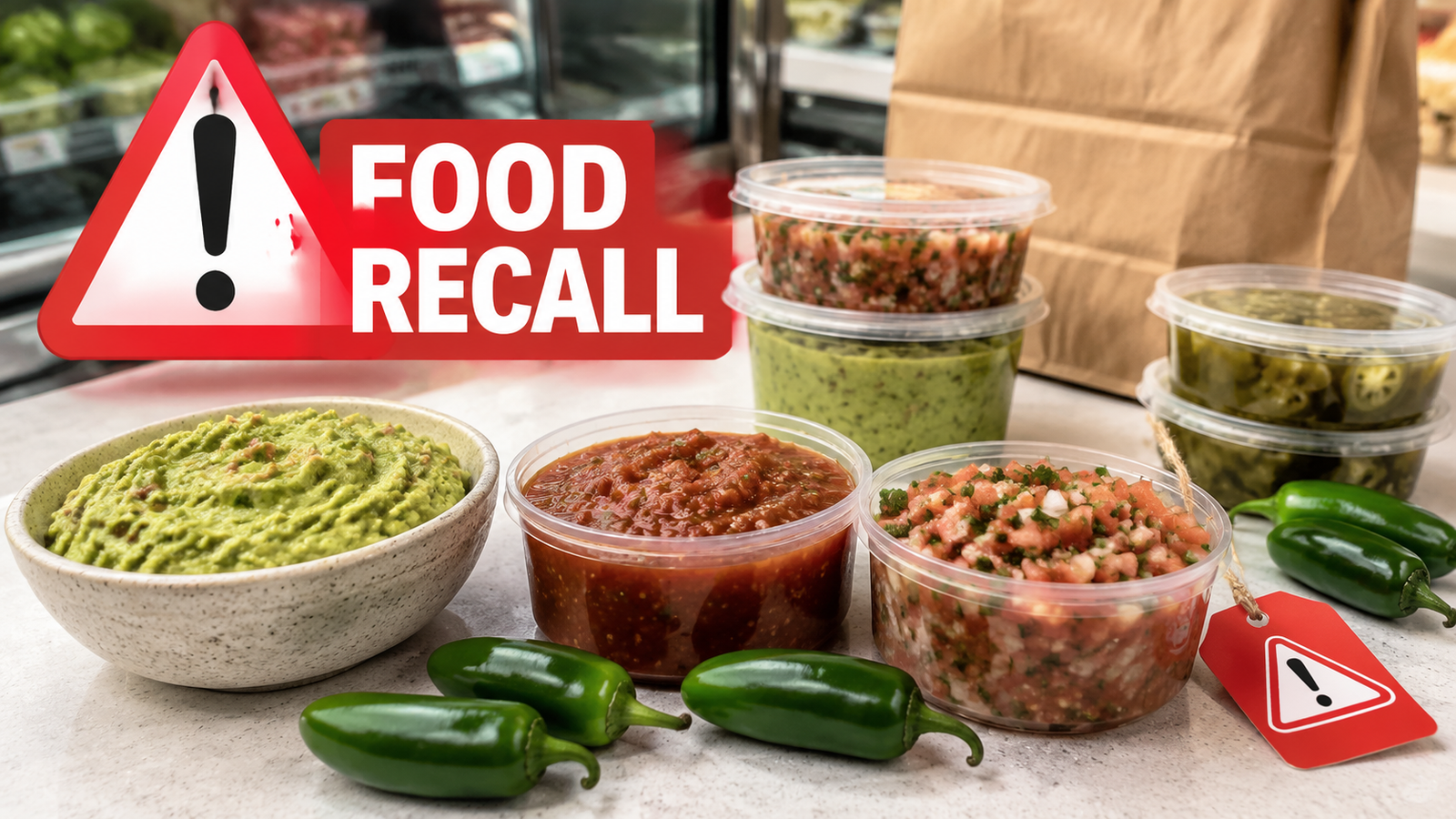
A major Whole Foods recall 2026 has been announced for dozens of guacamole, salsa, pico de gallo, dips, and prepared food products because they may be contaminated with Salmonella.
Whole Foods Market announced the recall on August 12, 2026. The affected foods contain fresh jalapeños supplied by Coast Citrus Distributors, a company connected to an ongoing multistate Salmonella outbreak investigation.
The recalled products were sold in Whole Foods Market Produce and Prepared Foods departments, as well as through online grocery orders, in 12 states. Depending on the product, affected Best Before or Best By dates range from August 7 through August 16, 2026.
Customers who recently purchased fresh guacamole, salsa, pico de gallo, dips, or certain prepared meals from Whole Foods should check their refrigerators immediately. Do not eat a product if its name, PLU code, and date match the recall information.
According to the official FDA Whole Foods recall announcement, no illnesses had been reported specifically in connection with these finished Whole Foods products when the recall was announced. However, consumers should still take the warning seriously and dispose of or return affected food.
Why Did Whole Foods Recall These Products?
The Whole Foods recall 2026 was initiated because certain store-prepared products contain jalapeños that may be contaminated with Salmonella.
The affected jalapeños were supplied by Coast Citrus Distributors. The FDA and CDC, working with state and local health officials, are investigating a multistate outbreak of Salmonella infections associated with fresh jalapeños.
According to the FDA, a grower in Sinaloa, Mexico, that supplied jalapeños to Coast Citrus Distributors was identified as a potential source in the ongoing investigation.
Whole Foods used the jalapeños in several fresh foods prepared or packaged for customers. As a result, the recall extends beyond whole peppers and includes numerous refrigerated dips, salsas, guacamole products, condiments, and prepared meals.
Salmonella contamination does not normally change a food’s appearance, smell, or taste. A container of salsa or guacamole may look fresh and still contain harmful bacteria. Consumers should rely on the product name, code, purchase location, and date instead of trying to determine whether the food looks spoiled.
Where Were the Recalled Whole Foods Products Sold?
The affected foods were available at select Whole Foods Market stores and through online orders in the following 12 states:
- Arkansas
- Illinois
- Indiana
- Iowa
- Kentucky
- Louisiana
- Michigan
- Missouri
- Ohio
- Oklahoma
- Texas
- Wisconsin
The recall does not currently apply to every Whole Foods location in the United States. Shoppers outside these states should not automatically assume that every similar Whole Foods product is recalled.
However, people should check their food if they recently traveled to one of the affected states, received groceries from someone living there, or placed an online order delivered from an affected location.
If you are uncertain about the store that fulfilled an online order, compare the product information with the complete FDA recall list or contact Whole Foods Market directly.
What Dates Are Included in the Whole Foods Recall?
The recalled products have various Best Before or Best By dates, generally falling between:
August 7, 2026, and August 16, 2026
The exact date range differs by product. Most recalled guacamole and pico de gallo products have dates from August 7 through August 12, while many recalled salsa products have dates from August 9 through August 14.
Some prepared foods may have dates extending through August 16.
Do not assume a product is safe based only on the general date range. Two products with similar names may have different PLU codes or affected dates. Consumers should compare all identifying information available on the package.
If the package or label has already been discarded and you cannot confirm the PLU code or date, the safest action is to avoid eating the food and contact the store where it was purchased.
Complete List of Recalled Whole Foods Guacamole Products
The Whole Foods recall includes numerous varieties and sizes of refrigerated guacamole. Product names may appear similar, so customers should check the PLU code printed on the package label.
The recalled guacamole products include:
- Mild Guacamole Dip No Tomatoes, extra small — PLU 24367500000
- Mild Guacamole Dip No Tomatoes, small — PLU 24293900000
- Mild Guacamole Dip No Tomatoes, small — PLU 25745000000
- Mild Guacamole Dip No Tomatoes, extra small — PLU 25658600000
- Spicy Guacamole Dip No Tomatoes, small — PLU 25745200000
- Spicy Guacamole Dip No Tomatoes, small — PLU 28432400000
- Spicy Guacamole Dip No Tomatoes, extra small — PLU 23501500000
- Spicy Guacamole Dip No Tomatoes, extra small — PLU 25744900000
- Medium Pico de Gallo Guacamole Dip — PLU 29802800000
- Pomegranate Guacamole Dip, small — PLU 27908100000
- Pomegranate Guacamole Dip, extra small — PLU 27908500000
- Roasted Corn Guacamole Dip, small — PLU 27132500000
- Roasted Corn Guacamole Dip, small — PLU 24075300000
- Roasted Corn Guacamole Dip, extra small — PLU 29956000000
- Roasted Corn Guacamole Dip, extra small — PLU 29533500000
- Spicy Guacamole Dip, small — PLU 21212000000
- Spicy Guacamole Dip, extra small — PLU 21211900000
- Mild Guacamole Dip — PLU 21501700000
- Guacamole Dip, large — PLU 25705700000
- OG Hot Guacamole — PLU 25138200000
- Small Guacamole — PLU 25054100000
These guacamole products generally have Best Before or Best By dates between August 7 and August 12, 2026.
Customers should carefully examine containers purchased from a refrigerated display or prepared-food counter. Some affected products may have a printed store label instead of the type of branded packaging normally found on grocery shelves.
Recalled Whole Foods Pico de Gallo and Dip Products
The recall also includes pico de gallo and combination dip products that may contain affected jalapeños.
Recalled products include:
- Mild Pico de Gallo, 16 ounces — UPC 85001178876
- Pico de Gallo — PLU 26383300000
- Dip Trio — PLU 25926000000
- Medium Pico de Gallo Guacamole Dip — PLU 29802800000
Combination products such as a dip trio should not be eaten simply because only one section appears to contain jalapeños. Ingredients may have contacted each other inside the container, and consumers cannot reliably remove the potentially contaminated portion.
If a recalled dip tray is still in your refrigerator, close the container, keep it away from other foods, and either discard it securely or return it to Whole Foods Market.
Complete List of Recalled Whole Foods Salsa Products
Several fresh salsa varieties are included in the Whole Foods recall 2026. These products were typically sold from refrigerated Produce or Prepared Foods departments.
The recalled salsa products include:
- Mango Pineapple Salsa, 14 ounces — UPC 82676681063
- Brodie Salsa — PLU 46000037533
- Peach Salsa — PLU 46000046598
- Tomatillo Salsa — PLU 46000038736
- Tropical Mango Mild Salsa — PLU 46000039895
- Heirloom Tomato Salsa — PLU 22860200000
- Salsa Fresca Roja — PLU 46000049560
- Salsa Fresca — PLU 29648100000
- Mango Salsa Dip, small — PLU 25867600000
- Heirloom Tomato Salsa Dip — PLU 29648700000
- Tomatillo Salsa Dip, large — PLU 24118800000
- Heirloom Tomato Salsa, small — PLU 25024800000
- Spring Veggie Salsa Dip — PLU 24091700000
- Mango Pineapple Salsa Dip, 10 ounces — PLU 25867200000
Most of these salsa products have Best Before or Best By dates from August 9 through August 14, 2026.
Even if a container has already been opened and no one became sick after eating some of it, consumers should not eat the remaining product. The presence of Salmonella may not be evenly distributed throughout the container.
Prepared Whole Foods Meals Included in the Recall
The recall is not limited to dips and refrigerated salsa containers. Certain prepared turkey burger products served with Caribbean mango pineapple salsa are also affected.
The prepared foods listed by the FDA include:
- Caribbean Mango Pineapple Turkey Burger, Cooked — PLU 21195900000 and condiment code 46000040275
- Caribbean Mango Pineapple Turkey Burger, Cooked Family Meal — PLU 27578600000
- Caribbean Mango Pineapple Turkey Burger FP, Cooked — PLU 25326800000 and condiment code 46000065697
- Caribbean Mango Pineapple Turkey Burger, Cooked Single Meal — PLU 27670200000
The mango pineapple condiment included with these meals is the reason they appear in the recall.
Consumers should not try to make a recalled meal safe by removing the salsa. The condiment may have touched the burger, container, or other parts of the meal.
What Should You Do If You Bought a Recalled Product?
If you find a recalled Whole Foods product, follow these steps:
- Do not eat or taste the food.
- Check the product name, PLU or UPC code, and Best Before or Best By date.
- Take a photograph of the label for your records.
- Place the container inside a sealed bag so it cannot leak onto other food.
- Discard it where children and animals cannot reach it, or return it to Whole Foods Market.
- Clean and sanitize surfaces that may have touched the product.
- Wash your hands thoroughly with soap and water.
Whole Foods advises customers to discard recalled products or bring a valid receipt to any Whole Foods Market store for a full refund.
Do not feed a recalled product to pets. Animals can become sick from contaminated food and may also spread Salmonella bacteria through their saliva, feces, food bowls, or surrounding surfaces.
Can You Get a Refund for the Whole Foods Recall?
Yes. According to the official recall announcement, customers can bring a valid receipt to any Whole Foods Market store for a full refund.
Before discarding the product, consider photographing:
- The complete package
- The product label
- The PLU or UPC code
- The Best Before or Best By date
- Your receipt or online order confirmation
These records may make it easier to identify the purchase and request a refund.
Customers with additional questions can contact Whole Foods Market at 1-844-936-8255. The customer service line is available from 7:00 a.m. to 10:00 p.m. Central Time Monday through Friday and from 8:00 a.m. to 6:00 p.m. Central Time Saturday and Sunday.
Do not pay anyone who claims they can submit a recall refund request on your behalf. A legitimate recall refund should not require a processing fee, membership purchase, or disclosure of sensitive banking information.
How Should You Clean Your Refrigerator After the Recall?
If a recalled container leaked or was opened in your refrigerator, clean the area carefully to reduce the possibility of cross-contamination.
Start by removing nearby food and checking whether any packaging came into contact with the recalled item. Throw away food that was directly exposed to leaking liquid and cannot be safely cleaned.
Wash removable refrigerator shelves and drawers with hot, soapy water. Clean the interior surface where the product was stored, then sanitize it with an appropriate food-safe sanitizing solution. Follow the directions printed on the cleaning product and never mix cleaning chemicals.
Wash reusable grocery bags, lunch bags, utensils, cutting boards, and serving dishes that touched the recalled food. Wipe the outside of nearby containers before returning them to the refrigerator.
Finally, wash your hands with soap and running water for at least 20 seconds. Hand sanitizer may be useful when soap is unavailable, but it should not replace proper handwashing after handling potentially contaminated food.
What Are the Symptoms of Salmonella Infection?
Salmonella is a type of bacteria that can cause an illness called salmonellosis. Symptoms commonly include:
- Diarrhea, which may sometimes be bloody
- Fever
- Stomach cramps
- Nausea
- Vomiting
- Headache
- Loss of appetite
- Dehydration
Symptoms usually begin between six hours and six days after exposure and often last four to seven days. However, the timing and severity can vary from person to person.
Most healthy adults recover without specific medical treatment, but some people may experience severe illness. In rare cases, Salmonella can spread from the intestines into the bloodstream and other parts of the body.
The infection may then lead to serious complications, including arterial infections, endocarditis, or arthritis. Anyone concerned about possible exposure should follow the latest guidance from a qualified healthcare professional.
Who Is Most at Risk of Serious Illness?
Anyone can develop a Salmonella infection, but certain groups have a greater risk of serious complications.
People at higher risk include:
- Children younger than five
- Adults age 65 and older
- Pregnant people
- People with weakened immune systems
- People receiving cancer treatment
- Organ transplant recipients
- People taking certain immune-suppressing medications
- People with serious underlying health conditions
Households with a high-risk family member should be especially careful about cross-contamination. Do not prepare other food on a counter, cutting board, plate, or utensil that contacted a recalled product until the surface has been properly cleaned and sanitized.
When Should You Contact a Doctor?
Contact a healthcare professional if you ate a recalled product and develop symptoms associated with Salmonella infection.
Seek prompt medical advice if symptoms are severe or if the sick person belongs to a higher-risk group. Warning signs that may require medical attention include:
- Diarrhea lasting longer than three days
- Bloody diarrhea
- Fever higher than 102 degrees Fahrenheit
- Frequent vomiting that makes it difficult to keep liquids down
- Severe stomach pain
- Very little urination
- Dry mouth or throat
- Dizziness when standing
- Unusual sleepiness or weakness
- Signs of dehydration in a young child
Before contacting a healthcare provider, write down the product name, purchase location, date eaten, and the time symptoms began. If possible, keep a photograph of the product label and your purchase receipt.
Do not eat more of the product to confirm whether it caused the symptoms. Do not take antibiotics or anti-diarrheal medication unless advised by a healthcare professional.
This article provides general consumer information and is not a substitute for medical diagnosis or treatment.
What If You Already Ate the Recalled Food?
Do not panic if you already ate one of the affected Whole Foods products. Eating a recalled product does not automatically mean that you will become sick.
Stop eating the product and monitor yourself for possible Salmonella symptoms. Because symptoms can begin up to six days after exposure, continue paying attention to your health even if you initially feel fine.
Write down when you ate the product and save any available purchase records. If symptoms develop, contact a healthcare professional and explain that you may have consumed food included in the Whole Foods recall 2026.
People who remain symptom-free generally do not need to seek emergency care solely because they may have eaten a recalled food. Anyone with individual health concerns or a condition that increases the risk of serious infection should contact a healthcare professional for personalized guidance.
Can You Determine Whether the Product Is Safe by Smelling It?
No. Food contaminated with Salmonella may look, smell, and taste normal.
A fresh appearance does not prove that guacamole, salsa, or pico de gallo is safe. Consumers should not taste a product to check it.
Use the following information to identify recalled food:
- Product name
- Container size
- PLU or UPC code
- Best Before or Best By date
- Purchase location
- Purchase date
When identifying a product, check all available details rather than relying on only one item. Different Whole Foods locations may use similar names for products with different codes.
If the label is missing and you cannot confidently determine whether the product is affected, contact Whole Foods Market before eating it.
Can Cooking Kill the Salmonella in a Recalled Product?
Proper cooking can kill Salmonella bacteria, but consumers should not attempt to cook and eat food included in this recall.
Salsa, pico de gallo, and guacamole are commonly consumed without cooking. Heating may also be uneven and may not eliminate contamination from the package, utensils, refrigerator, or surrounding surfaces.
The FDA and Whole Foods instructions are clear: affected products should not be consumed. Customers should discard the food or return it to a Whole Foods Market store.
Can You Return an Opened Product?
The FDA recall announcement says customers who purchased an affected product should discard it or bring a valid receipt to a Whole Foods Market store for a full refund.
If the product has already been opened, seal it inside a bag before transporting it. Do not carry an open or leaking container into the store.
Call Whole Foods Market at 1-844-936-8255 if you no longer have the product, threw away the label, or are unsure what proof of purchase the store will require.
Customers who ordered through a delivery service should also keep their electronic receipt or order confirmation. The record may show the date, store, and exact product purchased.
Does the Recall Include Whole Jalapeño Peppers?
This particular Whole Foods announcement focuses on finished products made with jalapeños supplied by Coast Citrus Distributors. These include guacamole, salsa, pico de gallo, dips, and certain prepared meals.
However, the Whole Foods action is connected to a wider investigation involving fresh jalapeños. Consumers who purchased whole jalapeño peppers should review the FDA’s current outbreak information and any separate recall notices rather than assuming this finished-product list covers every affected pepper.
Recall information can change as an investigation continues. Check the FDA recall announcement for product photographs and the most current list.
Does the Recall Include California?
California is not one of the 12 states listed in the August 12, 2026 Whole Foods recall announcement.
The affected Whole Foods products were sold in Arkansas, Illinois, Indiana, Iowa, Kentucky, Louisiana, Michigan, Missouri, Ohio, Oklahoma, Texas, and Wisconsin.
California shoppers should not discard unrelated Whole Foods products solely because they have a similar name. Nevertheless, a California resident should check the recall if the food was purchased while traveling, delivered from an affected location, or received from someone in one of the listed states.
The underlying jalapeño investigation may also involve separate products or distributors. Consumers should check the FDA’s outbreak page for updates instead of assuming that California is excluded from every related recall.
Are All Whole Foods Guacamole and Salsa Products Recalled?
No. The recall does not cover every container of guacamole or salsa sold by Whole Foods Market.
It applies to specific products sold online and at affected stores, with particular PLU or UPC codes and Best Before or Best By dates. Similar products with different codes or dates may not be included.
Use this checklist before deciding whether a product is affected:
- Was it purchased in one of the 12 listed states?
- Did it come from a Whole Foods Produce or Prepared Foods department?
- Does the product name appear on the FDA list?
- Does the PLU or UPC code match?
- Is the Best Before or Best By date within the listed range?
When all or most of the identifying information matches, do not eat the product. Contact Whole Foods Market if any detail is unclear.
Were Any Illnesses Reported?
According to the recall announcement published on August 12, 2026, no illnesses had been reported specifically in connection with the recalled finished Whole Foods products.
That does not mean the contamination risk should be ignored. The recalled products contain jalapeños associated with an ongoing multistate Salmonella investigation.
Illness numbers and recall details may change after an announcement is published. Consumers should use the FDA page as the primary source for later updates.
How to Avoid Cross-Contamination at Home
Cross-contamination can occur when bacteria move from recalled food or its packaging to other food, utensils, or kitchen surfaces.
Take the following precautions:
- Do not empty recalled salsa or guacamole into the sink.
- Seal the container before placing it in the trash.
- Keep the product away from children and pets.
- Clean the refrigerator shelf or drawer where it was stored.
- Wash utensils, plates, and cutting boards that touched the food.
- Clean counters and refrigerator handles after handling the container.
- Wash reusable grocery bags if the product leaked.
- Wash your hands with soap and water for at least 20 seconds.
- Do not serve food from a recalled container, even if only part of it was eaten.
- Do not reuse the container for food storage.
Pay particular attention to ready-to-eat foods that may have touched spilled liquid. Unlike raw ingredients that will later be cooked, ready-to-eat foods may be consumed without an additional step capable of reducing bacteria.
More Consumer Safety Alerts
Food recalls can expand quickly as investigators identify additional products and stores. Consumers may also want to read our guide to the 2026 egg recall and Salmonella warning for another important food-safety update.
You can also review our 2026 Cyclospora outbreak warning to learn about common symptoms, higher-risk groups, and steps consumers can take after possible exposure.
How to Keep Track of Food Recalls
Food recalls are often announced after products have already been purchased. In some cases, consumers may have placed the food in a freezer or removed the original outer packaging.
These habits can make future recall checks easier:
- Keep electronic grocery receipts when available.
- Photograph labels before transferring food to another container.
- Write the product name and purchase date on frozen food.
- Check FDA recall notices regularly.
- Review online grocery order histories.
- Keep store loyalty account information current.
- Avoid removing date and lot information until the food is used.
- Share relevant recall notices with relatives who may have purchased the same item.
Recall notices are most useful when consumers compare the exact product details. A social media post or headline may omit important dates, codes, package sizes, or store locations.
Frequently Asked Questions About the Whole Foods Recall 2026
What products are included in the Whole Foods recall 2026?
The recall includes select guacamole, salsa, pico de gallo, combination dips, condiments, and prepared turkey burger meals containing jalapeños supplied by Coast Citrus Distributors. Only specific products, codes, dates, and sales locations are affected.
Why are Whole Foods products being recalled?
The products may contain jalapeños contaminated with Salmonella. The recall is connected to an ongoing multistate outbreak investigation involving fresh jalapeños.
What are the affected date ranges?
Depending on the product, the recalled foods have Best Before or Best By dates between August 7 and August 16, 2026. Consumers should check the exact date listed for their particular product.
Which states sold the recalled products?
The products were sold online and at select Whole Foods stores in Arkansas, Illinois, Indiana, Iowa, Kentucky, Louisiana, Michigan, Missouri, Ohio, Oklahoma, Texas, and Wisconsin.
What should I do with recalled Whole Foods food?
Do not eat it. Seal the product and discard it where children and animals cannot reach it, or return it to Whole Foods Market according to the company’s instructions.
Do I need a receipt to receive a refund?
The recall announcement instructs customers to bring a valid receipt to any Whole Foods Market store for a full refund. Contact Whole Foods customer service if you no longer have the receipt or purchased the product online.
What number should I call with questions?
Consumers can call Whole Foods Market at 1-844-936-8255. Hours are 7:00 a.m. to 10:00 p.m. Central Time Monday through Friday and 8:00 a.m. to 6:00 p.m. Central Time on Saturday and Sunday.
Can I eat the food if it smells normal?
No. Salmonella contamination generally cannot be identified by appearance, smell, or taste. Do not taste a recalled product to determine whether it is safe.
Is every Whole Foods store affected?
No. The announcement identifies sales in 12 states. Consumers should compare their purchase location, product name, code, and date with the official recall details.
What should I do if I already ate the product?
Stop eating it and monitor for symptoms such as diarrhea, fever, stomach cramps, nausea, or vomiting. Contact a healthcare professional if symptoms develop, become severe, or involve someone at higher risk of complications.
Are there illnesses linked to the recalled Whole Foods products?
No illnesses had been reported specifically in connection with the finished Whole Foods products as of the August 12 announcement. The products were recalled because their jalapeño ingredient was associated with a broader outbreak investigation.
Final Reminder About the Whole Foods Recall 2026
The Whole Foods recall 2026 affects dozens of popular refrigerated and prepared foods, including guacamole, salsa, pico de gallo, dip trays, and turkey burger meals that may contain potentially contaminated jalapeños.
Check your refrigerator for affected products with Best Before or Best By dates between August 7 and August 16, 2026. Pay close attention to food purchased from Whole Foods Produce and Prepared Foods departments or through online orders in the 12 affected states.
Do not eat a product that matches the recall. Discard it securely or return it to Whole Foods Market with a valid receipt for a full refund. Clean any refrigerator shelf, container, utensil, or surface that may have touched the food.
Because the investigation is ongoing, consumers should confirm details through the official FDA Whole Foods recall notice.
This article was last updated on August 12, 2026. Recall information can change as investigators identify additional products or sales locations.
Leave a Reply