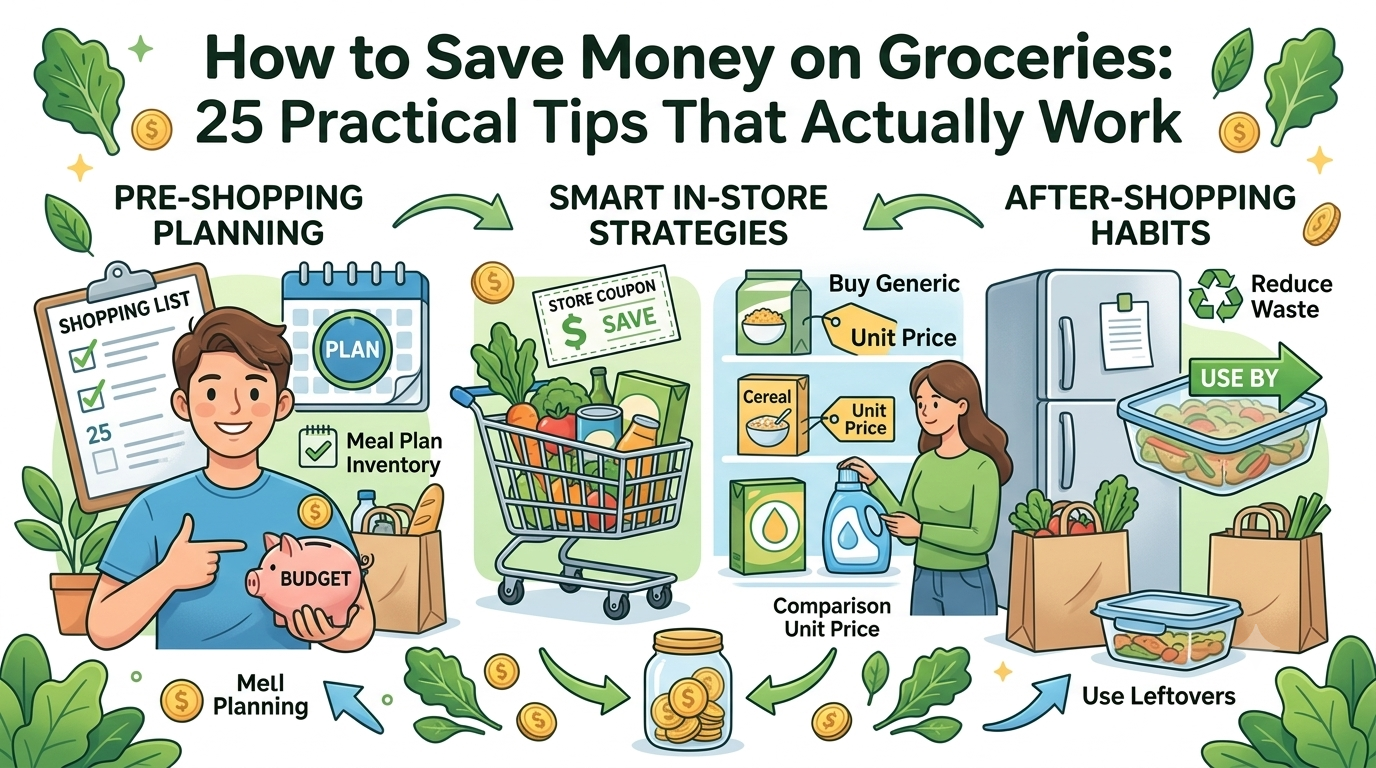
Learning how to save money on groceries does not require extreme couponing, eating the same meal every night, or giving up the foods your family enjoys. The biggest savings usually come from a few repeatable habits: planning before you shop, buying only what you will use, comparing prices correctly, and preventing food from going to waste.
Whether your grocery bill has slowly increased or you simply want more room in your monthly budget, the following strategies can help. Start with three or four tips that fit your routine, then add more as they become automatic. Small changes made every week can create meaningful savings over the course of a year.
1. How to Save Money on Groceries by Setting a Weekly Budget
Choose a weekly amount before you start shopping. A clear limit makes it easier to decide what belongs in the cart and what can wait. Review your last four weeks of grocery spending, calculate the average, and set an initial target that is slightly lower. Cutting too aggressively can backfire if it leads to extra store trips or takeout later in the week.
2. Plan Meals Around What You Already Have
Before creating a meal plan, check the refrigerator, freezer, and pantry. Build two or three meals around ingredients that need to be used soon. A half bag of rice, frozen vegetables, canned beans, or leftover chicken can become the base of a low-cost meal. This habit reduces duplicate purchases and keeps food from being forgotten.
3. Make a Grocery List and Stick to It
A list gives every item in your cart a purpose. Organize the list by store section so you can move through the store efficiently and avoid wandering into aisles where impulse purchases are more likely. Keep a running list on your phone during the week so you do not have to rebuild it from memory.
4. Check Weekly Ads Before Choosing Meals
Instead of planning a specific menu and then paying whatever the store charges, reverse the process. Look at the weekly ad first and build meals around discounted proteins, produce, and pantry staples. This flexible approach is one of the easiest ways to lower food costs without lowering quality.
5. How to Save Money on Groceries by Comparing Unit Prices
The lowest sticker price is not always the best value. Compare the cost per ounce, pound, or count shown on the shelf label. A larger package may cost more upfront but less per serving. However, the bigger size is only a bargain if your household can use it before it spoils.
6. Learn the Best Prices for Your Regular Items
Track the normal price of ten to fifteen items you buy frequently, such as milk, eggs, rice, coffee, cereal, chicken, or lunch ingredients. Once you recognize a genuinely good sale, you can stock up with confidence instead of being influenced by promotional signs that may offer only a small discount.
7. Use Store Loyalty Programs Strategically
Many supermarkets reserve sale prices and digital coupons for loyalty members. Join the programs at stores you already use, then activate only the offers that match your list. Avoid adding an item simply because a coupon exists. Spending three dollars to save fifty cents is still spending three dollars.
8. Choose Store Brands for Basic Staples
Store-brand flour, sugar, canned vegetables, pasta, oats, spices, and cleaning products are often less expensive than national brands. Try switching one product at a time. Keep the store brand when the quality works for you and pay more only for items where your family notices a meaningful difference.
9. Shop Less Often
Every additional store visit creates another opportunity for unplanned purchases. A well-planned weekly trip is usually cheaper than several quick trips. Keep a small backup supply of flexible staples such as pasta, eggs, frozen vegetables, beans, and tortillas so a missing ingredient does not require an emergency run.
10. How to Save Money on Groceries by Avoiding Impulse Purchases
Hunger makes convenient snacks, bakery items, and prepared foods more tempting. Eat a meal or small snack before shopping and bring water when the trip may take a while. This simple habit helps your list, rather than your appetite, guide your decisions.
11. Buy Produce That Is in Season
Seasonal fruits and vegetables are often more abundant, better tasting, and less expensive. Use sale produce for snacks, side dishes, soups, and sheet-pan meals. When fresh options are costly, frozen fruits and vegetables can be an excellent alternative because they are easy to portion and keep longer.
12. Use Frozen and Canned Foods Wisely
Frozen vegetables, berries, fish, and meat can reduce waste because you use only the amount needed. Canned beans, tomatoes, tuna, and fruit are affordable pantry staples for quick meals. Compare ingredients and sodium or added sugar when those factors matter to your household.
13. Buy Meat When It Is Discounted
Protein is often one of the most expensive parts of a grocery budget. Watch for markdowns and weekly specials, then freeze portions promptly. Less expensive cuts can work well in slow-cooker meals, soups, tacos, curries, casseroles, and shredded-meat recipes.
14. Add More Meatless Meals
You do not have to eliminate meat to save money. Replacing one or two meat-based dinners each week with meals built around beans, lentils, eggs, potatoes, pasta, or rice can lower the average cost per serving. Bean burritos, lentil soup, vegetable fried rice, baked potatoes, and pasta with chickpeas are filling, flexible options.
15. Cook Once and Use Ingredients Twice
Plan meals that share ingredients. Roast a chicken for dinner, use the remaining meat in tacos or sandwiches, and turn the bones into broth. Cook extra rice for stir-fry the next day. Shared ingredients reduce waste and make busy nights easier.
16. Portion Bulk Purchases Immediately
Warehouse sizes and family packs can save money, but only when they are managed properly. Divide meat, bread, cheese, or snacks into usable portions as soon as you get home. Label freezer packages with the item and date so the food is easy to identify later.
17. Create an Eat-First Area
Designate one refrigerator shelf or clear bin for food that should be eaten soon. Place leftovers, opened packages, and ripe produce there. When family members need a snack or lunch, they know where to look first. This small system can prevent perfectly good food from being pushed to the back and forgotten.
18. Freeze Food Before It Goes Bad
Bread, tortillas, shredded cheese, cooked rice, soup, ripe bananas, and many leftovers freeze well. Do not wait until food is already questionable. Freeze it when you realize you will not use it in time, and label it clearly. A freezer inventory on the door or phone helps you remember what is available.
19. Understand Date Labels
A date printed on a package does not always mean the food becomes unsafe that day. Many dates relate to quality rather than safety. Use reliable storage guidance, inspect food carefully, and follow safe handling practices. When in doubt about perishable food, discard it rather than taking a risk.
20. Reduce Convenience Purchases
Pre-cut fruit, individual snack packs, shredded cheese, bottled drinks, and prepared meals can cost much more than basic ingredients. Convenience has value, especially on very busy weeks, but choose it intentionally. Preparing a few grab-and-go portions at home can provide similar convenience for less.
21. Build Meals Around Low-Cost Staples
Keep versatile foods on hand that can support many meals: rice, pasta, oats, potatoes, beans, canned tomatoes, eggs, tortillas, frozen vegetables, and peanut butter. When the pantry contains flexible ingredients, you are less likely to rely on expensive prepared food or last-minute delivery.
22. Use Leftovers as Planned Meals
Treat leftovers as part of the meal plan rather than accidental extras. Schedule a leftovers night, pack portions for lunch, or transform them into a new dish. Roasted vegetables can become a frittata, cooked meat can become quesadillas, and small amounts of several foods can create a grain bowl.
23. Calculate Whether a Second Store Is Worth It
Driving across town for one sale can erase the savings through fuel, time, and extra purchases. A second store may be worthwhile when several regularly used items are significantly cheaper or when it is already on your route. Otherwise, a slightly higher price at one store may be the more economical choice overall.
24. Review Your Receipt
Check the receipt before leaving the parking lot. Confirm that sale prices and digital coupons were applied and that quantities are correct. Pricing errors happen, and they are easier to fix while you are still at the store. Reviewing receipts also helps you notice which categories are consuming the largest share of your budget.
25. Track Your Savings for One Month
Keep a simple note of what you spent each week and which strategies made the biggest difference. The goal is not perfection; it is learning which habits work for your household. You may discover that meal planning saves more than couponing, or that reducing waste matters more than visiting multiple stores. Continue the methods that produce real results.
| Quick-start challenge: For the next grocery trip, check your pantry, plan five dinners, make a list, compare unit prices, and create an eat-first shelf. These five actions alone can make a noticeable difference. |
Frequently Asked Questions
What is the fastest way to save money on groceries?
The fastest approach is to plan meals around food you already own, shop with a list, and reduce unplanned store visits. These habits address both overspending and food waste.
Is it cheaper to shop weekly or monthly?
Most households benefit from one planned weekly trip for fresh food combined with less frequent purchases of pantry and freezer staples. Monthly-only shopping can lead to waste or extra trips for perishables.
Are coupons necessary to lower a grocery bill?
No. Coupons can help when they apply to products you already planned to buy, but meal planning, unit-price comparison, store brands, and waste reduction often produce larger and more consistent savings.
Does buying in bulk always save money?
No. Bulk purchasing saves money only when the unit price is lower and the household can use or freeze the product before it spoils. Storage space and cash flow should also be considered.
How can a family reduce food waste?
Plan meals, keep an eat-first area in the refrigerator, freeze food before it spoils, label leftovers, and review the refrigerator before shopping. These systems make existing food more visible and easier to use.
Helpful Official Resources
• Shop Simple with MyPlate offers budget-friendly shopping and meal ideas from the U.S. Department of Agriculture.
• FoodKeeper provides storage guidance that can help households use food while it is at its best quality and reduce waste.
• USDA food-waste guidance for consumers includes practical steps for saving food and money at home.
Final Thoughts
The best grocery-saving system is one you can repeat. You do not need to use every strategy at once. Begin with a budget, a meal plan, and a list. Then improve the system by comparing unit prices, choosing flexible ingredients, freezing extras, and using leftovers on purpose. Over time, these habits can lower your grocery bill without making meals feel restrictive or complicated.
If you’re wondering how to save money on groceries, the key is consistency rather than extreme couponing. By planning meals, shopping with a list, comparing prices, and reducing food waste, anyone can save money over time. These simple strategies make it much easier to save money on groceries every month without sacrificing quality.
Related reading
If you’re looking for more ways to protect your finances, read our Chick-fil-A Data Breach: What Customers Need to Know guide.
Leave a Reply