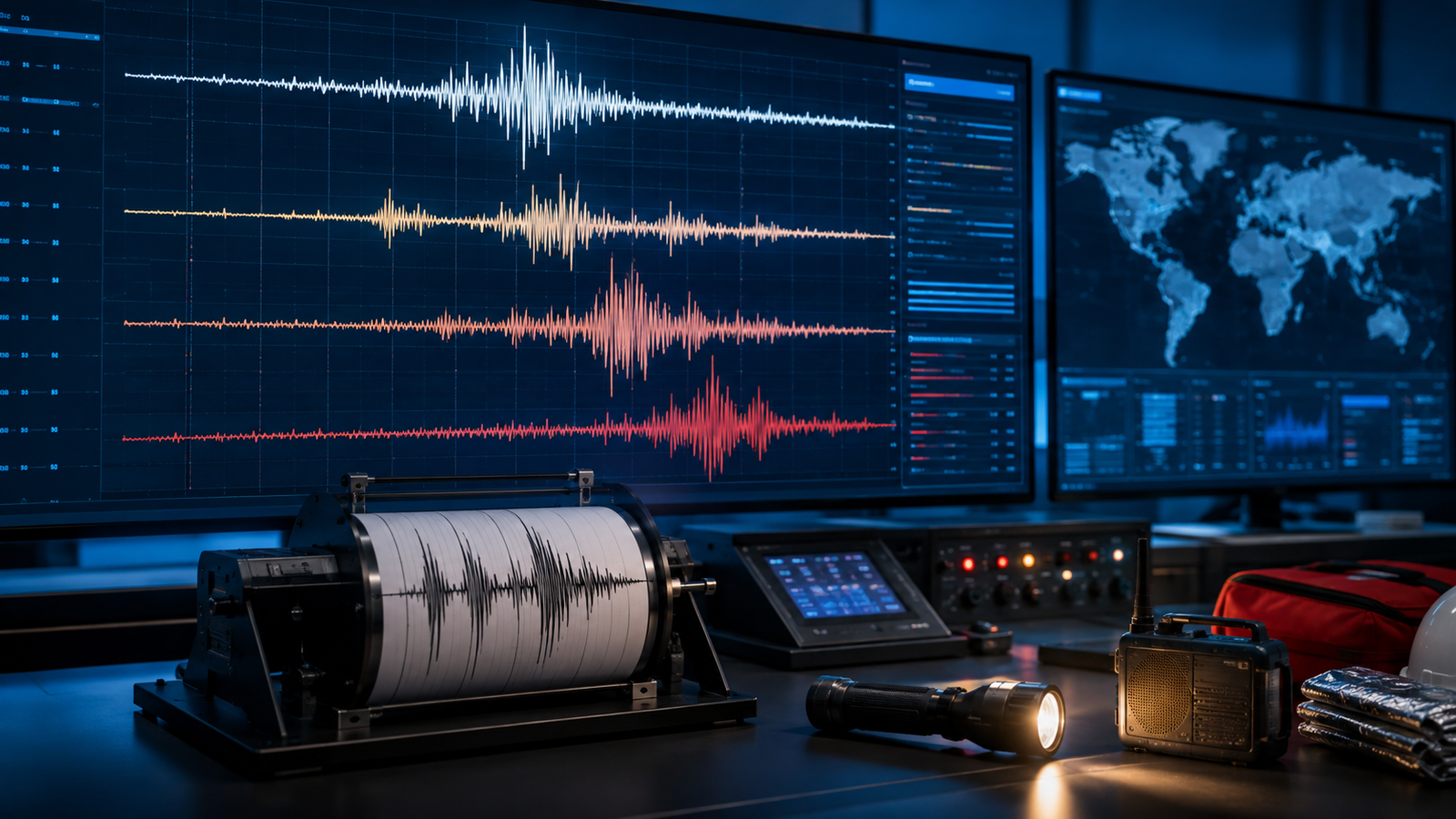
Earthquakes in Colombia, Venezuela, and California have recently captured worldwide attention, leaving many people asking the same question: Why are so many earthquakes happening?
A devastating magnitude 7.4 earthquake struck western Colombia on August 10, 2026, followed by numerous aftershocks. Earlier this summer, two powerful earthquakes shook Venezuela. Then, on August 13, a magnitude 3.8 earthquake rattled California’s San Francisco Bay Area.
Although seeing several earthquakes in the news within a short period can feel alarming, scientists say these events do not necessarily indicate that worldwide earthquake activity is suddenly increasing. The earthquakes occurred in different regions, involved different faults and tectonic processes, and should not automatically be treated as parts of one connected seismic event.
Still, every earthquake is an important reminder to understand local risks and prepare before stronger shaking occurs.
Recent Earthquakes in Colombia, Venezuela and California
Many readers are asking why so many earthquakes are happening across different parts of the Americas within such a short period. Here is a quick overview of the major seismic events receiving attention:
- A magnitude 7.4 earthquake struck near San José del Palmar in Colombia’s Chocó department on August 10, 2026.
- Colombia experienced numerous aftershocks following the main earthquake.
- Two earthquakes greater than magnitude 7 struck Venezuela on June 24, 2026.
- A magnitude 3.8 earthquake struck near San Leandro, California, on August 13, 2026.
- Two smaller aftershocks, measuring magnitude 3.0 and 2.8, followed the California earthquake.
These events happened close enough together to attract public concern. However, proximity on a calendar does not prove a geological connection.
The distance between the affected regions is enormous, and each area has its own complicated network of tectonic plates and faults.
Magnitude 7.4 Colombia Earthquake Causes Widespread Destruction
The most destructive of the recent earthquakes struck Colombia on Monday, August 10.
According to the Colombian Geological Service, the magnitude 7.4 earthquake occurred at 7:34 a.m. local time. Its epicenter was near San José del Palmar in the Chocó department, and it originated approximately 103 kilometers, or about 64 miles, below the surface.
The agency described it as the strongest earthquake recorded in Colombia during the 21st century.
Although the earthquake was relatively deep, its high magnitude allowed the seismic energy to travel across a wide area. People reported feeling the shaking throughout Colombia and in neighboring countries, including Panama and Venezuela.
The Colombian Geological Service received more than 12,000 reports from people in approximately 900 population centers shortly after the earthquake. The maximum reported intensity reached level 7 on the scale used by the agency, which represents severe shaking and damage.
Buildings and homes were damaged across western Colombia, with some of the most serious effects reported in and around Cali, Pereira, Manizales, Quibdó, and nearby communities. Search-and-rescue operations continued as emergency crews looked for survivors and assessed structures.
Because casualty and damage numbers can change quickly during a major disaster, readers should check current reports from Colombian emergency authorities before relying on an earlier total.
Colombia Continues to Experience Aftershocks
The magnitude 7.4 earthquake was followed by multiple aftershocks.
Within the first several hours, the Colombian Geological Service recorded at least 18 aftershocks near San José del Palmar and Sipí. Those earthquakes ranged in magnitude from 1.4 to 4.8. Additional aftershocks have continued since the initial report.
Aftershocks are smaller earthquakes that occur in the same general area after a larger main earthquake. They happen as the surrounding crust adjusts to the stress changes caused by the original rupture.
Aftershocks may continue for days, weeks or even months after a powerful earthquake. They generally become less frequent and less powerful over time, but a strong aftershock can still cause additional damage—especially to buildings already weakened by the main earthquake.
People in an affected area should remain cautious, avoid visibly damaged buildings and follow instructions from local emergency officials.
Why Did the Colombia Earthquake Happen?
Colombia is located in a highly active seismic region where several tectonic plates interact.
The August 10 earthquake resulted from the movement of the Nazca Plate beneath the South American Plate. This process is called subduction. Pressure can accumulate where the plates meet, and the eventual release of that pressure produces an earthquake.
Colombia is also influenced by the Caribbean and Cocos plates, making the country geologically complex and naturally prone to seismic activity.
The Colombian Geological Service records an average of approximately 2,500 earthquakes per month. Most are so small that people never feel them and only monitoring instruments detect them.
This does not mean that Colombia experiences thousands of damaging earthquakes every month. It means modern seismic networks are sensitive enough to identify many small movements that would otherwise go unnoticed.
Were the Colombia and Venezuela Earthquakes Connected?
To understand why so many earthquakes are happening, scientists examine each earthquake’s location, depth, and tectonic mechanism separately. Despite their similar strength, geological authorities say the recent Colombia and Venezuela earthquakes were not connected.
The Venezuelan earthquakes occurred on June 24 and were shallower events associated with the sideways interaction between the Caribbean and South American plates. This is known as strike-slip or transform movement.
The Colombia earthquake, by comparison, was a much deeper subduction earthquake involving the Nazca Plate moving beneath the South American Plate.
The two locations therefore involved different earthquake mechanisms.
Timing alone is not enough to demonstrate that earthquakes are related. To establish a possible connection, scientists examine factors including:
- The distance between the earthquakes
- The fault or plate boundary involved
- The depth of each event
- The type and direction of fault movement
- Changes in stress surrounding the original rupture
Based on these factors, geological experts have said the Colombia and Venezuela earthquakes were independent events.
California Earthquake Shakes the San Francisco Bay Area
Another earthquake drew attention on Thursday morning when residents across California’s San Francisco Bay Area felt noticeable shaking.
The earthquake occurred at approximately 8:30 a.m. near San Leandro in the East Bay. Initial reports placed its magnitude at 4.1, but that preliminary measurement was later revised to magnitude 3.8.
The epicenter was approximately 2.4 miles north of San Leandro and close to Oakland, Alameda and the Oakland Zoo. The earthquake originated at a relatively shallow depth of approximately 3.2 miles.
Residents reported feeling the shaking in San Leandro, Oakland, Alameda, Berkeley, San Francisco and other surrounding communities. No major damage was immediately reported.
Two smaller earthquakes followed shortly after 9 a.m. near San Leandro. They measured magnitude 3.0 and 2.8 and were treated as aftershocks of the initial magnitude 3.8 earthquake.
BART Trains Slowed Following the California Earthquake
Bay Area Rapid Transit temporarily reduced train speeds so crews could inspect tracks after the earthquake.
Although normal operations later resumed, riders experienced delays of up to approximately 20 minutes across the system. Slowing trains following an earthquake allows transit officials to inspect tracks and other infrastructure for possible damage before returning to normal speeds.
The temporary service disruption demonstrated how even a moderate earthquake without major structural damage can affect transportation and daily routines.
The Bay Area earthquake occurred close to the Hayward Fault, one of Northern California’s best-known active faults. However, determining whether a smaller earthquake occurred directly on the main fault or on a related structure can require additional analysis.
The Hayward Fault runs through heavily populated portions of the East Bay and is closely monitored because it is capable of producing a much larger earthquake.
Does the California Earthquake Mean a Bigger One Is Coming?
A small or moderate earthquake does not provide a reliable prediction that a larger earthquake is about to happen.
Most earthquakes are followed only by smaller aftershocks. In some cases, however, an earthquake initially identified as the main event may later be classified as a foreshock if a larger earthquake occurs nearby.
Scientists cannot determine in advance whether a particular earthquake will be followed by a stronger one. That is why residents should use any noticeable shaking as a reminder to review their emergency plans without assuming that a major disaster is certain to follow.
Earthquake prediction remains impossible with current science. Experts can estimate long-term earthquake probabilities for a fault or region, but they cannot accurately predict the exact date, location and magnitude of a future earthquake.
Why Are So Many Earthquakes Happening Right Now?
When several earthquakes receive extensive news coverage within a few weeks, it can appear that global earthquake activity has suddenly increased. However, earthquake experts caution against drawing that conclusion from news reports alone.
According to the U.S. Geological Survey, temporary increases and decreases in recorded earthquakes are normal. Earthquakes are not evenly distributed throughout the year, and clusters can occur without indicating a permanent worldwide change.
Several other factors can create the impression that more earthquakes are happening:
- Seismic monitoring networks are more sensitive than they were in the past.
- Scientists can now detect extremely small earthquakes.
- News and social media distribute earthquake reports almost instantly.
- More people carry phones that deliver real-time emergency notifications.
- Population growth means more people live near active fault zones.
- One large earthquake may generate dozens or hundreds of aftershocks.
A person may now receive notifications about earthquakes occurring thousands of miles away that they would never have heard about 20 or 30 years ago.
The Colombian Geological Service has similarly stated that the number of earthquakes is not necessarily greater than before. Increased monitoring and faster communication make the public more aware of seismic events.
Are Earthquakes in Different Countries Connected?
Most earthquakes occurring in widely separated locations are not directly connected.
A powerful earthquake changes stress in the crust surrounding the fault that ruptured. This can trigger aftershocks and, in some situations, influence other faults within the same general region.
However, that does not mean an earthquake in one country routinely triggers another earthquake thousands of miles away.
The Colombia and Venezuela earthquakes involved different tectonic processes. The smaller California earthquake occurred in an entirely separate fault system. There is currently no scientific evidence that the three events were part of one connected earthquake sequence.
Scientists sometimes detect distant triggering, in which seismic waves from a major earthquake affect small or already unstable faults far away. Nevertheless, the occurrence of earthquakes in separate regions around the same time does not by itself establish this kind of relationship.
Claims that the recent earthquakes were deliberately created or caused by weather, eclipses, planets or secret technology are not supported by scientific evidence.
Can Scientists Predict the Next Earthquake?
The question of why so many earthquakes are happening does not mean scientists can predict where the next major earthquake will strike. Scientists cannot currently predict an earthquake’s exact time, location, and magnitude.
Seismologists can identify active faults, study past earthquakes, and estimate the probability of a damaging earthquake occurring within a particular period. Those long-term forecasts help governments develop building codes and emergency plans.
That is different from a prediction such as saying a magnitude 7 earthquake will strike a particular city next Tuesday.
Earthquake rumors often spread online following a noticeable tremor. Be cautious of posts claiming that another earthquake is guaranteed to happen on a specific date. Reliable information should come from official geological agencies and emergency authorities.
For United States earthquake information, readers can check the USGS Latest Earthquakes Map. California residents can also obtain alerts and preparedness information through the state’s Earthquake Early Warning System.
What Should You Do During an Earthquake?
If you feel shaking, remember three basic actions:
Drop, Cover and Hold On.
Drop to your hands and knees so the shaking does not knock you over. Cover your head and neck under a sturdy table or desk if one is nearby. Hold on to the furniture until the shaking stops.
If no table or desk is available, move away from windows and cover your head and neck with your arms. Do not run outside while a building is shaking because glass, bricks and other materials may fall near entrances and exterior walls.
If you are in bed, stay there and protect your head with a pillow unless a heavy object directly above you creates an immediate danger.
If you are outdoors, move away from buildings, utility lines, trees and streetlights. If you are driving, pull over in a safe location away from bridges, overpasses and power lines, then remain inside the vehicle until the shaking stops.
Additional earthquake safety instructions are available from Ready.gov.
What Should You Do After an Earthquake?
Once the initial shaking stops, be prepared for aftershocks.
Check yourself and the people around you for injuries. Do not enter a visibly damaged building, and leave immediately if you hear unusual noises or notice signs that the structure may be unstable.
Watch for hazards such as:
- Broken glass
- Fallen power lines
- Gas odors
- Damaged electrical wiring
- Leaking water pipes
- Unstable shelves or furniture
- Cracks in walls, ceilings or foundations
Do not use matches, candles or electrical switches if you suspect a gas leak. Move to a safe area and report the problem to emergency services or the utility company.
Follow evacuation instructions from local authorities. Use text messages when possible because phone networks may be overwhelmed after a major disaster.
People near a coastline should pay attention to tsunami warnings. If the shaking is strong or lasts a long time, move inland or to higher ground without waiting for a notification when local emergency guidance recommends doing so.
How to Prepare for an Earthquake Without Spending Too Much
An emergency kit does not need to be purchased all at once. Families can build one gradually by adding a few affordable supplies during regular shopping trips.
Start with items you may already have at home:
- Bottled water
- Shelf-stable food
- Flashlights
- Extra batteries
- First-aid supplies
- A manual can opener
- Phone charging cables
- A portable battery pack
- Copies of important documents
- Necessary medications
- Hygiene products
- Pet food and supplies
- Sturdy shoes and work gloves
- A battery-powered or hand-crank radio
Store supplies in an accessible location that household members know about. Do not place the only emergency kit in an area that may become difficult to reach after an earthquake.
Dollar stores, warehouse clubs and supermarket sales can help reduce the cost of basic supplies. Check expiration dates regularly and rotate food and water into normal household use before they expire.
Avoid buying expensive “survival” products without comparing what is included. A preassembled kit may appear convenient but can cost considerably more than basic items purchased separately.
FrugalHQ also covers important consumer safety alerts and money-saving news that can help families protect their homes while avoiding unnecessary expenses.
Free Ways to Improve Earthquake Preparedness
Many important preparedness steps cost nothing.
Create a household communication plan and select an out-of-area contact whom everyone can call or text. Identify safe places in each room, such as underneath sturdy furniture and away from windows.
Practice Drop, Cover and Hold On with children so the actions become familiar. Learn how to turn off household utilities, but only shut off gas when authorities instruct you to do so or when you detect evidence of a leak.
California residents can enable emergency alerts on their phones and download the free MyShake app. The app is one of the methods used to deliver earthquake warnings through California’s warning system.
An early warning is not a prediction. It is generated after an earthquake begins and may provide people farther from the epicenter with a few seconds of notice before stronger shaking reaches them.
Frequently Asked Questions About Recent Earthquakes
Was the California earthquake caused by the Colombia earthquake?
There is no evidence that the magnitude 3.8 San Leandro earthquake was caused by the magnitude 7.4 Colombia earthquake. The events occurred thousands of miles apart and involved separate tectonic settings.
Were the Colombia and Venezuela earthquakes related?
Geological experts say no. The Colombia earthquake was associated with subduction of the Nazca Plate beneath the South American Plate. The Venezuelan earthquakes were shallower and associated with movement between the Caribbean and South American plates.
Will there be more aftershocks in Colombia?
Aftershocks can continue for days, weeks or months following a powerful earthquake. Their frequency usually decreases over time, but additional noticeable shaking remains possible.
Is a magnitude 3.8 earthquake dangerous?
A magnitude 3.8 earthquake is generally considered minor, but shallow earthquakes can be strongly felt near their epicenters. Damage is usually limited, although effects depend on depth, distance, soil conditions, and building quality.
Does a small earthquake prevent a larger earthquake?
No. Small earthquakes generally do not release enough energy to eliminate the possibility of a future large earthquake on a major fault.
Are earthquakes becoming more common?
Short-term fluctuations are normal. Improved detection, immediate alerts, and extensive media coverage can make earthquakes appear more frequent. Scientists have not established from these recent events alone that natural global earthquake activity is undergoing an unusual increase.
Can an earthquake be predicted from animal behavior or weather?
There is no scientifically reliable method for predicting the exact time, location, and magnitude of an earthquake using animal behavior, unusual clouds, weather, or similar observations.
Final Thoughts on Why So Many Earthquakes Are Happening
Understanding why so many earthquakes are happening can help readers separate verified scientific information from frightening online rumors. The recent earthquakes in Colombia, Venezuela, and California are understandably concerning, especially when reports appear close together. Colombia’s magnitude 7.4 earthquake caused a major disaster, while the smaller San Leandro earthquake reminded millions of California residents that they live in an active seismic region.
However, the events should not be presented as one connected chain. They occurred within different fault systems and resulted from different tectonic processes.
Instead of relying on predictions or alarming social media posts, follow official earthquake agencies, enable emergency alerts, and prepare basic supplies before they are needed.
Scientists cannot tell us exactly when the next damaging earthquake will occur. Being prepared remains the most practical response whenever people wonder why so many earthquakes are happening.
This article was last updated on August 13, 2026. Damage and casualty figures may change as authorities release new information.