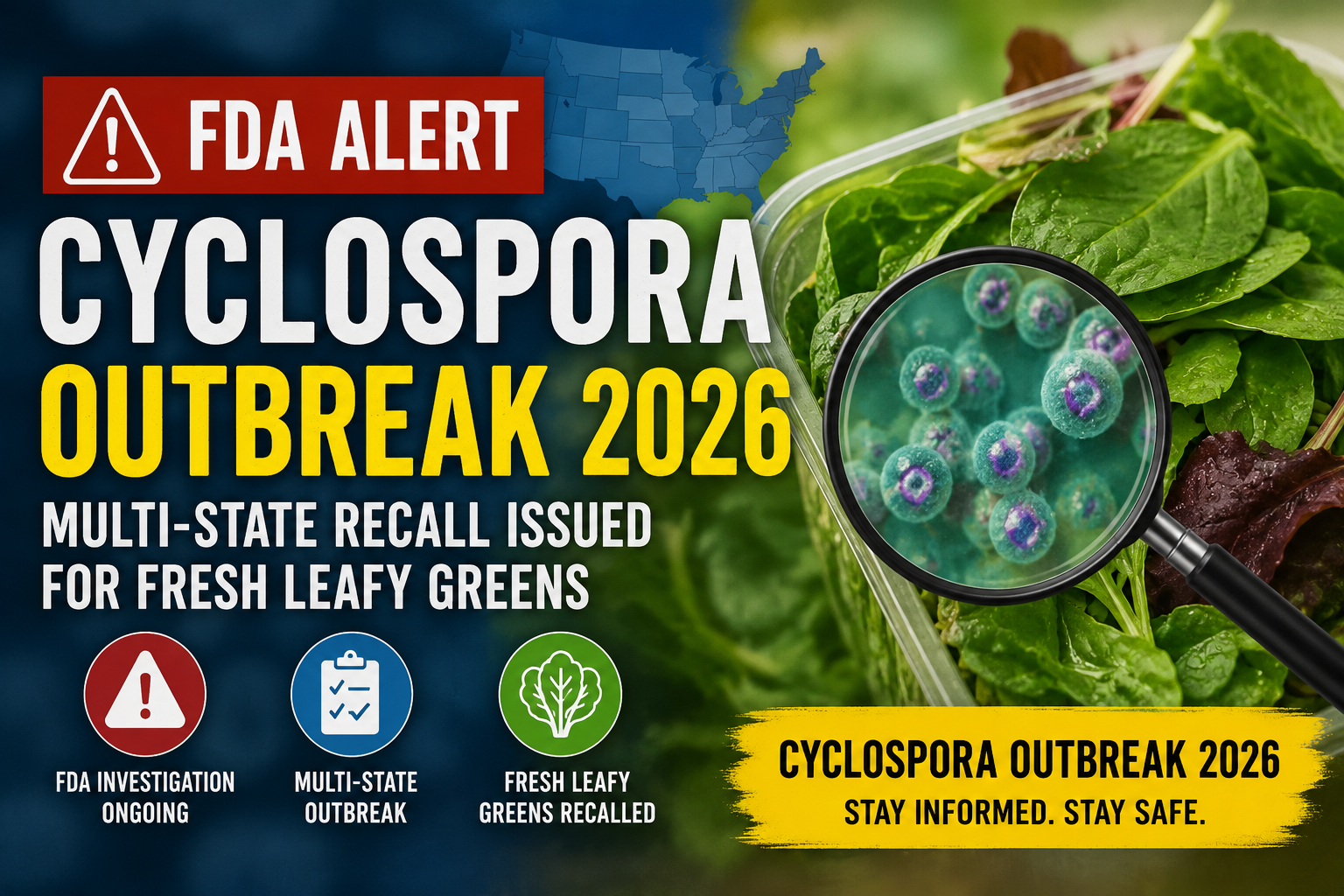
Cyclospora outbreak 2026 is one of the biggest food safety investigations of the year, prompting FDA warnings and raising concerns for grocery shoppers across the United States. Food recalls happen every year, but some outbreaks receive much more attention because they affect people across multiple states and involve foods that millions of Americans buy every week. The ongoing 2026 Cyclospora outbreak is one of those cases.
Health officials are investigating illnesses linked to contaminated fresh produce, prompting recalls and warnings from public health agencies. Since fresh fruits and vegetables are part of many families’ daily meals, shoppers are understandably asking the same questions:
- Is the food in my refrigerator safe?
- What products have been recalled?
- How can I protect my family?
- What should I do if I already ate the affected food?
This guide explains everything you need to know about the current Cyclospora outbreak, including how the parasite spreads, symptoms to watch for, what products may be affected, and practical steps you can take today.
Whether you shop at Costco, Walmart, Kroger, Aldi, Trader Joe’s, Whole Foods, or your local grocery store, understanding food recalls can help you make informed decisions and reduce your risk of foodborne illness.
What Is the Cyclospora Outbreak 2026?
Cyclospora cayetanensis is a microscopic parasite that causes an intestinal illness known as cyclosporiasis. Unlike bacteria such as Salmonella or E. coli, Cyclospora is a parasite that typically spreads through contaminated fresh produce or water.
Because the parasite is extremely small, you cannot see it with the naked eye. Contaminated food usually looks, smells, and tastes completely normal, making it impossible for consumers to identify without official recall announcements.
One reason Cyclospora is especially challenging is that the parasite often survives on raw fruits and vegetables that are eaten without cooking. Since many salads, herbs, berries, and vegetables are consumed fresh, they can become vehicles for infection if contamination occurs somewhere along the supply chain.
How Does Cyclospora Spread?
Cyclospora infections usually occur after someone eats contaminated fresh produce. Unlike viruses that spread quickly from person to person, Cyclospora generally requires time in the environment before it becomes infectious.
This means outbreaks are commonly linked to foods rather than direct contact between people.
Foods that have been associated with previous Cyclospora outbreaks include:
- Lettuce
- Cilantro
- Basil
- Fresh herbs
- Raspberries
- Blackberries
- Salad mixes
- Green onions
- Snow peas
- Various imported produce
Because produce is distributed through complex supply chains, a single contaminated shipment may reach grocery stores, restaurants, cafeterias, and food service distributors across numerous states before investigators identify the source.
Why the 2026 Outbreak Is Getting National Attention
The current investigation has attracted nationwide attention because illnesses have been reported across multiple states while investigators continue working to identify every product involved.
Federal and state health agencies are tracing the supply chain to determine exactly where contamination occurred. As new information becomes available, additional recalls or public health alerts may be issued.
Consumers should understand that recall investigations often evolve over several days or even weeks. Early announcements may identify only one product, while additional products are added later as investigators collect more evidence.
For this reason, experts recommend checking official FDA recall updates instead of relying solely on social media posts or outdated news articles.
Common Symptoms of Cyclospora Infection
Symptoms usually do not appear immediately after eating contaminated food. In many cases, people begin feeling sick about one week after exposure, although the timing can vary.
Common symptoms include:
- Frequent watery diarrhea
- Stomach cramps
- Nausea
- Vomiting
- Loss of appetite
- Fatigue
- Weight loss
- Bloating
- Increased gas
- Low-grade fever
Without treatment, symptoms may continue for several weeks and sometimes come and go before completely resolving.
Young children, older adults, pregnant women, and people with weakened immune systems may experience more severe illness and should seek medical advice promptly if symptoms develop after eating recalled food.
Can Washing Produce Remove Cyclospora?
Many people assume that thoroughly washing fruits and vegetables eliminates all food safety risks. Unfortunately, that is not always true.
While rinsing produce under running water helps remove dirt and some contaminants, it may not completely remove Cyclospora parasites once contamination has occurred.
Cooking foods thoroughly can destroy many foodborne pathogens, but because many recalled products are eaten raw, consumers often do not have that additional layer of protection.
For this reason, if a product has been officially recalled, the safest recommendation is to throw it away rather than attempt to wash it.
What Products Have Been Recalled?
As of the latest FDA and public health updates, investigators have linked the outbreak to certain fresh produce distributed to restaurants and food service providers. Because investigations are ongoing, additional products or distributors could be identified as more information becomes available.
Rather than relying on social media posts or secondhand reports, consumers should always verify recall information through official government sources. The FDA regularly updates recall notices with product names, lot numbers, distribution areas, and instructions for consumers.
If you purchased fresh produce recently and are unsure whether it may be affected, compare the packaging information with the latest recall announcements. When in doubt, it’s safer to discard the product than to risk illness.
What Should You Do If You Purchased Recalled Produce?
If you discover that you have a recalled product in your home, follow these steps:
- Do not eat the product, even if it looks and smells normal.
- Throw the product away in a sealed bag or return it to the retailer if a refund is offered.
- Wash and sanitize any refrigerator shelves, cutting boards, knives, or containers that came into contact with the recalled food.
- Wash your hands thoroughly after handling the product.
- Monitor yourself and your family for symptoms during the following days.
If symptoms develop, especially persistent diarrhea lasting more than a few days, contact your healthcare provider and mention the possibility of Cyclospora exposure.
The Cyclospora outbreak 2026 continues to be monitored by the FDA as investigators trace the source of contaminated produce.
How Grocery Shoppers Can Reduce Their Risk
While no food safety practice can eliminate every risk, several habits can significantly lower your chances of foodborne illness.
- Check FDA recall announcements regularly.
- Buy produce from reputable retailers.
- Refrigerate fresh produce promptly.
- Separate raw produce from raw meat during preparation.
- Wash kitchen surfaces before and after food preparation.
- Replace worn cutting boards that are difficult to sanitize.
- Avoid consuming recalled products, even if they appear fresh.
Food recalls can happen at any time, so staying informed is one of the best ways to protect yourself and your family.
Why Food Recalls Matter
Many shoppers assume recalls only affect a small number of products. In reality, modern food distribution networks are highly interconnected.
A single farm or processing facility may supply products to grocery chains, restaurants, meal kit companies, schools, hospitals, and cafeterias across the country. That means one contamination event can quickly affect thousands of consumers before officials identify the source.
This is why federal agencies work closely with state health departments and food manufacturers to trace products through the supply chain. Although recalls can be inconvenient, they are an important part of preventing additional illnesses. Consumers should follow updates about the Cyclospora outbreak 2026 before purchasing or consuming fresh leafy greens.
Frequently Asked Questions
Can I wash recalled produce and still eat it?
No. If a product has been officially recalled, the safest recommendation is to discard it or return it to the retailer. Washing may not completely remove Cyclospora.
Does cooking destroy Cyclospora?
Many recalled items are intended to be eaten raw. If a recalled product has already been identified, public health officials recommend not consuming it regardless of how you plan to prepare it.
How long does it take to get sick?
Symptoms often begin about one week after exposure but can appear sooner or later depending on the individual.
Who is most at risk?
Older adults, young children, pregnant women, and individuals with weakened immune systems may experience more severe illness and should seek medical care if symptoms develop.
Where can I find official recall updates?
The U.S. Food and Drug Administration (FDA) maintains the latest recall announcements and investigation updates on its official website. Consumers can also sign up for FDA recall alerts to receive notifications when new recalls are announced.
Final Thoughts
The 2026 Cyclospora outbreak is a reminder that food safety starts long before products reach grocery store shelves. Although government agencies and food producers work to quickly identify contaminated products, consumers also play an important role by staying informed and responding promptly to recall announcements.
If you recently purchased fresh produce, take a few minutes to review the latest FDA recall information. Discard any affected products, clean surfaces that may have come into contact with them, and monitor for symptoms if you believe you may have been exposed.
Food recalls can be concerning, but staying informed about official updates and following basic food safety practices can greatly reduce your risk. Staying informed is one of the simplest ways to protect yourself and your family while continuing to enjoy healthy fresh foods.
For the latest recall information, visit the official FDA Food Recalls page: https://www.fda.gov/safety/recalls-market-withdrawals-safety-alerts
Related Articles
Stay tuned to FrugalHQ for the latest FDA food recalls, grocery savings, Costco updates, and money-saving tips to help you shop smarter and keep your family safe.
Leave a Reply